Depends on your use case/tools/habits. WSL gives you the advantage of being able to access the same files with native Windows tools and from the GNU[1] command line. If you plan on using the X GUI tools, it will be much less useful to you.
[1] I can't bring myself to use the term 'Linux' here, because, ironically, Linux is the primary missing part in this Ubuntu distribution. It should really be called WSG or WSU.
If you plan on using the Linux GUI tools, it will be much less useful to you.
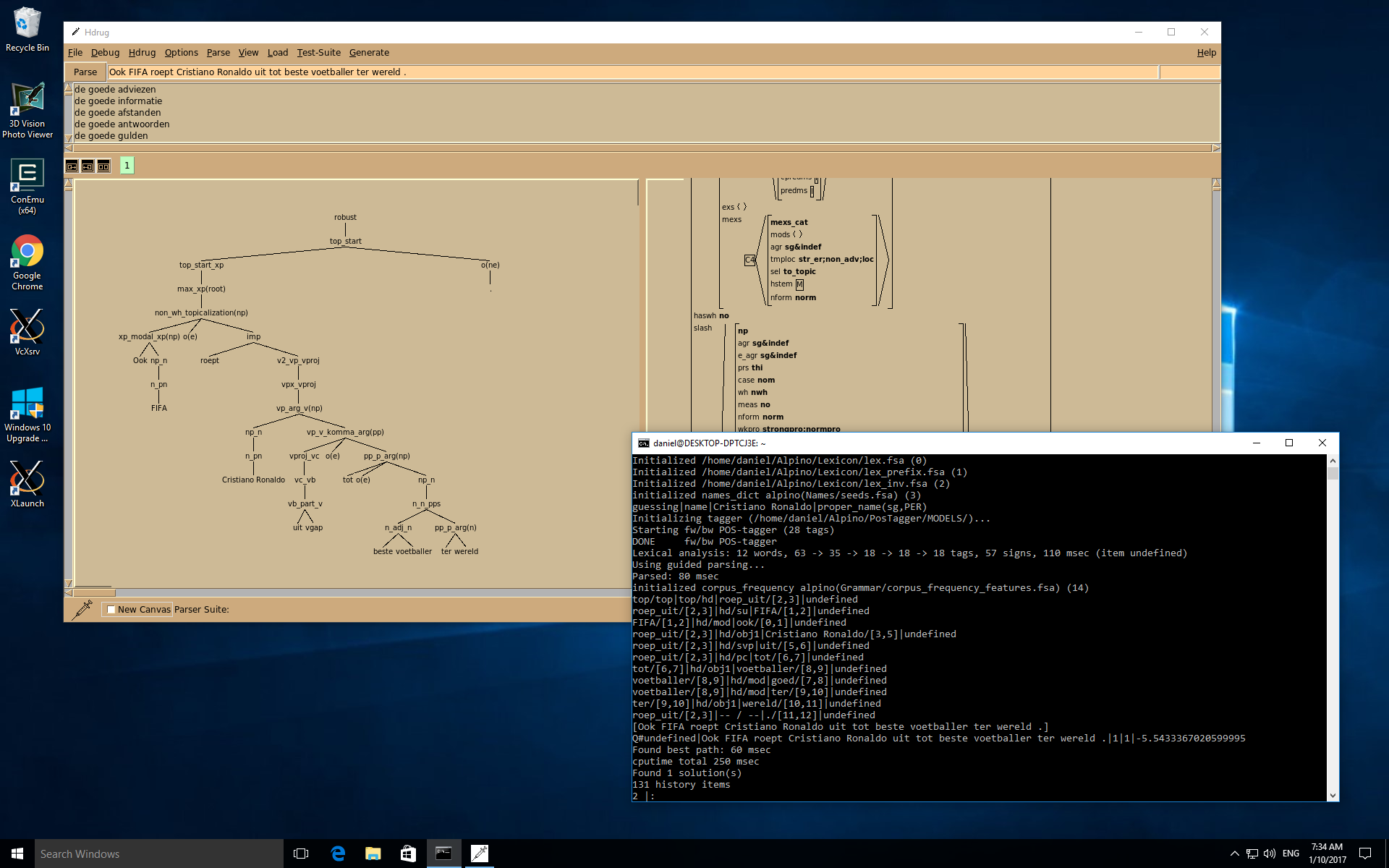
If you install an X server, such as VcXsrv and set the DISPLAY variable (typically export DISPLAY=:0 will suffice), you can just run X11 apps. For instance, here's a screenshot of a Prolog/Tk application running on WSL:
I have installed Windows on a workstation just to try WSL out and it's quite impressive. Many regular applications just work. I could build Ubuntu packages and upload them to my PPA (I just had to use fakeroot-tcp to replace fakeroot).
Of course, there are also things that don't work for obvious reasons. E.g. because they require facilities deep in the kernel (performance counters/perf) or because they require kernel modules and hardware access (running CUDA programs).
You can access your entire Windows filesystem freely from Linux, so that's not really an issue. Just keep your data in /mnt, or link it from there to other places.
I've been using it for a couple months now for web development. There are still some quirks and bugs but I haven't had to move to dual-boot. I'm on the edge of doing so (see aforementioned quirks and bugs), but I've been rather happy with it so far.
For many people I think it's still the wrong way around. It's not the first solution to running Linux applications on Windows. The first I saw involved X-Win32 and a Linux server in the basement. It's just that most of these solutions get it wrong. It's not that people want Windows, and a little Unix. People want Unix/Linux, and a little Windows.
I think there is a large group of people that needs or want to develop on Linux (POSIX API, open source tools). But have difficulty getting their hardware running on Linux, need applications that are not available on Linux (Microsoft Office, Adobe suite), or simply want to run games as well without dual booting.
I think this is a masterstroke by Microsoft, since it will give Windows the best of both worlds. Something that only OS X had so far.
Of course, it's not for everyone. People might be morally opposed to proprietary software or want UNIX all the way down.
I've been using this, and find it works well enough for me.
I like a Linux/GNU terminal, but I prefer windows GUI to X, I find all laptops I have owned work better under windows than linux, I prefer outlook to mutt/thunderbird, and many of my games only run on windows. (Obviously, other people's opinion can be different!)
I don't have WSL available, but I would love some numbers for tasks like cloning a large repository with git and running cmake. These things tend to be slow on Windows due to fork, see for instance this comparison for Windows vs. Linux in a VM:
Ah. (Can't read the article but I'll assume that's what it says.) Still... if she had those connections, they must not have been very good connections; the site still isn't available.
Eh. It's more about using her connections to sell Twitter's services to companies in China than it is about using her connections to make Twitter available to users in China.
Relevant portions:
> Twitter said its strategy in China hasn’t changed and that Ms. Chen’s main job is to sell services like advertising, data analytics and developer platforms to companies in China, Hong Kong and Taiwan.
> Underlying the messages were concerns that Twitter, which casts itself as a champion of free speech, was motivated to hire Ms. Chen as part of a strategy of compromise aimed at getting Chinese authorities to lift the block.
> A Twitter spokesman said on Tuesday that wasn’t the case and that Ms. Chen had been hired to take advantage of increased interest among Chinese companies in advertising on the platform to reach a global audience. “We have no plans to change anything about our service in order to enter the market,” the spokesman said.
> Twitter has consistently said it won’t compromise its service in order to operate in China. It described former CEO Dick Costolo’s first visit to China in 2014 as the executive’s attempt to learn more about the local culture and technology industry. His successor, Mr. Dorsey, who co-founded Twitter, has emphasized a dedication to the company’s values and mission, including freedom of speech.
This is supported by the Reuter's article which mentions her work on courting "potential Chinese advertisers for the social media platform" and growing "its Greater China advertiser base nearly 400 percent over the past two years."
> No, of course not. Some guy at Forbes just decided to wake up one morning and extol the virtues of WordPress.
In spite of your sarcasm you pretty much nailed it, except the guy doesn't work for Forbes. He's part of the contributor network, which is essentially a few thousand bloggers that get paid based on how much traffic they generate for the site.
Piano's another good one if you're looking for something more melodic. Although I think drumming is where it's at if you'd find value in the social aspects of music (it's harder to play piano in a band). Now that I think about it, drumming and piano have a couple of things in common, even though they're vastly different instruments.
Both require 'synchronising' the left and right sides of your body (and also, presumably, the left and right hemispheres of your brain). Although, occasionally, they require 'un-synchronising': for example when the beat is syncopated. As a pianist, it's such a strange feeling when a syncopated piece 'clicks': it almost feels like your left & right hands (and brain hemispheres) are operating completely independent of each other; almost like it's two separate people playing two separate pieces at the same time.
And one from my favourite composer, Claude Debussy, the first in his pair of Arabesques: https://www.youtube.com/watch?v=9Fle2CP8gR0 . The Arabesque is really nice: it starts off synchronised and then transitions to a really beautiful syncopated flowing section.
And although this has nothing to do with syncopation or off-beat rhythms, I highly recommend this video from Valentina Lisitsa (one of the most technically brilliant pianists alive, IMHO) playing a Beethoven Sonata with a GoPro strapped to her chest: https://www.youtube.com/watch?v=q0m2RW4m8xE
Although you might want to avoid that last one if you're prone to motion sickness :)
I didn't felt a lot for Lisitsa interpretation. Debussy Arabesque n°2 has bits that I like a lot, too short though. Chopin's piece is nice for the momentum but .. I'm more in love with the Prelude 20. Do you know other piece of him with similar harmonic brilliance ?
----
Listening to classic music like this is relaxing, I currently listen to things like:
- https://www.youtube.com/watch?v=U3s3dne0d8Q (this is the piece that made me think I should start listening to classical music more openly. I used to be in jazzfusion, but the piano introduction felt mostly classical in tone and quite beautiful. The rest isn't bad either, strings, bass, guitar... a very nice crescendo)
Talking about off beat syncopation, not sure if that's what you mean, I think of this kind of rhythm (warning not classical music):
I consider the dude who created this album a genius, his pianistic style is messy, lightweight, with diagonal solos (see next song finale) toying with the bar in all directions.
Hey thanks for the links. I'll probably take a little while to go through these; it often takes me a few listens to 'get' a piece of music (regardless of genre). I don't know if anyone else gets this, but I find after listening to an album a few times through, pieces that I initially didn't like sometimes end up being my favourites.
I get what you're saying about Lisitsa; if I has to make one criticism, it's that she can play a little 'mechanically' at times. This is often the case with talented 'technicians'. Well, with the exception of Horowitz, who was some sort of freakishly talented mutant, with his crazy 'flat-fingered' technique and heavily modified Steinway (that most people find unplayable). Although, given the level of her technical talent, Lisitsa is not so bad in this regard. If you really want to see a concert pianist with no feel for what he is playing, take a look at some of Lang Lang's performances. I suppose a lot of people must like him, given his success, but he just isn't for me.
As for nice harmonies, I'm a little unsure what to recommend. I only did a little formal study of music theory (mostly forgotten), so am not the greatest theorist... Maybe try Liszt's third 'Liebestraum' (which has an interesting, and bloody difficult, 'three hands' technique where both hands contribute to a 'middle melody' in sections of the piece): https://www.youtube.com/watch?v=KpOtuoHL45Y . Also, a famous Chopin Ballade that you've probably heard before: https://www.youtube.com/watch?v=Ce8p0VcTbuA
As for the term 'syncopation', I think it has fairly broad meaning. The kind I was referring to is when the timing/tempo of one clef doesn't neatly divide into (or 'match up' with) the other. For example, see page 2, line 3 here: http://www.mediaphorie.com/pdf/PSU_Demo_En.pdf
Hell yes. I'm a "drummer" first. I don't mention this because drumming is rarely thought as musical. It does make you reflect on different part of the musical continuum. To summarize my years twirling sticks:
- drumming often lead to learning things slow. Focusing on minute details that are ignored, also meditative (you have to be slow and low energy but it's dense, you pay attention at the 10th of a second so you're constantly mentally and physically active)
- limb independance is akin to meditation for me, playing patterns involving all limbs massages my brain. It's like trying to balance on a virtual wire. It's a game of doing more with less and abstracting the motion of each limb into another form of data. You must not think of one limb in particular. You feel rhythm and accents, and you distribute to some limbs... I feel like a live compiler.
- oddly technique also required revisiting my understanding of physics. It's all about angular momentum, shifting gravity center and inertia. Also doing less with more by distributing the effort on every possible muscle. Makes you reflect on a global basis about each hit.
Oh and I forgot, to do lengthy single hand rolls with accents, you don't rotate your wrist, you wave your forearm, hand and stick (it has to be smooth like low basketball dribbling, you'll see if you look for moeller technique later) accents are just a blip in amplitude at the forearm wave; the hand wave will keeps as it is so you'll keep time and won't feel tired because waving doesn't require much energy (half the energy comes from sensitivity and reusing the response of the skin to let the stick go up).
It was through this that I started to "see" music. I played bass too, and along the way melody and harmony started to make sense at the intuitive level (I only took 1 year of accelerated formal theory training on piano as a teen, taught me approximately nothing about "music")
All in all, I'm a brainiac (for better or worse) .. different people will see other things in drumming.
ps: One last thing, at first drumming felt like an immense beast to tame. Famous drummers did things I could barely see, even less understand. My mind skipped to conclusion thinking to reach that level I had to do more and play like a fighter jet. It's the other way around, it changed your view about your perception and interpretation of the world through your senses. As I told before it's all a game of economy, but you have to experience each cymbal, skin, sticks, subtle space and time placement to finally see that just a few strokes well placed are enough to recreate that "complex" thing. It's a bit like when you finally understand a software architecture, you realize how small it is, but you connected the dots and see how much it can do.
Can't agree with you more. I'm a drummer as well, and I didn't "get" drumming until I learned to relax, and instead of forcing hits to be in time, it felt more like I was directing a flow of notes.A lot of what you said really resonated with me, I feel the same about a lot of it. At my high school we've always taught that "to go fast, you have to go slow".
Happy to hear that. I rarely read similar testimonies on the web, and since I'm self taught on drums (a few videos here and there but no face to face lessons).
Isn't it amazing that "relaxation" improves things that much ? it makes you tap in the system much more efficiently. Goes well with my notion of minimalism and also the ways of elders [1]. Did you understand the high school 'fast is slow' motto or was it flying over your head ?
Latin has a proverb precisely for that: "in festina lente". Seems like antique knowledge ...
ps: Also, I kept trying wrong "fast" intuition for something like 6 years until I started to break it all apart and starts back from scratch and slow. One thing that helped me is leading left hand (I'm right handed). Even playing anything with any limb. You just cannot go fast, you have to relearn bit by bit. Surprisingly everything starts to have a better ring. It also corrected things that could flow fast on the right but were mostly luck. Another enlightenment.
Some of the restrictions in Whole 30 are silly, but for most programs like this, the main point is that the restrictions force you to change your habits. The details of the allowed and forbidden foods are almost irrelevant as long as the resulting diet is complete and balanced. I bet you could run this program with whole wheat (actually eating the wheat berries, not bread/pasta) and lower-starch legumes (again, eaten whole and not as stuff like refried beans) and get similar benefits.
"The main point is that the restrictions force you to change your habits."
And this is really the main key with diets and healthy eating. You gotta change your habits.
But in that respect, you could do similar things without the restrictions: Simply work on changing the habits without eating more. Take a while to focus on cutting out most sweetened beverages: Some time to eat more veggies, more grains, adjust your eating to reflect when you are hungry, and so on.
The point of whole 30 is to eliminate everything and see how you feel. After 30 days you add things back in one by one. Think of it as an experimental control.