>I think this is the pragmatic approach vs an ideological approach
I'm all for pragmatism, but I believe in long term pragmatism, not short term pragmatism.
Rewarding terrorists gets them to stop killing you, which is pragmatic, except in the long run it encourages other terrorist groups to start killing you, which is unpragmatic.
>A scaled-down gale blows over a flat plate set inside the tabletop wind tunnel. Despite the low lighting and hazy Plexiglas view portals, we can clearly see the frenzied fluttering of streamer ribbons, called telltales, in the field of little wind vanes that carpets the exposed test surface inside.
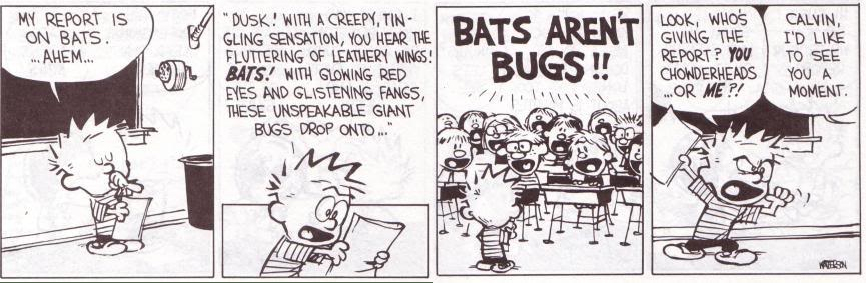
I'm really bothered by this style of journalism which feels the need to start off every story with an in media res narrative instead of just telling you the most important points and working its way down like a traditional newspaper article should.
I don't care about the scene at the wind tunnel you visited while researching this story. Tell me about the plasma wings.
I see this more and more and also find it tiresome. I stop reading and go straight to the HN comments. At least then I'll more quickly learn what the damn article is about.
I took Journalism as an elective and fell in love. I use knowledge gained many times a day, and have much deeper insight into what I consume. I highly recommend anyone who hasn't do yourself the favor of taking a Journalism class. I felt like Neo- I could see the code of the matrix and was no longer fooled by all the fake stuff surrounding me.
edit- I could also form a deeper appreciation for the truly amazing Journalists out there. Diamonds in the rough.
You are very interested in the subject, so this seems unnecessary.
Most people are not, and need to be hooked. That's what starting a story like this is intended to do. It's the same reason that so many movies and TV shows start with an action scene and then circle back to start the exposition.
People who have just heard of twitch and want to know what it is? And whether those people eventually become twitch customers or not, their existence is a sign that twitch is still gaining mindshare in the broader community.
> Do you have more specifics about what you think they missed?
Do you have any specifics of what you think they didn't miss, given that you're the one who has supposedly talked to the sponsors of the legislation?
Legislation, like code, should be considered buggy until proven otherwise -- but with the complication that the people who write legislation aren't necessarily interested in fixing the bugs in it.
Since the amounts involved are pretty small (15% ownership of a company that has received at least $350K in funding) there seem to be no end of ways for to make it happen. Six Chinese (say) dudes each pay $100K to some guy who is a "qualified investor" in the US, who invests $350K in a Chinese restaurant and makes them each 1/6th owners. Bam, hello US residency for all involved.
You can be immensely wealthy if you beat it consistently. Almost no professionals can. Warren Buffet is winning his $1m charity bet that the S&P beats pro hedge funds over a decade:
> His horse in the race, the Vanguard 500 Index Fund Admiral Shares, which tracks the benchmark S&P 500 index, is up 65.7 percent. That's well ahead of the 21.9 percent average gain for the unnamed five funds of hedge funds chosen by Protege Partners, a New York City money management firm.
So not just an average of hedge funds, but ones specifically selected to out perform by a multi-billion dollar management firm.
Warren Buffet is a spectacular value investor, but those funds are not representative of the best performers in the industry. A brief Google search demonstrates that a variety of hedge funds have consistently beaten the S&P 500 for well over a decade; in some cases, for 25-30 years.
I do agree with you that almost no professional can beat the S&P 500, but I think that is due to a variety of factors, including but not limited to the outright difficulty. For example, if you beat the market consistently you still might not become rich. With $100k in starting capital, "merely" beating the S&P 500 by a few percentage points each year (let's say 10% average annual return instead of 7%) will not make you rich in the conventional sense of the word. This prevents many people with the aptitude from investing in the skill development because they could earn a greater living doing other things.
A trader whose insight is primarily responsible for driving that same return on $2B in assets is already very rich or will very quickly become so. Beating the market with that kind of capital requires an entire infrastructure devoted to trading and execution just to make the trades with minimal market movement and signalling, let alone maintaining alpha on it. Not all people capable of beating the market can do so in a manner that is actually worth their own time, because the scale can be astronomically different.
The key point of the wager is that the bettor must select the funds at a point in time and bet only on the future returns.
Gazing back into the history of thousands of funds to find a few funds who have beaten the S&P 500 over 25 years is interesting, but is far a guarantee that those funds will beat going forward.


I'm all for pragmatism, but I believe in long term pragmatism, not short term pragmatism.
Rewarding terrorists gets them to stop killing you, which is pragmatic, except in the long run it encourages other terrorist groups to start killing you, which is unpragmatic.