Yep, search for "direct lab testing" and you'll find some vendors, and possibly some local clinics.
But the thing with ordering your own tests is that it is not the only way to get these results. You can simply ask a doctor. They'll order it and help you understand the results and insurance can cover it. Depending on your insurance, that might be cheaper or it might not. There are pros and cons to both approaches mostly centered around how self-driven you want your care to be and whether or not you have a cooperative doctor.
But I would add a general word of warning - raw lab results do need some broader understanding of what the expected results are. They'll typically tell you what numbers are too low/high, but will not tell you what it means if you are outside those limits. For some things, being a slight bit out of the norms is a big deal. For others, unless you are at a few multiples beyond the limits, there is northing to fret over. Knowing which is which is critical to know how to react to test results.
I'm not saying you've gotta work with doctors - I'm saying that they do have a point that self-educated and self-diagnosed patients who learn the info off the internet are not always well-informed. If you are going to go the self-directed route for your health care, take the time to learn deeply and do it well.
I imagine the bulk of your data is collected when you show up for the blood draw. You have a really nice site, but should defiantly try to find and work with a more ethical and trustworthy lab. On the plus side, when they sold your data they probably had a lot of nice things to say about your intelligence, abilities, and aptitudes!
Quest is one of the two major testing companies in the US. (And LabCorp is not much better.)
I understand the sentiment here, but it's like saying "you should definitely try and find and work with a more ethical political party than the [reader's choice: Democrats|Republicans]". Good luck! It's not likely to happen, even if we all wish otherwise.
It looks like those two companies have been buying up competitors left and right for a long time, so no wonder there aren't many other options left out there. Seems like this is an industry that doesn't get a lot of attention, but which is badly in need of oversight and regulation.
No, ug/L, not ug/mL - sorry, my report gives units of 10^-6 grams per 10^0 liters, yours gives results in 10^-9 grams per 10^-3 liters; we have very similar levels.
Direct to consumer lab testing is offered in ~47 states in the country. It has been available for years with thousands of tests available. To date, there has been no apocalypse from empowering consumers to know about their own personal health.
NMS is one of the preeminent toxicology labs in the country. This test is Liquid chromatography–mass spectrometry which is known, quantifiable, extremely accurate and repeatable test methodology.
National Academies of Science, Engineering and Medicine explicitly references this lab in their report. Further, they go on to elucidate the risks and benefits of offering PFAS testing to people.
"Harms of PFAS testing include fear induced by blood draw, a small risk of injury or infection at the draw site, difficulties in interpreting results, and psychological stress that may occur when people who are tested learn that they or their family members have high levels of PFAS exposure. On the other hand, biomonitoring for PFAS blood levels may also alleviate fears associated with not knowing one’s PFAS levels. Another potential benefit is increasing awareness of exposure so that exposures can be reduced. If sources of exposure are identified, actions taken to reduce these exposures, such as using a water filter, may also benefit family members in addition to the person who was tested. Community-level benefits may be associated with PFAS testing as well, such as empowering communities to respond to contamination and providing a baseline with which to evaluate the impact of community-level interventions to reduce exposure. Additionally, biomonitoring for PFAS in the context of epidemiologic studies could provide more information about PFAS-associated health effects."
Also a couple of quotes from the same paper.
"Kristen Mello of Westfield Residents Advocating for Themselves (WRAFT) said to the committee:
You don’t have a problem getting an insurance assessor when your car is hit, you don’t have a problem getting an insurance assessor when you have a tornado, but this slow motion unfolding environmental and public health disaster … is intentionally keeping the information from us so that we cannot take action.
Furthermore, Emily Donovan of Clean Cape Fear, said:
Sadly it feels like guinea pigs are treated better, because at least their exposures are thoroughly studied for the betterment of humanity.
And Cathy Wusterbarth of Need Our Water said:
We’ve tested the fish; we’ve tested the deer; we’ve tested the groundwater, the waterways, and the foam. When are we going to test the people?… The only risk [of testing] is to the polluters who do not want us to link them to our exposure."
Went to doctors dozens of times with severe but vague symptoms. Was admonished repeatedly for doing my own research. All the doctors get saying it was anxiety, and that I was simply a hypochondriac. After years of this found out I had 3 fairly uncommon conditions that mixed to produce crazy issues. Proper treatment resolved my issues.
I’ve met many others who have had similar problems.
Consumers should always be allowed to do their own research.
I don't think the previous commenter was saying "don't test people" but there are a few comments on here about how sketchy this website/company looks.
So instead, the question is, if I pay $400 what meaning/value am I getting from this. And what can I get above and beyond the given 98% certainty I have that I've already ingested one of these chemicals?
I think it's right there in the post itself. If you have certain occupations, live in certain zip codes, or have medical problems, a test like this can prove invaluable.
If you're just curious, your mileage may very.
I do push back on the idea that not knowing is somehow better. Or people cannot handle learning new information about themselves. It's an old idea from medicine I hope we can move past as it just entrenches the power dynamic between caregivers and patients.
> I think it's right there in the post itself. If you have certain occupations, live in certain zip codes, or have medical problems, a test like this can prove invaluable.
Invaluable, as in, worthless?
Invaluable for what? What are you going to do if you test positive?
Uhh, you haven't answered this person's question in the rest of the discussion. What is the value of this test over assuming that I have this? What treatment exists that I can get if I know my blood contains PFAs?
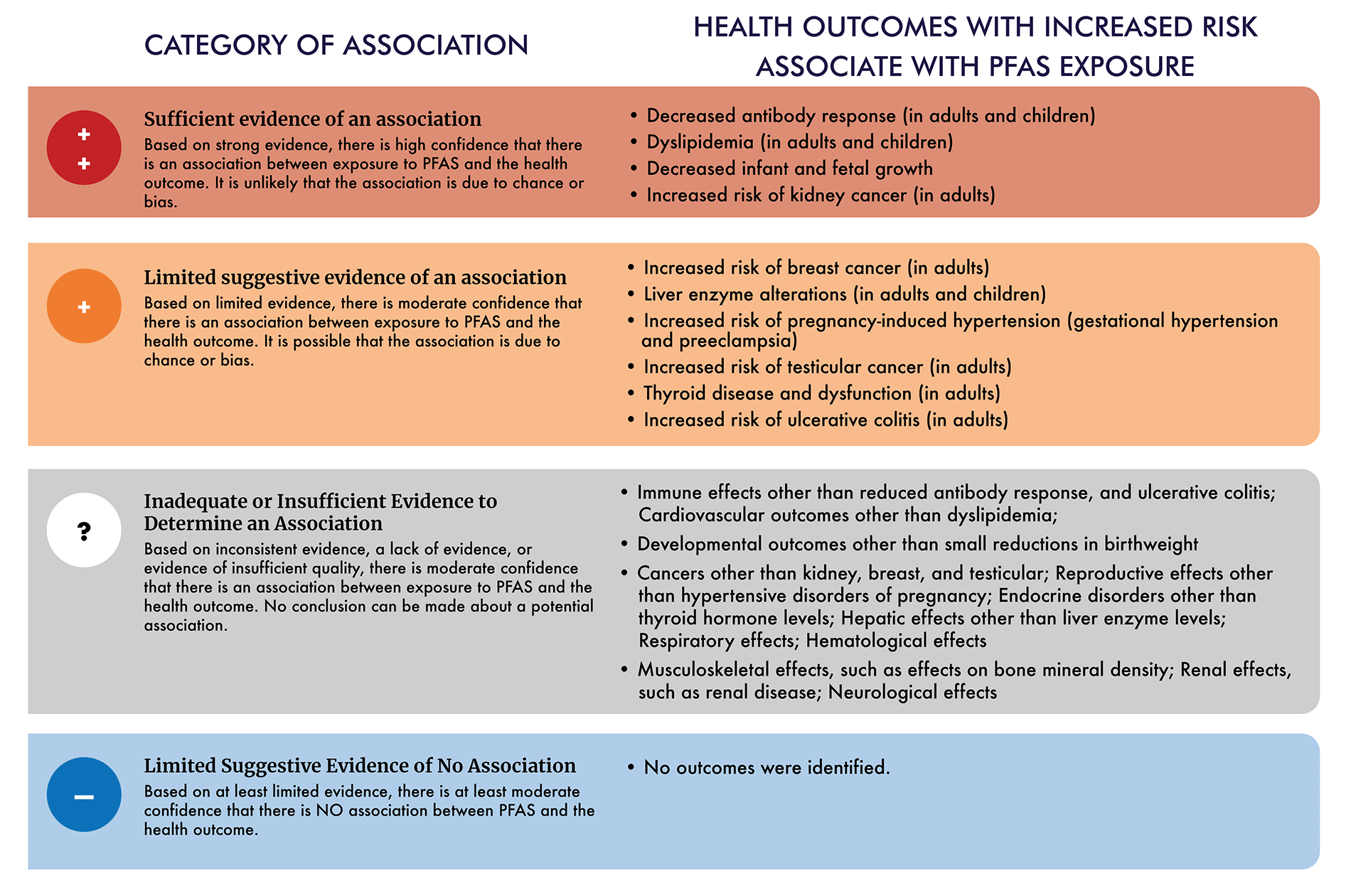
Depending on your Total PFAS blood level, you are at increased risk for certain medical conditions which require ongoing monitoring by a physician. Knowing this may prevent the development of future diseases or allow you to catch it early in its progression. NIH graphic: https://res.cloudinary.com/mpsh87/image/upload/v1687923551/N...
If your level is significantly elevated (>20 ng/mL), you can audit your environment by testing your tap water and installing a reverse osmosis whole house filter (expensive). If your level is low, you don't need to do any of this. By eliminating point source exposure, your PFAS levels would naturally decline in time.
Lastly, I bring up therapeutic phlebotomy as interesting emerging research because it points in a concrete direction to something that is very actionable (pending more study).
Somewhere else in this comment section there's a discussion about screenings causing more trouble than benefit because people don't know how or what to do about them.
Emerging research is not something actually concretely actionable for most people. Worse, because most people are "arm-chair experts" without clear guidance, your average person is more likely to harm themselves with doing their own research into things like this than otherwise.
For the additional thing about "reverse osmosis whole house filter" most people likely can't do afford to do this. Even if they can, there would need to be much better guidance here to have any certainty that someone wasn't selling you snake oil. The only things I can find on these systems in searches is that the companies that sell them recommend them, and won't even say they can filter out PFAs on their own, that's a major red flag to me that this is poorly regulated and likely dangerously marketed for things they can't do anything about.
A thought experiment, if I offer you two glasses of water, and tell you one has PFAs and the other doesn't how could you actually test that assumption? How could you have certainty in that test? I'm not saying it can't be done, but knowing what companies you can trust in a brand new space is not something obvious, and especially in a low-regulation space can be a major opportunity for companies to use meaningless words to try and convince you they're doing more than they are.
I had an insect exterminator come to my door and tell me the "eco" in their company name meant that they were eco-friendly with 0 data to back that up. They also said that all of their chemicals for killing animals were "plant-based" and didn't expand on that any further. Companies can make a lot of money making up BS terms to try and sell you the same thing you've been buying for years. That's a lot easier than finding a new thing to sell you.