Unfortunately as a diabetic, oatmeal is one of the most difficult foods to control. I question how healthy it is given how high and how fast my blood sugar spikes after eating some. Oats are converted to glucose very quickly it seems, and that's without all the added sugar OP recommends. I won't dispute that it's delicious though.
Use thicker oats. Do not add sugar or any sweet milk. Also, if you sprinkle ceylon cinnamon and fenugreek powders, the impact will be less. For more effect, I used to microwave it in black tea instead of water.
Heating and then cooling oatmeal should allow it to form some resistant starch of type RS3. This will spike glucose a little less, but it causes much more gas.
Other effective hacks are gymnema, berberine, thiamine, and benfotiamine supplements, all of which help with glucose regulation.
Acacia fiber powder in oatmeal could be a worthy hack too, but I have yet to try it.
I used oatmeal with water and it has always spiked - every body is different. How much less did it spike when you used fenugreek ? What other blood sugar spike hack do you use?
Others that I know of — frozen bread changes starch, or extra virgin oil and almond butter are high in oleic acid so with the right amount it won’t spike as much
I have now updated the parent comment with more hacks. As for a quantification, I don't have one. The only related metric I quantify is HbA1c that I measure at home every few months.
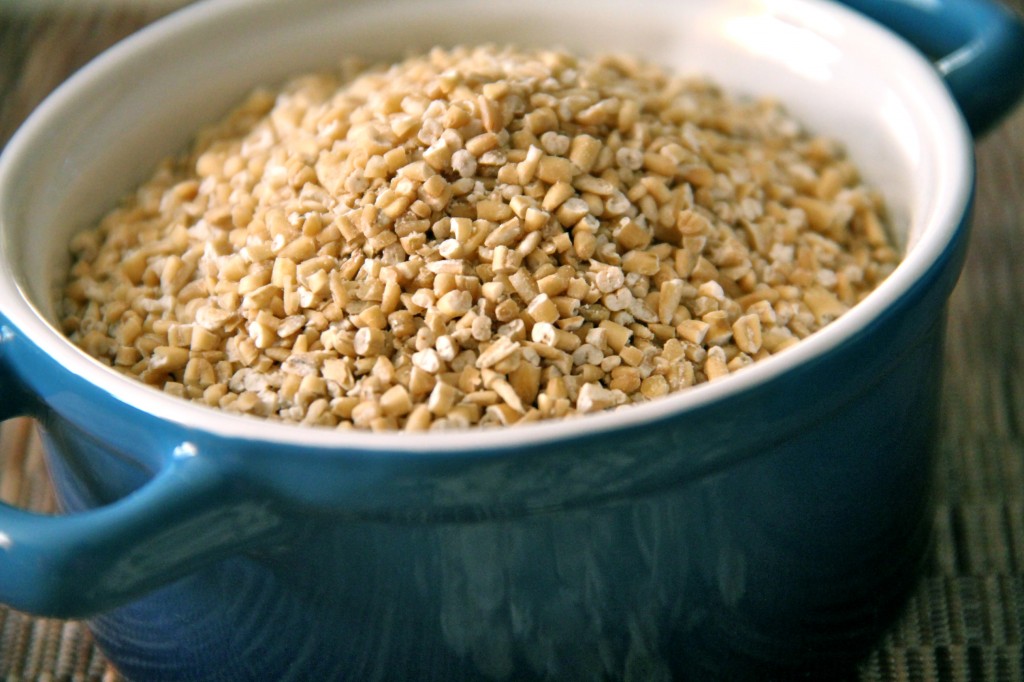
Are we talking of steel-cut oats here? The glycemic index for steel-cut oats is moderate. Instant oats, on the other hand, raise your blood glucose very rapidly.
Oats are about 15% calories from protein, 85% from carbs.
High protein foods would be:
egg white (90% calories from protein), chicken breast (80%), lean fish such as cod (90%)
medium protein foods would be:
fatty beef (e.g. ribeye) 50% calories from protein, cottage cheese (60%), fatty fish like salmon (55% calories from protein), whole eggs (fatty yolk plus white, 36% calories from protein), soybeans (36-40%)
low protein foods would be:
lentils (30%), 2% milk (26% calories from protein), lima beans (22% protein), parmesan cheese (30%), summer squash/zuccini (24% protein), most mushrooms (25-30%).
very-low protein foods would be:
rice (9%), onions (9%), winter squash (10%), red bell peppers (12-13%), sweet corn (12%)
Here, by very low, I mean if you try to get your protein from these sources, you will end up obese unless you expend extreme amounts of energy exercising or maintain serious protein deficiencies (muscle loss). You can get decent amount of protein if you are downing lentils, whole milk, parmesan, soybeans, salmon, etc, e.g. you don't need to eat high protein foods, but this is about the bottom level to get reasonable protein while maintaining reasonable weight unless you are a day laborer or expending massive calories.
At only 15% calories from protein (the rest being carbs), oats would be not much better than corn in terms of protein content per calorie consumed. Nothing wrong with eating some corn on the cob, but that's not gonna be a major source of protein for anyone unless you are willing to consume huge amounts of carbs.
I assume they mean non animal sources of protein. Of course it'll be hard for plant based foods to compete. Out of non animal sources, oatmeal is pretty good, especially as a cheap staple food no less
The human body does not grade on a curve. There is as much protein in oatmeal per calorie as there is in red bell peppers and obviously people don't cite red bell peppers as a high protein food, this is true even if for some reason they really prefer to eat red bell peppers.
If you want something from non-animal sources, go for mushrooms and soybeans, which have twice as much protein per calorie as oats. Mushrooms are an under-rated source of protein, as is cottage cheese.
> The ARR shows the extent by which total predicted COVID-19 deaths exceeded officially reported COVID-19 deaths during the period. A limited number of counties had ARRs < 1, which suggests that there were more officially reported COVID-19 deaths than total predicted COVID-19 deaths. One reason that a county could have an ARR < 1 is if death certifiers recorded people as dying from COVID-19 when they had COVID-19 but actually died from another unrelated cause.
Afaik that was a story that spread around, but has very little connection with reality. As i recall this was mostly down to people who don’t know how to read a death certificate misunderstanding what goes in the cause of death field. I.e. something along the lines of it would list the cause of death as “organ failure”, because that was what caused death - but covid caused the organ failure.
Open to a good source that says otherwise, of course
Not to mention if you made one app in college and then didn't keep up with the SDK updates, Google perma-closes the entire Play account such that the only way to publish a new app is by creating a brand new gmail account
Forcing people to keep up with SDK updates is a bad thing in itself. Let people target the earliest possible feature set and make the app run on as many phones as possible rather than showing scary messages to people due to targeting an older API.
I think the problem is that older SDK versions allowed you to do things like scan local WiFi names to get location data, without requiring the location permission.
So bad actors would just target lower SDK versions and ignore the privacy improvements
The newer Android version could simply give empty data (for example, location is 0,0 latitude longitude, there are no visible WiFi networks), when the permission is missing and an app on the old SDK version requests it.
Of course, they don't like this because then apps can't easily refuse to work if not allowed to spy.
Phone companies are required to make sure 911 works on their phones. Random people on the internet aren't required to make sure 911 works on random apps, even if they look like phones.
Yeah I assume that these foreign casinos have pretty weak regulations. In Australia, poker machines are all required to have real-time monitoring software installed and that software can be provided by any vendor, but must be audited by regulators and have remote access allowed.
> Cloudflare will serve them globally, for free, cached at the edge, to anyone who asks. They are not a file storage system. They were not designed to be a file storage system. Nobody at the IETF was thinking about them being used as a file storage system when they wrote RFC 1035. And yet here we are.
Yeah these types of hacker stories kind of bug me. They are sort of in the same vein as "you can eat for free by going to McDonald's and eating a pint of ketchup without ordering anything" or "How I drank and showered for a year using public water fountains" . Or put another way "just because you can doesn't mean you should". Trustless societies kind of suck and forcing society to lower trust by abusing trust kind of makes things incrementally suckier ("trust" here being "it's on the honor system to not abuse DNS to serve static content").
Look, if this was a project on using DNS to replace Dropbox or something, I'd agree with you.
But the demo version of Doom just isn't that large; Cloudflare will host much larger files than that for free via Cloudflare Pages/Workers. This project is clearly meant as a fun proof of concept, not some novel way to host 3 MB for free.
I’ve heard rumors that DNS records are also sometimes used in some steganography-type communications. Great way of passing small messages in a ubiquitous and innocuous system, unlikely to be blocked or raise eyebrows by accessing.
gemini -> gemini://gemi.dev, it has geminipedia, a web to gemini converter reading sites over gemini at great speeds.
irc -> servers from https://bitlbee.org will allow upon connecting to a registered IRC account to several protocols in the server. For instance, XMPP users will appear as IRC users and groupchat can be created as IRC channels. Ditto with Mastodon, Discord...
mail/usenet -> well, except for big attachments and news binaries (free NNTP servers will just serve text) once you used something like mbsync/msmtp to store your IMAP mail locally and send email ondemand (and ditto with Usenet with slrnpull doing the same exact same task for pushing your writtings and pulling down new articles) everything would just work slower, but usable enough as it can be just batch-uploaded/downloaded overnight.
Iodine it's really great for open but paid wifi services behind portals, such as some hotels, airports...
It won't give you broadband speeds but you can at least chat with people, read some blogs or news at https://lite.cnn.com or https://text.npr.org or get some classic from Gutenberg. That's better than nothing.
I've never had great luck getting iodine running anywhere. The one and only success I've had was on an aircraft where, after numerous attempts at different things, the best I could do is connect to an SMTP server and send an email manually.
If you consider information theory, when something has states, you can store data in any system that has multiple states, which means you can store data in any system.
The placement of coffee cups on a table can be used to encode data.
At that point, only your audience needs to know that data is there.
Airplanes and many other captive portals will allow DNS traffic, but restrict everything else. Such things can be used to get free internet in such environments. It is indeed an abuse of protocol, and future protocols are going to make life difficult for everyone to prevent such abuse.
Regulatory compliance. If you want to sell your product to the UK, for example, you have to (see: UK Cyber Essentials). The more you try to expand your market, the more regulations you will run into that are solved with spyware and locked down computers.
Go's net/http Client is built for functionality and complete support of the protocol, including even such corner cases as support for trailer headers: https://developer.mozilla.org/en-US/docs/Web/HTTP/Reference/... Which for a lot of people reading this message is probably the first time they've heard of this.
It is not built for convenience. It has no methods for simply posting JSON, or marshaling a JSON response from a body automatically, no "fluent" interface, no automatic method for dealing with querystring parameters in a URL, no direct integration with any particular authentication/authorization scheme (other than Basic Authentication, which is part of the protocol). It only accepts streams for request bodys and only yields streams for response bodies, and while this is absolutely correct for a low-level library and any "request" library that mandates strings with no ability to stream in either direction is objectively wrong, it is a rather nice feature to have available when you know the request or response is going to be small. And so on and so on.
There's a lot of libraries you can grab that will fix this, if you care, everything from clones of the request library, to libraries designed explicitly to handle scraping cases, and so on. And that is in some sense also exactly why the net/http client is designed the way it is. It's designed to be in the standard library, where it can be indefinitely supported because it just reflects the protocol as directly as possible, and whatever whims of fate or fashion roll through the developer community as to the best way to make web requests may be now or in the future, those things can build on the solid foundation of net/http's Request and Response values.
Python is in fact a pretty good demonstration of the risks of trying to go too "high level" in such a client in the standard library.
Thr comment I replied to was talking about sending a http requests. Go’s server side net/http is excellent, the client side is clunky verbose and suffers from many of the problems that Python’s urllib does.
I don't understand why new houses don't just have one high quality AC/DC converter so you can just use LED lighting without every bulb needing its own AC/DC converter. I imagine the light bulb cartel wouldn't really like that.
With modern technologies, that's power over ethernet or USB-C. Other comments in this thread point out that the telephone service also routinely used 48V for the ring signal.
However, higher DC voltage is riskier, and it's not at all standard for electrical and building code reasons. In particular, breaking DC circuits is more difficult because there's no zero-crossing point to naturally extinguish an arc, and 170V (US/120VAC) or 340V (Europe/240VAC) is enough to start a substantial arc under the right circumstances.
Unfortunately for your lighting, it's also both simple and efficient to stack enough LEDs together such that their forward voltage drop is approximately the rectified peak (i.e. targeting that 170/340V peak). That means that the bulb needs only one serial string of LEDs without parallel balancing, making the rest of the circuitry (including voltage regulation, which would still be necessary in DC world) simpler.
Every decent LED would then need … a switching power supply. LEDs are current-driven devices, and you get the best efficiency if you use an actual current-controlled supply. And those ICs are very, very cheap now.
The part that would genuinely be cheaper is avoiding problematic flicker. It takes a reasonably high quality LED driver to avoid 120Hz flicker, but a DC-supplied driver could be simpler and cheaper.
> I don't understand why new houses don't just have one high quality AC/DC converter so you can just use LED lighting without every bulb needing its own AC/DC converter.
IEEE 802.3bt can deliver up to 71W at the destination: just pull Cat 5/6 everywhere.
In the commercial/industrial space this may be worth it: how long do these bulbs last? how much (per hour (equivalent)) do you pay your facilities folks? how much time does it take for employees or tenants to report an outage and for your folks to get a ladder (or scissor lift) to change the bulb?
What voltage do you use? Most DC stuff wants low voltage (5-48V), but appliances need higher voltage like AC-level to get enough power over existing wiring. The result is DC-DC converters every place that have transformers now.
The gain from DC-DC converters is small and DC devices are small part of usage compared appliances. There is no way will pay back costs of replacing all the appliances.
LED light bulbs exist exclusively for compatibility with Edison sockets. Every LED fixture I have seen had a single transformer for the entire fixture; and that transformer was reasonably separate from the LEDs themselves.
That's traded off against the increase efficiency of LED lighting, at least compared to incandescent lighting. An LED "equivalent replacement" for a typical incandescent globe is down around 1/10th of the power. A 7Watt LED bulb is typically marketed as "60W equivalent". If that configured as a bunch of LEDs in series (or series/parallel) that need 12VDC, it's right about the same current draw as the 120V 60W incandescent equivalent. (Or perhaps double the current for those of us who get 220VAC out of our walls.)
(Am I just showing my age here? How many of you have ever bought incandescent globes for house lighting? I vaguely recall it may be illegal to sell them here in .au these days. I really like quartz halogen globes, and use them in 4 or 5 desk lamps I have, but these days I need to get globes for em out of China instead of being able to pick them up from the supermarket like I could 10 or 20 years ago.)
It wouldn't work. leds need low voltages, meaning massive wires. you can run the voltage change on ac or dc. Ac just needs a few capacters to smooth the wave out.
> Japan spends ~$5,790 and has the highest life expectancy in the OECD
Is Japan's life expectancy because of its healthcare or culture? I'm pretty sure Americans would not live to the same age as Japanese even with Japanese healthcare because of our low nutrition high sugar diets...
Life expectancy is not a useful health care system comparison because the primary factors that cause divergences between developed countries aren't based in the health system --- they're things like traffic accidents, homicides, drug overdoses, and suicide. Yes, CVD will appear in that list of factors, but it's noisy; despite having structurally the same health care system, states in New England will have Scandinavian CVD outcomes while southern states (some of whom actually do a better job than New England at making care available) have developing-nation CVD outcomes.
What if you throw a transformation step into the mix? i.e. "Take this python library and rewrite it in Rust". Now 0% of the code is directly copied since python and Rust share almost no similarities in syntax.


reply