We're seeing this pattern where the coasts of many countries are cosmopolitan and well-integrated into the world economy, but the interiors are very conservative and nationalistic. Scotland & London vs. Wales & the rest of Britain. The U.S. West Coast & Northeast vs. the Farm Belt, Rust Belt, and Mountain states. Croatia & Slovenia vs. the rest of Yugoslavia. The Baltic Republics vs. the rest of the USSR. Even in a Red State like Texas, Houston (on the coast) has gone democratic.
What happens if economic ties between coastal regions of major trading partners become greater than cultural ties within nations?
Here in California, some of the proposals about sending all the immigrants back to where they came from seem absurd. The economy would cease to function. On one of my teams of 10 people at Google, we had immigrants from Iceland, England, Vietnam, China, Taiwan, and India, and I was the only native-born American citizen. California would sooner secede than deport all of its immigrants.
What if it actually came to that? If push came to shove and the interior decided to push a nativist, nationalist agenda, what if the coastal regions that benefit significantly from trade were to say "Okay, you guys can play with yourself, we're going to play with the rest of the world." Scotland has threatened to do exactly that, and is planning on holding another referendum on independence if Britain actually follows through on Brexit.
What sort of organizing principle would the world have then? I haven't seen anything historically like that - the closest would be the Roman Empire that rimmed the Mediterranean. For most of recorded history, the primary means of production has been land and so fights have been over land, but over the last 150 years or so (contemporaneous with the nation-state as a social organizing principle, BTW), the primary means of production shifted to capital, and now it's shifting to information. What kind of social organizing principle does that imply?
> On one of my teams of 10 people at Google, we had immigrants from Iceland, England, Vietnam, China, Taiwan, and India, and I was the only native-born American citizen. California would sooner secede than deport all of its immigrants.
If you think the immigration debate is about Google employees, I think you don't understand the immigration debate.
> If push came to shove and the interior decided to push a nativist, nationalist agenda, what if the coastal regions that benefit significantly from trade were to say "Okay, you guys can play with yourself, we're going to play with the rest of the world."
The interior (culturally and geographically) is massively over-represented in the security forces and military. So good luck with that.
He didn't say that the debate was about Google employees. He said that Google is affected by the debate. This is a big difference and is increasingly relevant.
And what defen is saying is that the actual debate is about "illegal" immigrants. Not all immigrants. I have absolutely no idea where the idea that Trump doesn't want legal immigrants in the country came from; as that's certainly not true.
It's more than just immigration, it's trade too, as mentioned in the OP.
I work for a multinational contract manufacturing company; we currently have plants and employees in (among many other nations) Mexico (full of the Mexicans Donald Trump threatened to build a wall around) and Malaysia (which is majority Islam, of whom Donald Trump threatened to ban from the USA). So, yes, this result is quite... interesting... to me. Hopefully Trump is more bluster than action here.
I'll be honest, the problem with the current wave of anti-globalization (eg Brexit and Trump, also count France's Le Pen among others) is that I can't see the solutions being advocated doing any good economically for those who are advocating it. If anything, it may make things worse. Of course, a lot of what is driving these movements is more cultural anxiety and has less to do with pure economic factors, which in my opinion makes this a lot more challenging to resolve.
> I work for a multinational contract manufacturing company; we currently have plants and employees in (among many other nations) Mexico (full of the Mexicans Donald Trump threatened to build a wall around) and Malaysia (which is majority Islam, of whom Donald Trump threatened to ban from the USA). So, yes, this result is quite... interesting... to me. Hopefully Trump is more bluster than action here.
Those are certainly valid concerns, but can you explain to me how legal work visas don't address that? (Serious question.)
Legal work visas don't address the trade angle. It's unclear to me how Trump as president will affect both our global suppliers and our global customers, particularly the trade across borders.
It may end up being nothing, but to me it is an uncertainy. Businesses generally don't like uncertainty.
Plus, if we took Trump's primary bluster 100% literally (that "ban all the Muslims" talk), no one from our Malaysia plant who is Islam could visit corporate headquarters for any reason, work visa or not.
Such of course could end up being complete bluster, it probably is to be honest. Again, though, there's the uncertainty.
> I have absolutely no idea where the idea that Trump doesn't want legal immigrants in the country came from; as that's certainly not true.
He probably got it from Trump himself on one of the many occasions when Trump has talked about it. It seems plausible that he wants a c. 30% drop in net legal immigration.[1]
This is also a cornerstone of the Brexit "movement" (if you can really call a loose coalition of people without degrees in low income areas a movement). They want to cap or limit immigration, despite not being exposed to it in any meaningful way. (40% of inner-London's population is "foreign born", which suggests that a disproportionately high number of the UK's migrants live here -- a city which almost unanimously voted to stay in the EU.)
As a highly educated physician who voted for Brexit, I find your interpretation of the "Brexit movement" woefully incorrect. There are plenty of well informed, well read and intelligent people who feel that the concept of the European Union no longer provides a net benefit to Britain. No doubt there are plenty of well educated Americans who voted for Trump too.
> As a highly educated physician who voted for Brexit, I find your interpretation of the "Brexit movement" woefully incorrect.
It's interesting that a "highly educated physician" can't draw a distinction between one potentially anomalous datapoint -- their own characteristics -- and the data drawn from the characteristics of 15 million people. I had thought the makeup of the two respective movements were well-known.
Remain voters are more likely to be degree educated, and to live in a large metropolitan area which experiences significant immigration. Leave voters are more likely to be older, have tertiary college or a GCSE as their highest form of education, and live in a smaller cities, towns, and villages.
> There are plenty of well informed, well read and intelligent people who feel that the concept of the European Union no longer provides a net benefit to Britain.
By and large they're shuffling about with their tails between their legs at the moment as every single fiscal institution's observations about what a disaster a "leave" vote would be comes true, but you're right and I don't dispute this. The point I made is that the aggregate view of the leave movement -- and you can find this as galling as you like -- is of an uneducated, parochial, and ageing demographic.
> No doubt there are plenty of well educated Americans who voted for Trump too.
This is true, and is entirely unrelated to my original post. Amongst the college-educated, Trump won men and women by the bucketload (I think the only category he didn't win was college-educated white women but it was still a close-run thing).
Actually there's quite a body of evidence to suggest that when GDP is growing and income disparity is not significant, culture/sovereignty/immigration are not used as political footballs. When income disparity grows and GDP growth slows (or there's a recession), extremist politics -- usually centred around some sort of binary opposition -- rise. I.e. economics is everything, and people only kick up a fuss about other things when times are bad.
> Sovereignty
In purely semantic terms we are a sovereign nation irrespective of our EU membership. So it would be useful for you to unpack exactly what you mean by sovereignty. (IIRC the only way to violate one's sovereignty are: harbouring terrorists, invading a neighbouring country, violating the genocide convention, breaking nuclear non-proliferation.)
> Population density
Population density is fascinating to me because when you look at the 6m or so foreign-born workers in the UK, only 1.9m of them come from the EU. Bans on India, China, and Pakistan would be better ways to reduce population density. And, of course, if you removed all of the foreign born workers in the UK, you would see a massive reduction of… 24 people per km2.
I always thought people really cared about immigration's perceived drain on welfare. Which is why it's so funny that EEA migrants either a) overwhelmingly pay for themselves (pro-Remain numbers) or b) almost pay for themselves and certainly do a better job of it than the average UK national (pro-Leave numbers). Of the 7% of non-UK nationals who take up the welfare budget, Pakistanis are more likely to receive benefits than any other nation, and in the top 10 there's only three or four EEA nations.
> Culture
Left this one until last. The culture of Britain hasn't changed for the worse since Enoch Powell in the 1960s, Paki bashing in the 1970s, monkey chants from the football terraces in the 1980s, has it?
The "uneducated" argument is beyond played out now. One does not become "enlightened" and align some common set of views by simply getting a degree. If this is true then it's not called education, it's called brainwashing.
> The "uneducated" argument is beyond played out now.
You cannot equivocate on this point. When considered in the aggregate, leave voters are less educated than remainers. You can read whatever you want into that, but to say it's "played out" sounds like you're disputing it.
> One does not become "enlightened" and align some common set of views by simply getting a degree.
Nobody said anything about enlightenment or aligning around a common set of views simply by getting a degree.
> If this is true then it's not called education, it's called brainwashing.
Actually, no, it's probably called education. It's impossible to quantify, but it's axiomatic that traversing through to most classical forms of higher education has the effect of opening one's eyes to a broader range of viewpoints and beliefs than one might have previously been exposed to.
Education isn't about specific points of view or pieces of information, but about philosophy, critical thinking, and communication. For the many thousands of Brexit voters who feel duped by the economic aftermath and winding-back on promises made by the leave side, a little education on critical thinking and the outright, literal lies of the media they consume would probably have led to them voting differently, and feeling happier about it.
Regardless, nostrademons' point still stands. Over 50% of US farm workers are undocumented immigrants[1], and 1 in 10 farm workers in California are undocumented migrant workers[2]. That's a very sizable chunk of the labor pool.
Ann Coulter is the defacto Trump advisor on immigration and she can't hide her preference for either only or predominantly white immigration and if that untenable for some reason, just limit it to absolute minimum.
So, it is not just about illegal immigration, this is just a red herring for what it really is at stake here.
> What if it actually came to that? If push came to shove and the interior decided to push a nativist, nationalist agenda, what if the coastal regions that benefit significantly from trade were to say "Okay, you guys can play with yourself, we're going to play with the rest of the world."
I think if it actually came to that, it would eventually mean war. The interior economy falls apart, coastal regions secede, the poor countries would inevitably be driven to war against the coastal regions out of desperation. Extreme nationalism would just make this more likely. No one should think this is a good idea.
Also, saying coasts are "well-integrated into the world economy", implying the rest of the country is not, is just a horribly myopic view of the world. They are only "well-integrated" because the government chose and planned that explicitly - globalization and free trade as an economic policy, removal of protectionism (e.g. NAFTA, etc) and heavy subsidies of the industries involved (especially tech, via military spending).
It didn't have to be that way - it isn't because tech, finance, whatever is more meritocratic or anything. With more sensible protectionism you could have international trade while still preserving your country's manufacturing base, allowing the rest of the country's economy to also be "well-integrated". But labor is expensive in developed countries, corporations want more profit, and our government doesn't particularly prioritize the working class.
I'm explicitly avoiding the question of whether this is a good idea and considering only whether it's a plausible idea. In other words, predictions, not plans. I actually think a major war in the next decade is very likely, and no, I'm certainly not looking forward to it, but I'm very curious as to what it would look like if it did.
So leaving morality and emotions out of it - why does globalization seem to disproportionately benefit the coasts? I don't buy the "because the government chose and planned that explicitly" - the laws and treaties they write affect all citizens equally. Obviously there are going to be some winners and some losers, but how did it come to be that the winners are disproportionately concentrated in certain geographic locations? There's plenty of military spending and military bases that go into Montana and Wyoming, and much of it is quite high-tech (that's where the nuclear arsenal, is after all), but you haven't seen Silicon Mountain spring up. What's different?
And if we answer that, how can we replicate that in many places so that we don't see so much political blowback because a large segment of America is left out of the prosperity that globalization has brought elsewhere?
I question even the assumption that Silicon Valley is a success. I don't think many bay area locals would agree. Economic output isn't really success, in my mind. Providing everyone with a middle class quality of life would be a success.
S.F. has one of the largest homeless populations of any city in the U.S.. By any sensible definition, most cities in the U.S. are doing pretty terrible at providing quality of life, or "success", to their occupants.
I think the only way to improve things is the government would have to make policies that actually benefit the majority of the population. That would mean taking a look at all industries in the country, figure out what kind of economic policies would benefit most people (not military spending), curb the excesses of capitalism (prevent monopolies, ensure competition), and fund basic social policies like health care. The U.S. has gone so entirely bonkers, giving in to the natural progression of capitalism, it's hard to see if there is any possible hope left.
Another path forward that seems reasonable is to let capitalism mostly flourish as it may (after all by many accounts, the US is doing pretty well, creating lots of jobs, output is up but in automated factories, wages finally starting to rise a bit, etc), but tax the upper and upper middle class a little heavier and create a new New Deal for the "post blue collar" age.
Expand the Americorps program for instance. Investments in commuter transit seem like a particularly good idea because would be construction jobs building it, and then it could make commuting from rural areas to cities faster and easier which means that more people could participate in the growth of the cities.
I'm sure it wouldn't be perfect, and maybe I'm just biased as one of the liberal elites or whatever. But this seems like a much better world to live in then one where we just start curbing technological advances further and further to preserve the 19th century ideal of working class jobs when they are less and less needed.
Rebuilding failing infrastructure seems like an obvious path, but it means people must leave places like WV and MI. That is a tough thing for many.
Even though I lean libertarian, I think we are quickly approaching a time where a basic income will be needed. The pace of technology moves so fast, that jobs literally disappear overnight.
Coasts have historically been good for trade, which is good for city development. Your question isn't about coasts, specifically, it's about urbanites.
Cities have much more freedom of labour, and fewer single industry employers. They're more agile, more resilient, to changes in the world economy. They're less dependent on industry that can reasonably expected to be aided by a nationalist industrial policy. They have more people who weren't born there; people who are used to moving to where work is, finding a community where they go, rather than identifying with an area and a community they inherited and will bequeath. They are literally less tied to the land that makes up a nation.
So leaving morality and emotions out of it - why does globalization seem to disproportionately benefit the coasts?
Coasts are where most of the cities are. As for where globalization benefits? This question is somewhat oversimplified. There are two factors: the culture/demographic side and the economic side. That is, globalization has economic winners and losers AND cultural consequences.
Obviously there are going to be some winners and some losers, but how did it come to be that the winners are disproportionately concentrated in certain geographic locations?
You might better ask, why did certain geographic locations win? The people have changed. One of the key requirements of globalization is the free movement of labor. Jobs move to where the labor is and labor goes to where the jobs are. A small town has no future when it loses its only factory to Mexico while all its brightest youths go to Silicon Valley and New York City to work in IT, Media, and big Finance and spend lots of time getting drunk and having sex. Once that happens, the small towns left behind either manage to pivot into tourism or an exburban haven for telecommuters, or they just die a long, slow death; kept on life support by Wal Mart while Meth labs and Mexican heroin ravage their communities.
One other important thing to look at, as far as people's attitudes go, is the pace of change and the nature of the change. If a local factory failed because they failed to compete with foreign competition, that would inspire people to figure out a better way to compete. Everyone fails together or succeeds together. But when a local factory is shut down because the owners have decided to cash in on globalization, people are more likely to be upset and feel betrayed and look to government for help.
> I think if it actually came to that, it would eventually mean war. The interior economy falls apart, coastal regions secede, the poor countries would inevitably be driven to war against the coastal regions out of desperation. Extreme nationalism would just make this more likely. No one should think this is a good idea.
There is also a matter of food supply. There is a sentiment among rural people in my area (not US) that it's them who are doing actually important work for little pay while the cities waste time and money on bureaucracy and pursuit of fads.
Don't we give them massive subsidies? I ask since I know my family back east in Iowa does get a ton of federal money for farming, which was what inevitably ended up destroying farming in Mexico, where it isn't heavily subsidized and thus can't hit anywhere near the same price point per bushel.
> my family back east in Iowa does get a ton of federal money for farming, which was what inevitably ended up destroying farming in Mexico
And this is why liberal- and capitalistic-minded farmers despise EU subsidies. You have to take them to be competitive, but in order to get them you have to do what Brussels wants you to do. They set quotas on how much of particular goods particular countries are allowed to produce, subsidize regions they think are "important" or "disprivileged" or whatever. And if they feel like funding something else instead of you today, you are uncompetitive and screwed.
Don't get me wrong, some funding is neccesary like paying farmers to let their land lay fallow for a year so it may regain nitrogen & nutrients, and quotas have helped us avoid food insecurity, but the current system needs broad reform, to make a run of it as a farmer in the US today you need at least 500+ acres, which wasn't the case 50 years ago.
I remember back in the day when Mexican president Carlos Salinas promoted the NAFTA deal as a solution to our problems. I started to disagree when reason came to me (I was too young when it happened), few reasons:
- I believed in a more protectionist system that encouraged internal growth. I still do to a point.
- Trading is good as long as you don't compromise internal production and employment. NAFTA is way too aggressive in this sense.
- It will triggered this bad "us-american?" behavior of consumerism and materialism.
Well, here we are 22 years after and it's evident the system got exhausted, even for US-Americans who were supposed to be the strong link in this chain.
Is killing NAFTA a good idea? maybe. I don't know. We are so deep into these waters that it has to be a small "chunk by chunk" change, and even so, it'll be chaos.
What I am sure we need, is to find a new balance, going all protectionist will be a huge mistake, just like this crazy aggressive neoliberalism that allowed companies behave irresponsible. Believe me, the consequences of this 20+ years trade system in Mexico are massive.
Wait, I'm not a pro-Trump crazy Mexican, keep reading.
As I said, we need a new balance. To my eyes, Trump is an extremist and a dangerous man, he doesn't sound or act like a guy that could bring this balance. I think USA voters made a huge mistake on electing him. But, at the same time, they had 2 very poor choices. They just chose the worst one.
The years to come will be interesting ones... that is given.
London isn't on the coast. What you're looking at here is not coasts vs non-coasts even if American maps might make it look that way. It's cities vs everywhere else. It just so happens that in America most of the biggest/best known cities are on the coasts.
In Britain, at least, I'm not even sure it's cities vs everywhere else. The large cities of the Midlands and North (Birmingham, Manchester, Leeds, Newcastle) went for Brexit much more than anyone expected. It's more a case of new economy vs old economy. That's not really a surprise is it? People in places that benefit from globalization vote in favour of globalization; people in places that have seen manufacturing or rural jobs vanish in the face of globalization are reacting against these changes. In this light, both Brexit and Trump, which both promise quick fixes, are not really a surprise. Unfortunately there are no quick fixes - as technology increases, so must specialization. There's no going back - that ship has sailed.
I suspect what we're seeing here isn't actually even cities vs everywhere else. I suspect this correlation is obfuscating the real connecting variable which is age.
Young people live in cities. As they get married, buy houses and have children they move out into the suburbs.
Young people tend to vote left wing and be more supportive of the 'elite'. Older people tend to be more conservative and, apparently, more willing to give the 'elite' a good kicking.
I'm fairly left wing and I couldn't care less about the 'elite' (as long as they pay taxes at a rate that is fair given their net worth like everyone else).
This "if you are left you support the elite" thing at least in the UK was a way of conjoining the left and the elite into a single entity so that you could say to Joe Bloggs "these people don't care about you" and it needs addressing by the left.
The lefts biggest problem (here) is they simply aren't addressing the concerns of their traditional voting block at all, they seem to be more concerned about in-fighting and political correctness, I'm all for political correctness but you can only focus on so many issues and some issues are simply more important (particularly if you want to win elections and if you aren't focused on that you are a debate society not a political party).
A simple reading of what the left has traditionally stood for should make it obvious that the left and the 'elites' are opposed purely on simple economic grounds, We want them to pay more taxes, they don't want to pay more taxes (which is to be expected, who does?).
Frankly the biggest issue in regards to politics in the UK is the media (and I don't just mean the majority of the print media that is hilariously and obviously biased towards whatever Murdoch wants) but the media as a whole, the drop in revenue from the move to internet news has meant that they have to sell click bait and "agendas" to get traffic so we end up with these horrible echo chambers of bias-confirmation.
Frankly I think we are heading into a really dark period of politics here and I don't see any way to stop it.
I completely agree with your assessment that the media selling "agendas" is the problem. Not just traditional media, but social media too. Dialogue and democracy aren't attractive anymore, we've been basically coerced into fear and put into boxes.
From my point of view, the lefts biggest problem is that the "left" of today is pretty much the center. I find it extremely hard to take any left-of-center (think Bernie Sanders) position today. Anyone not in the center or in the right and you'll have both the liberal (as in economically liberal) and the conservative media against you. I don't live in the US/UK, but I live in an increasingly anti-leftist country. I can't even complain that Uber eroding worker's rights without being called a commie here. I honestly feared for my life one time when I was wearing a red t-shirt and accidentally bumped into a right-wing rally when I was visiting another town.
But the thing is, it doesn't take a lot of empathy to see that a lot of conservatives are feeling the same way: they complain that the media has a liberal-bias, they complain about not having the right to speak (because of political correctness), they complain about persecution because of their religion, they had their jobs taken away and the establishment (which they perceive as being completely on the left) failed them... they have liberal media against them. I can completely sympathize with all that.
Funny thing is that from reading comments of Trump voters, I feel as if the more radical left and Trump voters have a lot of fears in common: automation taking jobs, globalism taking jobs, elites raking it, the center-left liberals being too worried about what they call "political correctness" but saying fuck-off to workers, religious and rural people... Not to mention I can totally sympathize with how they crave for more radicalism in politics, just like I, as a leftist, do.
As I wrote that last paragraph, I wondered if what we're actually witnessing is the end of that brand of centrist/moderate liberalism. I'm biased but I think that the demise of liberalism will be that cause "dark times ahead", unless we find a viable left to strike a balance with the current right.
I think your observation that the "harder left" and "harder right" have a lot in common is a valid one, I suspect a lot of people who would have voted for Sanders voted for Trump.
In a way I think the values of "left" and "right" don't really apply like they did (if they ever did) anymore.
On some issues I hold views that the left would call me a right for and the right would call me a left for (e.g. Some things the the state runs should be private, some things that are private the state should run, not all defense spending is bad, fairer taxes can mean higher taxes on the rich, regressive taxes hit the poorer harder, religion has zero place in the bedroom or in reproductive rights, equal rights does not mean positive discrimination, the right to free speech doesn't mean the right to no consequences, single payer healthcare is not the devil (I'm British, the NHS is one of the better things we did), a social safety net is part of the social contract, immigration is broadly a good thing and rarely a very bad thing etc etc), corporations should pay their taxes and those found to be avoiding them should be punished in a way that actually makes it easier for them to just pay, we need to spend a lot on infrastructure (our national audit office found that there is between a 3 to 1 and 7 to 1 RoI on infrastructure spending).
I'm all over the spectrum when it comes to left/right, what I don't like (near universally) is the crop of politicians on either side of the old left/right.
What I'd really like is a party that addresses the tough issues with evidence led policy and the honesty to say "That's a tough problem, We don't have a total solution but we are going to try <foo> because we think it'll work better than <bar> because <fizz>".
There isn't enough nuance in politics anymore, everything is absolutist "This good, you bad", I want smart, articulate thinking politicians who are thinking about the big problems (where the problems aren't how do I benefit myself).
The actual city centres buck the trend, as you point out, by attracting young, mobile, educated, affluent people who are more likely to be open minded and engage easily with people from other backgrounds.
But get out of the cities in the north of England and you find a place not dissimilar to America's Rust Belt: forcibly de-industrialised, full of lingering resentment. When I go back to my hometown in the north it sometimes feels as though time has stood still since the 1980s, and the steelworkers and miners who Thatcher put out of work now have children and grandchildren who have been brought up feeling hard done by, apathetic and with few aspirations, despite having access to free education, welfare and healthcare that other countries would kill for.
This is the white working class problem incarnate.
> despite having access to free education, welfare and healthcare
That's the rub. I think they'd prefer to work. There are few places left in the modern world to find meaning. Supporting one's self through productive work used to be a great one. Living off the largesse of the state is demoralizing.
The jobs their looking for are not coming back, and its not just trade and immigration, but technology as well. While poverty can be mitigated through the welfare state, it isn't an ideal solution in the long term.
> That's the rub. I think they'd prefer to work. There are few places left in the modern world to find meaning.
Yes. That's why I'm critical of Universal Income. I believe that UI would only push those people further down, making them completely unnecessary, without purpose at all, their tasks in society being relegated to merely being a consumer.
I'm totally in favor of having free education, welfare and healthcare, though. I do think we need a balance here.
The pr(o|e)mise of UI is that, since you no longer need to sit at a desk retyping TPS reports in order to put food on the table, you are freed to raise horses, or sell homemade candles and jellies, or study poetry, or teach gardening, or sail off to the Canary Islands and research birds, or even do freelance accountancy if that suits you. Or just devote all your time to raising your kids.
In other words, to pick your own purpose: to be able to contribute to society (and the economy) in a way that you actually might enjoy instead of whatever stupid job you can manage to find where you live.
I don't know that this vision of every mom-and-pop becoming an entrepreneur would actually work out that way -- few things work out the way they sound on paper -- but it sounds better than people getting so upset they just want to burn it all down.
> Young people tend to vote left wing and be more supportive of the 'elite'.
I think we need to unpack that a bit more and deal with this "left wing elite" myth.
If I remember rightly, people have been digging for correlating variables and found that the best one for Brexit is .. support for the death penalty. http://www.bbc.co.uk/news/magazine-36803544
tbh the "support for the death penalty" correlation is pretty consistent with the view of young social liberals vs older social conservatives. It's a pretty good proxy variable for those groups.
(I doubt many Leave voters even realised they needed to vote leave the EU to allow for the possibility of peacetime death penalties; it certainly wasn't a campaign issue!)
Yes, but what I should have expressed more clearly is that it's a better predictive variable than mere age.
Not the death penalty specifically, but anti-ECHR campaigning has been going on for years. (Yes, I know that's not quite the same as the EU). And I do feel that there is a big, vague punitive component to both Brexit and Trumpism.
Ok, my mistake, I live in those areas and have never heard it used in a derogative manner - I'll check it out though and change if needed.
I would have said suburbs but that wasn't quite right as there are decent sized towns and cities encompassed in the area I am talking about but whom OP was using to claim that Newcastle voted leave when it didn't - it was the surrounding towns and cities that did.
OK. IN this case it might be just my ear - I'm not a native English speaker - but I've recognized the tendency of urbanites to dismiss suburban areas as "hinterland" or something similar. At their peril.
Scotland also isn't cosmopolitan, certainly not on the scale of London. It hasn't had anything close to the scale of immigration that other parts of the UK have had. It has deep seated issues with sectarianism rather than race.
There are parallels with Brexit, though I don't think many of the underlying causes are the same. I very much agree that those who play identity politics and deal in absolutes - "you must agree with me or you are an X" - are being burned an electorate who have heard that line a few times too often.
The election in France with Marine La Pen does have the potential for another Trump like upset - the next one to watch.
Remember that the UK is 80% white and London is 50% white; it's really striking how and probably relevant that the nonwhite population of the UK is concentrated in a few metropolitan areas.
But remember that "white" and "foreign" are not the same thing! Edinburgh has a substantial Polish community. I have coworkers from Ukraine and Romania.
"How cosmopolitan is Scotland, really" is a complex question. It's official policy of the very popular SNP, and there's little toehold for UKIP or xenophobic politics. I think they've quite successfully attached the free-floating blame to Westminster. While in the rest of the country blaming foreigners is more popular.
Having different press (including separate editions of the Mail and Sun) probably also makes a difference. Brexit is very much a long-term press project.
Edit: I didn't mean to imply that it's not a problem now - but it's no means as big a problem as it used to be (and I have direct experience through family members of horrific bigotry towards and to Catholics in Scotland).
Funny thing about the "people still get knifed at Old Firm games" comment itself is that it raises something that isn't really a problem so much anymore (Rangers/Celtic hadn't met in four years until September, where there was one arrest out of ~60,000 fans) and misses the stuff that really is an issue - areas which are still deeply segregated + gang violence split along these lines, provocative/offensive songs, flags and banners used by both sides at the football
But as you said - it's nothing like what our grandparents' generation would have experienced, or what went on in Northern Ireland during the Troubles.
I remember having a rather surreal experience a few years back, sitting at a bar on the Meadows during the festival with the Lady Boys of Bangkok on one side and an Orange Walk on the other.
I'd have said it went all the way back to the Civil War and the Jacobite insurgencies. Certainly NI's sectarianism is explicit about the Battle of the Boyne 1688.
It definitely is big cities versus rural areas rather than coast vs not coast.
It just so happens that most big cities are on or closer to the coast (or along large rivers in earlier history). It made travel and trade much easier.
If the London city-state's boundaries are determined by the Brexit vote, remember that Hillingdon (Heathrow), Uttlesford (Stanstead), Crawley (Gatwick) all voted to leave. Only Newham (London City Airport) was majority Remain.
Instead of correlating voting trends with coast vs non-coasts, it's more correct to correlate them with newbies vs non-newbies. Newbies just happen to gather on places with more opportunities and these places often happen near the coast.
Simplifying: non-newbies feel that newbies are hurting them more than helping.
That's right, it's town vs country. Election maps that drill into districts will show you the same in any country. Basically anywhere with a sports team (they play in cities) tends to be "leftie" and everywhere else not.
You're misunderstanding the proposal about immigrants. The proposal is to send all immigrants that are here illegally back to where they came from.
Yes, I agree it would hurt the California economy if that happened. But are you saying that on your team of 10 people at Google, all of them were here illegally? I can't comprehend the fact that Google would hire immigrants without proper visas or background checks. If they're legal immigrants or they have the required visas, they would be just fine.
edit: the proposal is also just that...a proposal. It's not guaranteed this will happen.
I am (somewhat deliberately, since this thread was initially about Brexit + Trump being part of a more general trend) conflating what Trump said about immigration with what his supporters have said about immigration. Trump's proposal was about illegal immigration. I actually think that as president he's going to be a lot more moderate than many on the left fear.
I'm also pretty sure that there are supporters of his that actually want to send all immigrants back to where they came from. "America for Americans", right? And most of the hypotheticals in this thread are about what happens if that wing of the party gets its way and pushes through rather extremist legislation.
No sir, its not 2 or 3 people, its far too many to count now. I've seen many of these cases where Trump supporters just want to send (legal or not) immigrants to their countries. And yes, not all Trump supporters are the same, but people are using his ill messages as an excuse to express their xenophobia to critical levels.
This is actually a great example of the current phenomena where left-wing elites draw out the caricatures they want to see from their out-group (lower class or rural whites) and then reinforce it through their echo chambers.
No one at This American Life has any insight into what it means to be a blue collar worker worker.
Please don't hold me to a standard that was not requested. I don't believe there is any evidence that this was drawn out; as far as I can tell, many of the statements are simply recordings of town hall meetings.
I think that what people are trying to explain is that that kind of shaming, accusatory, intentional, mischaracterization of the 'right' is what caused us to now have Trump as our president. You are alienating them.
The kind of people that I know that actually voted for Trump could not care less about the color/religion of a person so long as they had a basic desire to assimilate. In other words; come to America to become an American not to make America like place you left.
Now we have an obligation to understand these Trump voters as generously as possible; or we can berate, belittle, and battle-harden them and get another Trump (or worse) in 8 years.
I think the question is what it means to be American. To me, it means living and let living, and to accept others no matter who or what they are. To others, it means to be white and Christian.
That's exactly the current, default, ungenerous, belittling view held by democrats. How did that work out?
If you cannot understand them you cannot help them see why Trump is a bad idea.
It seems to me that you've dismissed them, having never thought to put yourself in their shoes; the shoes of the factory worker.
Michael Moore has friends that he likes, that he thinks are good people--not ignorant racists--that voted for Trump and instead of closing his mind to them he's tried to understand >> https://www.youtube.com/watch?v=YY-CiPVo_NQ
I mean, as a (legal) immigrant it's hard to believe that that's not the case, when I've been shouted at in the streets and told to go home to my country. Or when my (American born and bred) wife has been heckled for daring to show up wearing a hijab at an Indiana primary by white folks wearing Trump gear. I'm sure there are a lot of good people who voted Trump, but a whole lot of wicked people who threaten me and mine's existence in this country did too.
Nothing I said should leave you believing that some of Trump's supporters aren't xenophobic assholes.
But to now extrapolate from that to imagining that 47% of Americans voted for Trump because they are xenophobic assholes is not going to be a winning strategy.
Right, and I didn't say you said that, nor did I say that all 47% of those Americans are xenophobes. I just said that there are enough who are to make living here uncomfortable for us, even though in all other respects we love this country and would love to spend our lives here.
Stop talking about racism/xenophobia in relation to Trump's being elected. You cannot win the ~90% of Trump supporters by linking them with the ~10% of his supporters that are disgusting low lifes. You are distracting people from solving the problem.
It's a legitimate concern that I have that needs to be solved - the fact is that a whole lot of those people who are low-lives have found validation for their perspective with the Trump election. That is a concern for me and my family; I don't feel happy about the fact that my kids will go to school with other kids bullying them and echoing racist crap because the Commander in Chief does so, or because he implies that people from my part of the world are bad. I can't just not bring these concerns up because you think that detracts from the grander scheme of fixing the Trump supporters' problems.
Seems to me like you are disregarding my concerns in the same way you're accusing me of disregarding Trump supporters' concerns.
I am going beyond what I agree with. My statement is a strict super-set of your's.
Yes, Trump is a morally repugnant person. Yes, he has supporters that are as well. Yes, you should be concerned about both of those issues.
Now, while remaining concerned, let's talk; do you think lambasting 47% of voters--some of whom are (by your own admission) not intrinsically, categorically, irrecoverably, lost--is a good or bad strategy towards avoiding another Trump?
I also agree that lambasting all 47% is a bad idea. I never said that it was good; I just made a statement that a portion of those 47% are horrible people who are emboldened by Trump's demagoguery and will make life difficult for minorities like me (which, as you described is a subset of your statement). I made no comment describing the rest of your statement (perhaps you misread my initial reply to you as a blanket statement when it wasn't meant as such?) and I don't disagree with you on it. I would be very happy if we could find a way to make America work for everyone, rich or poor, white or coloured.
Not sure how to say this in a way that doesn't sound smug or self-righteous but...that's the price you pay for empathy and at least attempting to take the high road.
There will always be people who don't have the ability, capacity, wherewithal, or life experiences needed to see the bigger picture or recognize the need to put themselves in the shoes of others.
That leaves you with two options: fight "dirty" right back or deal with the reality and accept that you face an uphill battle.
Considering that urban liberals have control over almost all American mass culture/media outlets, yes, we are well aware of how you think what your ideas are.
Talk to more Republicans in more demographics. They want to severely restrict what is considered legal immigration, because they have a problem with certain types of people being here legally.
In my experience, the biggest issue many Republicans have with legal immigrants is that they tend to fervently support anything and everything that could benefit illegal immigrants. The friend of my enemy, etc.
That sounds exactly the opposite of everything I've heard. Legal immigrants are proud of their achievement and tend to negatively view those who circumvent the system that they participated in.
In the "Five actions to restore security and the constitutional rule of law" section is this:
> FIFTH, suspend immigration from terror-prone regions
where vetting cannot safely occur. All vetting of people
coming into our country will be considered “extreme vetting.”
My fear with Trump lies exactly in the unknown. He hasn't given very many policy specifics. Traditional Republicans are likely to step in to fill that vacuum. Will Trump push back and force policy to the center, or will he allow Congress to do as they please so long as he comes out with the credit? Hard to say at this point.
I'm also pretty sure that there are supporters of his that actually want to send all immigrants back to where they came from.
They want to protect their culture and values from the effects of mass immigration from people with very different heritage and values who are discouraged from assimilating and encouraged to join in the culture of grievance and victimhood preached by the progressive left. Repatriate everyone is definitely the most extreme position I have seen. A moratorium on all immigration is the next most extreme. Then there's the White Nationalist contingent, they are OK with immigration so long as it is from Europe but not anywhere else. Regardless, there's a general sense that the inflow of illegals must be stopped before any plan for amnesty should be allowed on the table and that the prevailing dogma that the entire world has a fundamental human right to immigrate to the US needs to be rejected completely.
Repealing NAFTA gets rid of the bulk of your legal Canadians and Mexicans on TN status, which is I'd imagine how the bulk of them are there given the low cost, ease and lack of caps of the program.
Go back far enough, sure. Most people go back to one or two generations after when their ancestors first came to America to set the bar for who's an immigrant.
It's like Ann Coulter's tweet last night where she said nobody should be able to vote unless all 4 of their grandparents were born in America - and then had to put her foot in her mouth when people pointed out that this would disqualify Donald Trump.
The dangerous thing is not about policy or specific proposals but who is empowered. Ann Coulter will be treated as a serious policy voice now because she stood with Trump. See Brexit with Farage, Boris et al.
That's like saying isn't the world made up mostly of Africans? Since it's said that we're all descended from individuals that lived in Africa before anywhere else.
So yeah, as the other poster mentioned, "if you go back far enough". If you go back far enough, we're all relatives, too. But that doesn't necessarily have meaning by itself. It's the individuals that choose to, or choose not to, apply meaning from such a technicality.
It's no more of a "technicality" than the fact that some people happened to be born within the somewhat arbitrary borders of a particular nation, through no effort of their own, and thus happen to be considered citizens of that nation.
You're misunderstanding the proposal about immigrants. The proposal is to send all immigrants that are here illegally back to where they came from.
For what it's worth, while I don't think Trump is likely to be even close to as draconian as his early rhetoric made it seem, it's worth noting that many of his supporters really are opposed to immigration in a much broader sense than merely legal or illegal. There's a very strong sense that the current philosophy of immigration + multiculturalism is out of control. Too many immigrants are coming in who do not share traditional American values and then are being encouraged NOT to assimilate by the progressive left; but to instead complain about oppression and racism.
My impression is that people just want this insane trend to STOP. Most don't want to see mass deportations. Most don't care about the finer points of what's illegal and what's not. They want someone to address the obvious threat to their culture and values.
> On one of my teams of 10 people at Google, we had immigrants from Iceland, England, Vietnam, China, Taiwan, and India, and I was the only native-born American citizen. California would sooner secede than deport all of its immigrants.
No one wants to send legal immigrants on your team back their countries of origin. Blue collar, unskilled laborers want to stop the influx of unskilled laborers and illegal immigrants who 1) take their jobs and depress their wages and 2) take up resources from social programs.
I don't understand why the Professional class struggles with this simple concept so much. Just look at the angst on HN about H1B IT workers undercutting US IT workers (and those are legal!). I would imagine this group's priorities would dramatically change if boatloads of Eastern European software engineers were arriving illegally in Silicon Valley and accepting salaries at half of their own. Then try to be concerned with lofty concepts such as "inclusiveness!" "stronger together!" "immigration!" when you're out of work due to ongoing violations of the law that half the country seems perfectly okay with. And on top of that, they call you racist for pointing it out!
As a socialist, I also don't understand why the professional caste has a hard time with this. "Free" exploitation by the sleaziest employers in the country, facilitated by commercial trafficking in humans, is not the internationalist dream any prospective uniter of mankind has proposed.
If someone walked in to my office, pointed at me and said "I'll do that guys job for half the price" I would wonder two things: 1) Can he do this job as well as I can? 2) If he can, why would he accept half of what I am under-payed?
because 1) Subjective answer either way. and 2) because he (potentially) gets to have a better quality of life than he currently has, with more opportunities to boot.
Sure, it isn't as easily measurable as stamping holes in license plates. But it is not impossible to evaluate performance.
It may take some time to evaluate, but I honestly feel my manager is good enough at his job to evaluate his worker's performance.
So, maybe initially, he pulls himself out of destitution with the job he 'stole' from me. Now he is just forever grateful that he doesn't have it much worse so he never wants more?
If the company gets a company man who does the job, never complains, and never asks for a raise, why would they ever hire me? The american who wants more money for the same job.
If they want to come in legally and can be properly vetted for ties with Islamic terrorist groups there's no issue and they can come in legally like everyone else.
Keeping Muslims out of the US (banning Muslim immigration to the US) != deportation. You may disagree with Trump, but please don't put words in his mouth.
> some of the proposals about sending all the immigrants back to where they came from seem absurd
Oh come on. Nobody is calling for sending all immigrants back. Trump's wife is an immigrant... The questions are:
* Big one: What to do about illegal immigration.
* Smaller one: What to do about the widespread abuse of the h1b program. For example, FY 2015, Infosys [outsourcing Indian company] leads the h1b pack with 23k visas, whereas Google has 3k visas.
I'm kind of curious why the down-votes so let me explain a bit further. Free trade isn't just about free movement of goods, it's also about free movement of labor. They're not the same thing but they are often lumped together, certainly for the purposes of Trump rhetoric and often in trade agreements.
One of Trump's signature campaign promises was to repeal NAFTA, which defines a class of skilled laborer status called TN status, which allows Canadians to show up at the border with $50, an offer letter and a diploma (in a skilled labor category) and work in the US. Mexican nationals are afforded similar status though require consular processing. This is cheap, flexible and un-capped. I'd wager the bulk of legal Canadians and Mexicans are in the US on TN status, so they would have to go were NAFTA repealed.
I have a hard time seeing a world where isolationist/protectionist policies increase free movement of labor so almost by definitions legal immigration will be restricted, IMO.
I'm not sure it's "coastal vs interior" as much as "urban vs rural".
I think we're past the time period where water transport was hugely superior to land transport (and air didn't yet exist). It's not that much harder or more expensive to get a plane ticket or UPS package to the Midwest compared to California.
I think the election results by county support this. Even in red states, urban centers are blue, and in blue states, rural areas are red.
I'm not sure there's a sufficient segregating force to change this. Aside from election time and resulting legal frameworks that apply to both areas, the ease of transportation and also of moving information mean that there's little friction in being next door to or embedded within the other groups.
I think the rural vs urban dichotomy definitely needs to be talked about. In reality these are 2 completely different worlds.
This is a little hyperbolic, but by the time the rural factory worker has finished killing the chicken and plucking its feathers for dinner, the attorney at New York's finest law firm has just settled a class action lawsuit for $100,000,000.00
There is no question rural areas are getting the short end of the stick, but I have a hard time believing it's primarily because of any intervention on the part of special interests (though they almost certainly are not innocent). It's because on a global scale the smartest, most connected people in the world can literally move mountains relative to their blue collar counter parts.
It's an interesting question. But doesn't the fact that coastal regions are pro-trade and interior lands are against it tell us that people are pro-trade when they engage in it and against it when they don't?
So a response may be to get more people engage in trade and globalization instead of only seeing the bad sides, the closed factories, etc.
How does one do that I don't know. Maybe Google should move its campus to Iowa.
I think that's both an accurate assessment and a useful prescription.
I don't know how to get more people to engage in trade either. Better education, probably. Even though I live in the Bay Area, used to work for a multinational corporation, know plenty of immigrants (including a parent), and have entrepreneurial friends that basically employ an army of international contractors through UpWork, I still find myself reluctant to take the plunge and take advantage of globalization.
> For most of recorded history, the primary means of production has been land and so fights have been over land, but over the last 150 years or so (contemporaneous with the nation-state as a social organizing principle, BTW), the primary means of production shifted to capital, and now it's shifting to information.
I don't expect wars over land to be done anytime soon. We might be doing most of our work on computers rather than on land, but the resources for these computers gotta come from somewhere. This is why esp. China has been going around and buying huge troves of land in Africa: not only to feed their growing population, but also to call dibs on the minerals in the ground.
That doesn't mean that information wars are not happening as well. (Though not nearly as prominent since these need way less personnel and happen less openly.)
> these need way less personnel and happen less openly.
(Nationalistic media and propaganda are just as much an information war as attacks on computer systems. Even if it does sound more like a "misinformation war".)
That's just more capital, though. They aren't invading the land itself by force because they need to be able to sell their stuff to other countries and an invasion can cause trade sanctions.
one of main reasons of Turkey intervening anywhere ISIS is (and stepping back from their former covert support) is to grab more land, in case Iraq or Syria will stay in turmoil. Both valid representatives of the states expressed that Turkey is not welcomed on their territory and should move back, but they couldn't care less.
Land is apparently good, even if arid desert or useless very high mountains (ie Chinese invasion of India and land grab for 0 purposes)
> On one of my teams of 10 people at Google, we had immigrants from Iceland, England, Vietnam, China, Taiwan, and India, and I was the only native-born American citizen.
How is this an argument? I'm not from the US and I'm not very well read on the issue, but isn't it illegal immigrants they want to deport?
Who said that people from those countries couldn't be well educated and be fully functional Americans?
Also, I live in Malmö Sweden (coastal city) and the right-wing party here is strong, and we have lots of problem with immigrants, both legal and illegal.
The Trump campaign has only promised to enforce the existing US law.
However, the tenor of the campaign in the american press and social media has such that the left is convinced that they are going to be sent to robot death camps constructed for people who vote democrat. The right was concerned about the opposite until they won.
For many of the young and educated democrats this is the first time they have lost an election. The hysteria will pass. And then we will see where it all goes
Not good example. They were not voluntarily part of USSR (see Molotov-Ribentrop pact), Stalin sent a lot of them to Siberia. They have huge Russian minority too (remember Putin's policy for "protecting" russians in foreign countries). It it not easy for them to survive, they have to be as independent on russia as possible, so they have no other choice than integrate into international organizations.
It's basically urban vs rural, the cities are just on the coasts for historical reasons related to trade and shipping I think. Global trade means that the economy has centred more and more around highly-skilled jobs that require the network effects of being in a major city. Rural residents can't afford to move there and probably wouldn't be able to get jobs anyway.
Also, being dependent on imports to feed the population would have major national security implications.
> What sort of organizing principle would the world have then? I haven't seen anything historically like that
The Hanseatic League was a federation of free-trading market towns along the North Sea and Baltic Sea coastlines. [1]
A number of people have suggested that cities (and federations of cities) may become more of a focus as a political unit in the medium term over the nation state.
Actually, yeah, it has a lot in common with city states.
It differs from historical city-states in that the primary factor of production in the classical/medieval era was land, and so city states negotiated from a position of weakness and remained confined to the city because they lacked the resources to capture more territory. Now, food is abundant, and actually requires fossil fuels and genetic engineering for its production. That changes the negotiating position of a port city without a lot of land significantly.
(It does make me wonder what would happen if we got a nationalist heartland ringed by a number of small city states, and then the heartland would refuse to sell food. Massive famine and political collapse? Peaceful trade with overseas nations to supply an alternate source? A large army streaming out of the city states to capture the heartland by force? Mutually assured destruction where everyone dies, since modern crops don't actually grow by themselves without fresh inputs of chemical fertilizers, pesticides, antibiotics, and genetically-modified seeds?)
Food is abundant but still grows outside of cities. There's no particular reason to assume that genetic engineering companies are all based in cities. A city state arrangement is one I was thinking about a lot lately but it seems very hard to make it stable.
Yup. I actually think the world is ripe for the return of city-states. The advantages of nation-states have fallen in importance, while their disadvantages have become increasingly clear.
Just look at the success of Singapore to see how effective a modern city-state can be. London, New York, San Francisco, etc. would all be better off as independent self-governing city-states.
Isn't that a fairly concise description of the Republican platform? They usually want to limit the size of the federal government, moving power to the individual states. States are larger than cities, but it's the same idea.
I'm actually a little confused why liberals want to push everything up to the federal level. They have total control over many states like New York and California, and it seems like they could accomplish their goals more efficiently if they weren't sharing senate seats with Alabama on key issues.
You get less federal funding for programs if the federal taxes are cut, but given California's salaries and population you're probably paying more than your fair share anyways.
That might be the traditional Republican platform, but sadly the Republican party is looking anything but traditional these days.
Also, I think the whole "states rights" thing is bullshit. Republicans only favor states rights when those rights run in favor of their positions. Otherwise you wouldn't have things like the Defense of Marriage Act—why should Republicans in Georgia get to decide who Californians can marry?
The other big problem is that certain policies are inherently handled at the federal level. Disregarding foreign policy, immigration and trade are both hot-button issues this cycle and the policies which the heartland voted for are likely to be destructive for coastal cities.
There are definitely some people who've appealed way too strongly to evangelicals in the past. 12 years ago I'd be solid Democrat for their stances on important social issues. And the traditional Republicans don't go nearly as far as they should. I think that tax revenue is a good proxy for comparing relative power. In this sense, Madison gave us a concrete measurement for his vision of how big of a role the federal government should play:
It is true, that the Confederacy is to possess, and may exercise, the power of collecting internal as well as external taxes throughout the States; but it is probable that this power will not be resorted to, except for supplemental purposes of revenue; that an option will then be given to the States to supply their quotas by previous collections of their own; and that the eventual collection, under the immediate authority of the Union, will generally be made by the officers, and according to the rules, appointed by the several States. Indeed it is extremely probable, that in other instances, particularly in the organization of the judicial power, the officers of the States will be clothed with the correspondent authority of the Union. Should it happen, however, that separate collectors of internal revenue should be appointed under the federal government, the influence of the whole number would not bear a comparison with that of the multitude of State officers in the opposite scale. Within every district to which a federal collector would be allotted, there would not be less than thirty or forty, or even more, officers of different descriptions, and many of them persons of character and weight, whose influence would lie on the side of the State. The powers delegated by the proposed Constitution to the federal government are few and defined. Those which are to remain in the State governments are numerous and indefinite. The former will be exercised principally on external objects, as war, peace, negotiation, and foreign commerce; with which last the power of taxation will, for the most part, be connected.
A glance at Wikipedia shows the IRS collects 7.7 times as much income tax revenue as the sum of all state income tax revenue. So to a first approximation, a Madison federal government would be 308 times smaller than our current one. That's crazy-talk to any traditional Republican, no matter how much they pretend to talk about states' rights and limited government.
Ron Paul, his son Rand Paul, and Ted Cruz have all expressed thoughts along these lines, and they seem to be gaining support compared to the evangelicals. Assuming Trump wins again in 2020, we'll see if the trend continues for truly limited federal government in 2024.
I'd happily vote for a Ron Paul Republican (I wouldn't vote for Cruz; he's far too close to religious people for my liking), but I think the party is moving far away from that. Donald Trump just won on a platform of more government intervention in the economy, not less. Not to mention that he apparently has zero respect for important foundational ideas like religious liberty and freedom of the press.
Of the choices on the ballot, Johnson was a lot closer to being a traditional Republican than Trump.
I think Johnson was closer to me in policy, according to those online political polls. Though, even if you disagree with Trump on nearly every issue and think he has terrible character, you're still forced to vote for Trump if you ever want a non-Democrat to have a chance at the federal level again. This video from Stefan Molyneux sums it up for me:
Though I think Trump is not just the lesser of two evils, but a great candidate for President. I'm not sure I could convince you of that in a HN comment, though.
Seems like having the interior pay its own way by selling food and other resources would be quite a lot more efficient. It would also allow people to govern themselves how they see fit. It's a more humane solution IMO.
Sure, and most of those imports would come from the surrounding farmland. It would likely be somewhat more expensive than the current system, but primarily because urban taxes would not be providing agricultural subsidies.
Tokyo already does this and food there is not substantially expensive than it is in other alpha cities.
Also there are plenty of big cities not surrounded by farmland. Hong Kong and Singapore, for example.
Locally-grown food is generally more expensive in these areas because smaller local farms do not enjoy the same advantage of economy of scale that global distributors do.
interesting you missed Tokyo there. Japan imports 100% of food consumed regularly except for rice, which is expensive compared to overseas (about $5/kg). Other locally grown meats fruits etc are generally premium items.
> Here in California, some of the proposals about sending all the immigrants back to where they came from seem absurd.
FYI, I'm not aware of anyone proposing to send all immigrants back, only undocumented (also known as "illegal") immigrants. Like it or not, the current laws are such that people in that category are not here legally, so if we truly are a nation of laws, those laws should be upheld, no?
If you don't agree with the law, vote to change it rather than act as if the law just doesn't exist.
To single out a certain group of people and act as if laws don't apply to them in a country that is otherwise built on laws is to deprive them (and all of us) of one of the most fundamental American virtues. Whether we agree with the laws or not, if we don't uphold them, we cease to be a free country (it's the laws that keep us free, after all). It's absurd to believe otherwise.
Or, you know, we can keep going down the rabbit hole of selectively enforcing laws, and we can ignore your vote too because some people don't agree with it; the voting laws are just words on paper.
OK, when you catch them, write them a ticket and make them show up with their Mexican ID and fill out the paperwork to be documented again. It's false to conclude that deportation is the only possible redress. There's no reason to turn one person's or a whole family's life upside down for a victimless crime of not filling out a paper form that takes 7 years to complete. The RIAA tried this with suing MP3 purveyors in the 00's, once an efficient legal market existed infringement plummeted.
Would that be fair to all the people playing by the rules and going through the process of legal immigration now?
I do agree that the process can and should be streamlined in many ways, but it should begin with those seeking to follow the law rather than essentially giving a free pass to everyone who knowingly broke the law as their first deed on American soil.
For the record, I know several Mexican families (in Mexico and in the US) affected by this, and I firmly believe that a strong border is better in the long run - both for the US and Mexico. Legal immigration should be an option and it should be a more straightforward process, but blanket amnesty doesn't really do any favors for anyone.
Fair ? No, and why should it ? The law is there to apply the nebulous concept of "justice", but has never been fair. You know what's unfair ? the fact that wealthy people can afford legal defenses that give them a fraction of the prison time / punishment for serious offenses. Thats a much more egregious unfairness than someone not filling out paperwork.
"What sort of organizing principle would the world have then?"
I don't know if this is what is likely to happen, but I've been pondering this: The Westphalian order for the world, which we currently live under, involves drawing borders for countries, and then basically insisting that the governments within those borders must have some sort of unity, regardless of what those borders are, do, or come from.
Do you have a group of people that are geographically localized but have borders going right through the middle of them, like the Kurds? Then they are not a country, not countrymen, and regardless of their affiliations they are subject to their country's policies for dealing with each other. The split of East and West Germany was an extreme case of this, where a national border was drawn, and you had families cut in half.
Do you have bunches of people that basically loathe each other with the fire of a thousand suns, but there's a border drawn around them on the world map? Then they live together, until the most pathological cases like Yugoslavia finally just blow apart.
And where did these borders come from? Did some bureaucrats in Europe in the 1700s or 1800s draw some conveniently straight lines in Africa? You're a country now in the 21st century, regardless of how anyone local feels about that. Pretty much anywhere in the world you see a straight line border you see something very artificial that took no account of conditions on the ground.
In the 1990s, the cyber utopians thought that technology would lead to more decentralization. With improved technology, you don't need industrial-era practices to deal with cities and counties and states and countries. You can have very sophisticated government and government services now at much smaller polities; even the small local cities take online payments now, for instance, and have online billing.
Perhaps the future looks like the Westphalian system cracking up, and polities being more willing to secede, easily join together in arrangements of convenience as needed, and easily break apart again as their interests diverge. There are certainly a lot of practical issues involved in that transition, but as diversity increases all around the world, there's increasingly a lot of practical issues involved in forcibly jamming people together because of borders drawn 200+ years ago. It wouldn't solve war; that's not on the table. But it might just prevent World War III.
I'm not sure how this will solve the problem. You'll still get artificial lines and physical and economic barriers. They'll just be drawn between cities and rural areas instead of between countries.
The reality is that there are now three populations - one connected, educated, cosmopolitan, and international. Another made of globalisation's cast-offs, who tend to be poorly educated, rural, reactionary, and reliant almost entirely on right-wing propaganda outlets for its world view. And a third, which is an indentured working class in the emerging economies which build things for the other two, but has very limited personal and economic freedoms.
Connected people are - ironically - more similar than different the world over. Allowing for local colour, you'll hear the same conversations in Barcelona, Berlin, Berkeley, Bankgkok, and Beijing. These people often see nation states as a distraction - something that gets in the way of getting cool shit done.
The cast-offs are also more similar than different, but they still identify strongly with nation states and nationalist politics because they have no other identity they can call their own. National pride is literally the only thing that allows them to feel any agency in their lives.
The Brexit and Trump votes are Luddite machine riots, where the machine is the globalised order.
Technology can't fix this. Globalisation has to decide what it wants to do with them.
The sensible humane option is to work out some way to re-enfranchise them.
The inhumane option - historically popular, and looking more and more likely - is to cull them in a major war and hope nothing else gets broken.
It's a bigger problem than it looks. In fact we have a is a kind of reinvention of medieval feudalism, with a plutocratic nobility who can move around freely, a supportive caste of technological and financial aspirants who can move with permissions, and an indentured worker caste who can't move, and sometimes don't want to.
There is no sense in which this is a functioning, inclusive popular democracy. It has some of the trappings - popular votes, etc. But absolutely none of the substance.
"I'm not sure how this will solve the problem. You'll still get artificial lines and physical and economic barriers. They'll just be drawn between cities and rural areas instead of between countries."
The point is that they don't have to be so immutable. We don't have to tie together two populations that don't want to be together if it's less of a Major World Shift to draw a new line between them and declare a new polity, or merge two polities that have no great need to be separate anymore.
A lot of the conflict in the US right now is in some sense artificial, imposed by the lines that exist. The truth is, what does it matter to San Francisco if the heartland is "racist homophobic bigots" and what does it matter to the heartland if San Francisco are "globalists engaged in foolish social policies and crazy obsessions with things that don't matter", if they weren't bound together by centuries-old lines? Obviously economic ties continue either way, because trade is flowing regardless and neither of the two are, in practice, all that concerned about the other places in the world that have the same description. It's only the people you're locked in the room with that bother you. Maybe we should unlock the door instead of having increasingly bitter and violent fights about who gets the couch tonight.
I don't think it will happen within my lifetime, but I think the future has to be something like the "phyles"[1] from the Diamond Age, by Neal Stephenson.
Many of these problems you mention are due to empires past imposing borders that don't correspond to natural nations. Most of Europe's borders are pretty natural equilibriums settled after centuries of wars. They are not perfect though so we are now seeing secessionist movements across the continent. Demographic changes and migrations flows threaten to upset these equilibriums. Africa and Middle East have different problems since their borders are more artificial and imposed from the outside. Most of these regions of the world can barely hold together a cohesive government without outside help.
Even before the Roman Empire, there were trade focused sea faring groups with significant influence, as seen on a map of Greek & Phoenician colonies[1]. The Carthaginians even sailed around West Africa and reached as far as Gulf of Guinea to search for precious metals[2].
I would expect the largest, most successful cities to be located on the coast, or in extremely fertile regions like the Nile Delta or Mesopotamia. Couldn't find any pretty visualisations that would show that though, so I might be wrong.
CA has the advantage of geography - any invading army would have to cross the steep side of the Sierras. These have relatively few passes, most at high altitude and all easily defended against an invading army. It's actually easier to invade CA via Tijuana than overland through the U.S.
They also have the advantage of being exceptionally technically advanced - perhaps moreso than the U.S. military, given that Lockheed has a large presence in the Bay Area and all the Predator drones are made in San Diego. And they're a nuclear power - Livermore is one of two sites that actually develops atomic bombs.
This'd be fun to wargame out as a board game or computer simulation, although the subject matter is a little macabre.
If this little wargame is to be played it would likely be a battle of attrition US warships deploy to restrain trade and cut off the CA economy... assuming the leadership isn't removed somehow by assassination or coup attempts.
CA is a big part of the US economy and culture, but in no way would I imagine that it could resist the rest of the 49 states.
You have to consider that it's highly unlikely that everyone in CA would be in favor of secession. I can imagine that many people in the Central Valley, who tend to be far more conservative than their coastal counterparts and rely extensively on Federal farm subsidies as well as out of state water resources would be less than thrilled at the idea. These people also tend to have high rates of firearms ownership so I could see a nice little insurgency springing up.
Certainly there is a lot of high tech industry in CA but I doubt that Lockheed and the other defense corps are disproportionately reliant on CA, they have plants and R&D centers spread throughout the country.
It actually might now. The Right is in full control of the country, and it had been generally very sympathetic to the idea of just splitting up the country and each going their own way lately. It was never really seriously looked at by the Left - sure, there are semi-joking proposals like Cascadia, but nothing as serious as, say, Texas secessionists. But right now Cascadia might sound like a very good idea for a lot of people.
The better more workable suggestion for these times is for the Federal Government to give the states back more of their individual powers. The Republican party is certainly more open to that vs. the Democrats.
It would have been workable, if not for one thing that Republicans have consistently promised their electorate for a long time now: a federal abortion ban. Liberals will not see anything including that as a legitimate "states rights" solution for themselves. Secession resolves this issue, and can even score points with the electorate on the right.
They will leave the US before they start a war or try to force a california sucession. Ireland could become the next Silicon Valley it may change from Silicon Valley to Technology Island. It would be cheaper for them to pay for their diverse workforce to move to a different country rather than go to war for sucession.
No, but way too many people are now using this as an excuse to express their xenophobia, and it really sucks because this country's good qualities are enriched by immigrants.
I think the situation in Wales is that the South and East are more cosmopolitan, lots of immigrants going back many years. The West and North less so.
Similarly in Scotland I think the major urban areas dominate, where populations are more diverse. But rural populations away from communications and conurbations seem far less accepting of [large groups of] migrants.
Similarly in the UK poorer populations that might feel threatened by incomers seeking low-skilled jobs (eg due to poor language skills) seem less welcoming of migrants.
Personally I think the whole "culture" aspect is a red herring and what people really care about is their own wealth. I mean the UK's history is epitomised by outside influences either due to invasion of Britain or British invasion and Empire.
Personally I think to survive and meet the needs of everyone the West will need give up some of its luxuries, get rid of our need to own everything we use, move away from the disposable lifestyle.
In short my analysis is it's liberal just greed that drives this whole thing - 'I deserve wealth but other people don't'.
>Here in California, some of the proposals about sending all the immigrants back to where they came from seem absurd. The economy would cease to function. On one of my teams of 10 people at Google, we had immigrants from Iceland, England, Vietnam, China, Taiwan, and India, and I was the only native-born American citizen. California would sooner secede than deport all of its immigrants.
>What if it actually came to that? If push came to shove and the interior decided to push a nativist, nationalist agenda, what if the coastal regions that benefit significantly from trade were to say "Okay, you guys can play with yourself, we're going to play with the rest of the world." Scotland has threatened to do exactly that, and is planning on holding another referendum on independence if Britain actually follows through on Brexit.
It's a decent idea for large parts of America to be devolved into separate nation-states. Texas, California, and Massachusetts are looking not to be governable as a unified country.
Different cultures have such dramatically different ideas about what laws they should be governed under, throwing them all into one set of rules is tyranny of the majority. California gets to feel that strongly right now, with Republicans owning 2/3, and soon 3/3 branches of the government.
More people get what they want when you have a larger number of smaller countries. California could have a democratic president and Texas could have a republican one. They don't need to hate how the other votes.
If the concept of States' Rights had been more faithfully adhered to, more states would enjoy a greater feeling of autonomy. Instead, collectivism was embraced.
California Democrats were loving it when Obama and the Democrats were in control in 2008. Couldn't they realize that sooner or later the pendulum would swing the other way?
We're about to witness an object lesson on why you enforce the rules even on your own party - even when the ends seem to justify the means. Think about the overreach of executive orders and the suspension of the filibuster as tools in the hands of the opposing party.
What if, people vote with their feet?
Would it be possible that sites like https://teleport.org or others, make moving as simple as booking a holiday trip? People will find their likeminded peers in the cloud and meet up physically at a place that fits best their needs? Not just to meet up for conferences but for longterm stays? Countries, cities, governments would have to compete for talent? Would this change the dynamic how governments act overall? Being in competition for people, for talent on a complete new level?
What happens if economic ties between coastal regions of major trading partners become greater than cultural ties within nations?
Then those regions might form their own government, see for example the Hanseatic League [1]. These cities answered directly to the Emperor, instead of some local nobility or government.
Kind of reminds me of the medieval Hanseatic League - city-states and merchant guilds around the Baltic Sea trading goods and culture (and providing for the defence of all that shipping) while the interior regions were more isolated.
>"We're seeing this pattern where the coasts of many countries are cosmopolitan and well-integrated into the world economy, but the interiors are very conservative and nationalistic. Scotland & London vs. Wales & the rest of Britain"
London is the interior, it is not on the coast. Wales and and Scotland are both coastal.
>"Croatia & Slovenia vs. the rest of Yugoslavia."
I assume you mean the former Yugoslavia? Bosnia and Herzegovina and Montenegro are also on the coast. So what does that leave for non-coastal fomer Yugoslavia? Macedonia?
>"The Baltic Republics vs. the rest of the USSR"
There hasn't been a USSR since 1991. Do you mean the former USSR?
> so (contemporaneous with the nation-state as a social organizing principle, BTW), the primary means of production shifted to capital, and now it's shifting to information. What kind of social organizing principle does that imply?
Agggressive, negotiators with awareness of cognitive biases like base-rate fallacy, asymmetry of information advantage, etc.... will form or create the organizing principles most likely.. I think of it and it becomes a pain thinking about the asymmentry of information. Hopefully, if it happens, we'll build a better deterrant against withholding information.
In Heinlien's Friday the US has split up into competing and fractious rival states, like a late 19th century Europe. The heroine is from a persecuted minority (namely genetically engineered people).
> What happens if economic ties between coastal regions of major trading partners become greater than cultural ties within nations?
Until you can fix your toilet, repair your house, teach your kids, pave your roads, and have your meals cooked for you remotely, I don't think this is a valid concern. The upper "coastal" class depends on local, blue collar labor that can't be outsourced (with current technology).
Rich folk can move to the suburbs but everyone will need to coexist within contiguous geographic states for the foreseeable future.
Honestly, I'd quite like to have a world with a few large 'nation-states' in charge of 'the global scene'. I am not an economic liberal by any means, but I am a proponent of forming ties between nations and having democracy applied to smaller communities.
Global city-states need to become independent with open immigration, separate from the Nations which should enforce strong immigration controls to maintain the native population & culture.
Those cultural ties practically already are stronger. Living on the west coast of Canada I really feel that - to the south we have Washington, Oregon, California.
No one is proposing sending all the immigrants back to where they came from, and if they did the economy would not cease to function. Maybe part of the problem is that companies like Google hire teams of 90% immigrants while Americans can't find good jobs.


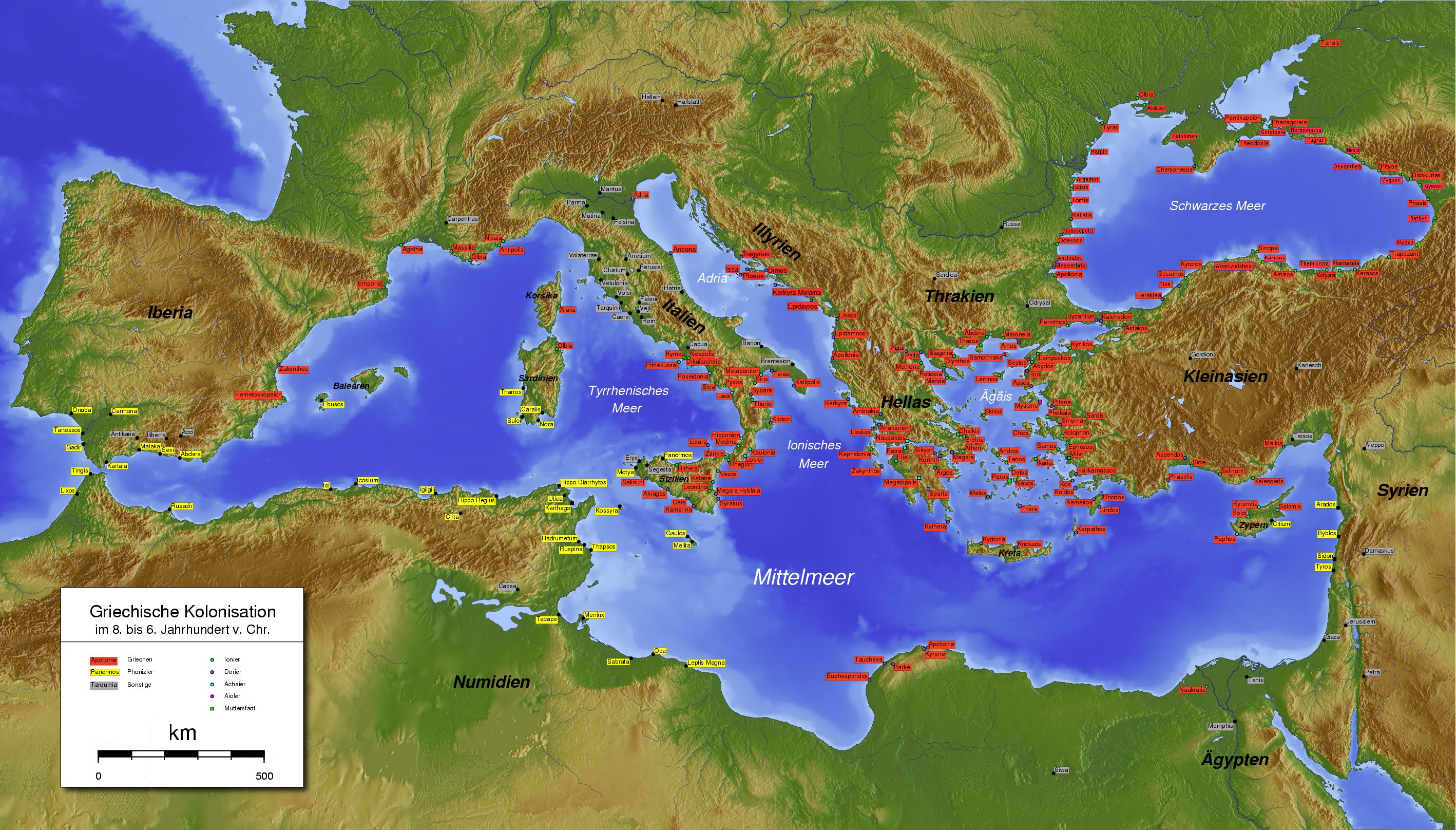
We're seeing this pattern where the coasts of many countries are cosmopolitan and well-integrated into the world economy, but the interiors are very conservative and nationalistic. Scotland & London vs. Wales & the rest of Britain. The U.S. West Coast & Northeast vs. the Farm Belt, Rust Belt, and Mountain states. Croatia & Slovenia vs. the rest of Yugoslavia. The Baltic Republics vs. the rest of the USSR. Even in a Red State like Texas, Houston (on the coast) has gone democratic.
What happens if economic ties between coastal regions of major trading partners become greater than cultural ties within nations?
Here in California, some of the proposals about sending all the immigrants back to where they came from seem absurd. The economy would cease to function. On one of my teams of 10 people at Google, we had immigrants from Iceland, England, Vietnam, China, Taiwan, and India, and I was the only native-born American citizen. California would sooner secede than deport all of its immigrants.
What if it actually came to that? If push came to shove and the interior decided to push a nativist, nationalist agenda, what if the coastal regions that benefit significantly from trade were to say "Okay, you guys can play with yourself, we're going to play with the rest of the world." Scotland has threatened to do exactly that, and is planning on holding another referendum on independence if Britain actually follows through on Brexit.
What sort of organizing principle would the world have then? I haven't seen anything historically like that - the closest would be the Roman Empire that rimmed the Mediterranean. For most of recorded history, the primary means of production has been land and so fights have been over land, but over the last 150 years or so (contemporaneous with the nation-state as a social organizing principle, BTW), the primary means of production shifted to capital, and now it's shifting to information. What kind of social organizing principle does that imply?