It's a damn shame we've let this crisis reach this scale. Along with healthcare, climate change, the debt, our inauguration, and so on, we've been essentially frozen for most of my life as politicians concern themselves more so with existential power struggle. The right wants to bring us back to the gilded age, the left makes headlines but is barely relevant, and the center is trying to squeeze bandaid solutions while just trying to fend off populism on both sides.
It shouldn't be controversial that we need an educated population and we need young people who aren't in debt up to their eyeballs. It's time for some hard choices, because the wheels are falling off.
Just let students default. The problem would be solved in a week. Poor investments should get poor returns. You should be able to default on any loan out of human dignity.
That doesn’t “solve the problem.” 92% of student debt is owed to the federal government. And the federal government originates almost all new student debt. The poor returns thus will accrue to the taxpayer. But unlike other investors, however, the government won’t stop making these “poor investments.” Big College has convinced everyone that access to student loans without consideration for credit risk is the solution to every ill from technological change to racial inequality.
Big College has also convinced everyone that access to education with out consideration of the marketability of that education is the solution to ever ill.
Good question. EG Why doesn’t everyone default on a loan? This is asking “how do loans work”.
Typically, a loan with interest is a gamble. You want to get your money back with a return. If you loan money you want to ensure you will get your money back by qualifying the applicant. There is a risk though because they might not pay it back, thus you increase the interest rate according to how qualified the loan is. Good investors really focus on getting a qualified applicant (one that can pay it back). Sometimes they don't get their money back and they are forced to write it off - it is apart of the loan business.
Basically, I am not trying to be insulting but I will end up explaining how a loan works - so I will stop there.
With college loans ALL basic loan concepts are wrong. You cannot default on a college loan by law. It follows you through marriage, bankruptcy, or even service in Afghanistan. The people which made these poor loans know they made poor loans backed by the US government. Thus, they have lobbyists pushing congress to ensure student loans are 'unforgivable'. SO! Investing in a student loan is a damn good deal. You have 0 chance of someone defaulting because it is illegal to default. The loan has zero risk. This is why tuition has exploded and why we have a crisis.
So, if you want to major in 18th century French Dance at Yale for 190k - there isn't an investor willing to stop you.
Tuition in your country has not expanded because of cheap loans.
People need jobs and you have a job shortage.
College is seen to be the best/only option for a middle class life - which is driving people to college.
College is not free in America. So people need to pay, but job pay is concentrated in certain fields, and any hitch in the process means that payment schedule gets extended.
To a certain extent, the problem is of course having loans.
But that would just make the main problem obvious - life is expensive and there’s now fewer ways to make a middle class life.
This is like the Indian job market- You are either a STEM / law/ CA / or bust.
How do you propose funding poor people's education then? Keep in mind education is not like a house where you generally pay 20% down and the bank gets to keep your house if you default which they can then resell to recoup some/most of their loan. Poor people have very little money to pay for education and all of the value goes towards their brain which a bank cannot just reposses which is why the government takes ownership of said loans and effectively repossesses your future earnings.
I propose that the government should have an anti NEET law (for 'working age' people), that is, someone should always be in Employment, Education or Training. It was either to complete the acronym, or the latter two are differentiated between theory education and trade-school education.
The education/training parts are pretty simple; a minimum 'living wage' (for ACTUAL living, not fake numbers) and housing near the education/training site will be provided in exchange for participating in the education/training. This payment also applies to child student dependents of legal guardians (usually parents) and is their "tax credit" replacement.
The employment part is a combination of publicly paid internships and/or work directly for the public good. In both cases the employee is a civil servant and any "works" they create become the public domain; unless the median pay rate for that job is paid to the government as a "temp" placement fee.
While I'm at it, part time workers receive pro-rated benefits funding and the option to buy from (any of) their employer's benefits pool(s). Partial work shouldn't be an excuse to deny benefits.
If benefits are fully socialized (E.G. single payer primary health cost coverage) then the above can still apply to over the top benefits.
Income-based repayment has to be codified through some kind of legislature, similar to no-default guarantees of the current regime.
Bad news for art history departments and copious law schools, but good news for nursing, aircraft maintenance, computer science, chemical engineering areas.
Wait, why is this a good question? I mean the OP said “it’s not that simple” which says he/she has a DEEPER understanding of loans that the previous post.
The answer to the OPs question is obvious to someone who understands loans (“the same things that keep everyone from defaulting on every loan”).
So, isn’t it actually a dumb question? Or rhetorical, and since its obvious and adds nothing, it seems best to just ignore it.
The original US student loan program gave loans which could be defaulted on just like any other loan. So, maybe a better question would be “why did the US congress change the rules just for student loans?”
If student loans can be defaulted, it doesn't matter what the investor thinks or what interest you get or if you're backed up by the government or not.
Even if you study [insert profitable degree], the rational action to do after graduating is to default, since students typically don't have much to lose.
And then lenders won't make the loans. That's exactly the point. Student loans were a bad idea in the first place. The ready availability of tuition money has lead to schools raising tuition FAR faster than inflation for the last 20-30 years. Most of that money isn't even going to education.
Except without those loans, poor people will have to grind out low paying jobs trying to save up enough money to go to college and get a higher paying job that requires a degree because they have no money to pay for it. Then, when they finally get through college, they will be years behind the kids of wealthy people and to make matters worse, every year you delay putting off a degree decreases the future value of said degree since you generally have a limited amount of working years and thus less years to earn money from said degree.
This argument makes sense if student loans were a novel concept, but we've seen the movie and know how the story ends.
When those same poor people are crushed with insurmountable amounts of undefaultable debt that follows them for life, they don't fondly think "well, at least I didn't have to grind out a low paying job back in the day".
Exactly. It is a poor investment option. So less investments are made, so less students attend, tuition plummets, community colleges spring back to life, people focus on degrees that offer pay, kids exit with no unforgivable debt, on and on.
It seems to lead to the sort of situation where the only kind of success a poor kid can hope for in life is the kind where they get into the kinds of degrees that offer pay, whereas privileged rich kids have the luxury of getting to go into "useless" humanities degrees and curate our culture and history and whatnot. Only enabling the leisurely well-to-do to enter the latter kind of career path is generally considered a bad thing.
It's not bad. But it doesn't matter how much tuition costs or what degrees offer pay or not. Everyone will study whatever they want, borrow at 1000% interest if necessary or 1% interest for "profitable" degrees, and then dump the dept as soon as they graduate.
Or am I missing something? Original question, what's stopping everyone from defaulting right after graduation?
What's to stop people defaulting on other unsecured loans, like credit cards? Some people do, but most people don't. Why? Because defaulting on a loan means a bad credit score and suddenly modern society becomes hard - no mortgage, no car loan, no more credit cards etc.
The difference is that other unsecure loans are only given out with some degree of expectation/evidence that the person will be able to repay them. A person with $10k/yr income does not get a $40k credit limit.
On the other hand, college loans are given out with zero consideration of that. You're just as eligible to take out tons of loans as a poor person majoring in underwater basket weaving as you are are getting a CS degree from Stanford. Even though those have very different probabilities of being able to repay them.
To default on a credit card you have to qualify for a credit card. Which generally requires some history with a bank that for youngsters involves a secured credit card to build credit - e.g. a credit card with $500 monthly limit paired with a $500 savings account that allows no withdrawals.
What happens when a lender decides you're unqualified for a student loan?
The main difference is a bank can repossess your house/car/possessions for normal loans thus making back some of the money they leant you (and you losing all of the stuff you bought with that debt). They cannot repossess any bit of the money spent on your education. This is why the federal government steps in because they legally can repossess some of your education by extracting it out of your future earnings.
You're describing the difference between unsecured and secured loans. The parent explicitly stated that they were talking about unsecured loans (where there's no tangible thing to repossess).
Oh wow, reading more into it, some credit cards are actually unsecured (but some aren't [0]). However, credit card companies can still sue you even if it is an unsecured loan and then repossess some of your stuff depending on the state [1].
Nothing would stop everyone from defaulting. There would just be less student loans to default on in the first place. If defaulting was an option, student loans would either not exists or nearly not exist. If student loans didn't exist, colleges would have to drop their cost or not be able to fill seats. If colleges drop their cost, students don't need loans. The cycle ends.
> If student loans didn't exist, colleges would have to drop their cost or not be able to fill seats.
For lots of colleges, I agree. However, lots of people who come from well to do families have their entire colleges paid for by their parents even today with high tuition costs and thus top colleges could still increase feas as rich parents can afford it whereas poor people would have to grind out for years in low paying jobs just to afford the chance to go to the rich schools. Without guaranteed loans, poor students would practically never have the opportunity to go to rich schools.
The entire premise is based on a questionable foundational assumption. The argument goes that you pay for an education but that can’t be taken back in bankruptcy proceedings or recovered when defaulted on. I’ll agree that what people pay for is an education, but what makes that education valuable in terms of employment is the paper that proves you have it. If the college won’t validate your attendance and degree what do you have except an unverifiable claim that makes you indistinguishable from candidates that don’t have a degree?
Yes. Loans should be harder to get. This will reduce school costs, reduce applicant numbers, and force students to really think if college is necessary.
Community colleges will take more of a lead, tuition will plummet, kids will enter the work force without a “unforgivable” loan.
> This will reduce school costs, reduce applicant numbers, and force students to really think if college is necessary.
In a society where academic qualification is more and more required, making loans harder to get will only drive the poorest people to even more desperate actions to ensure their kids get a chance in life.
Don't get me wrong, the debt situation should be resolved (e.g. by making ALL education free, like in Europe), but the core problem of society that "undereducated" people are left to compete for menial tasks must also be fixed.
> In a society where academic qualification is more and more required
Which is only the case because we handed out so many diplomas that it became a stigma not to have one... Which happened because we handed out student loans too easily. It's causing the problem more than it's solving it.
We’re so obsessed with stopping cheaters or lazy good-for-nothing’s that we’ll privatize at all costs. That’s including, oddly enough, publicly distributing the risk those private institutions take on. Why not just cut out the middle man and have the government pay for the higher education of the low and middle class directly?
The purpose of loans is that the private sector should be able to better evaluate college ROI than a government agency and offers/prices appropriately. Admittedly, government loan backing breaks this model.
(Also it doesn't help that the least risky students are out of the pool by either parents funding or scholarships)
The Iceland solution, yes. Different scale of course, but also not nearly as bad for the world or Iceland as the bankers and investors who lost their shirts would have had everyone believe.
My big beef is that Bush 2 and Congressional Republicans saw this coming, and in 2005 changed bankruptcy law severely curtailing, specifically students, from declaring bankruptcy.
"2005 bankruptcy reform bill making private student loans nondischargeable"
"Many debtors will have to work out repayment plans instead of having their obligations erased in bankruptcy court under the law"
It's a much higher bar for a student to successfully claim hardship than other debtors as a result.
> "as politicians concern themselves more so with existential power struggle"
I've been watching The Vietnam War documentary. Nothing angers me more than hearing Presidentsspeak about "re-election" in the same sentences as they speak about mass casualty campaigns as if it's one of the primary strategic considerations of a war that kills hundreds of thousands.
Politicians who have insulated themselves from the effects of the economy, the same way they insulate themselves from the effects of war, will be forever out of touch and therefore incapable of properly representing their people.
Was it the Abrams Doctrine, I think, that described the purpose of Total War being that decision makers think twice because its their children, their constituencies, their local, State, and Federal economies that pay the price of war? Maybe the same concept needs to exist for education, healthcare, and climate change. Not that Total War exists anymore...
Large numbers of nuclear weapons means total war between nuclear powers will escalate very quickly to nuclear armageddon. This (MAD) has prevented total war for generations, but has very costly tail risks that people growing up in the post-Cold War era are not likely to appreciate.
Chemical and biological really should not be grouped into the WMD label. They are not nearly as effective in the M and the D. See the saran attack on Tokyo. One small nuke would have been thousands of times more deadly. For a chemical attack to be as effective as a nuke one would need hundreds or thousands of bombs dropped on a single city. If you are going to do that then a firebombing raid can be much more effective for destruction. 300 B-29 caused more damage in a single night over Tokyo than either of the nuclear attacks later in the war (modern nukes are much bigger though).
Because nuclear - with exception of neutron bombs - destroys buildings, resources and materiel as well as people; chemical and biological attacks mostly don't.
>"Along with healthcare, climate change, the debt,"
There's an interesting parallel with the cost of healthcare. Increases in costs for both seem to outstrip inflation year over year. And there's lots of of people making lots of money in both sectors. And yet nobody in either sector seems to be able to say exactly why the costs are increasing at the untenable rates they are. The only thing Washington ever seems to do is kick the can down the road.
There’s a lot wrong with pricing of healthcare versus its costs, but that spending on it increases faster than inflation isn’t abnormal.
If you ask people what’s most important for them, health ranks very high, often is #1. So, once you’re rich enough to pay for food, clothing, and living, almost all extra money should go to health, rather than, say, dining at three star restaurants, wearing tailor-made clothing, or four day working weeks.
Also, automation makes things that can be automated cheaper, and, hence, things that can’t (or aren’t yet) relatively more expensive. Education, day care centers and healthcare fall in the latter category.
>"There’s a lot wrong with pricing of healthcare versus its costs, but that spending on it increases faster than inflation isn’t abnormal."
Well yes an increase in consumer prices for health care results in an increase in health care spending as a percentage of GDP. But that's not what I referring to. I was referring to the fact that the price for basic services and components far outstrip the rate of inflation inflation. Here's one example - generic drugs. A generic drug, barring a supply chain disruption should at most keep with pace with inflation. Using an ancient antibiotic such as doxycycline:
"The price that hospitals and pharmacies pay for a bottle of 500 tablets of doxycycline, a decades-old antibiotic, rose to $1,849 in April, from $20 in October 2013"[1].
There are many other such example regarding run of the mill generic drugs.
Here's another example - a visit to see a primary care physician for either a either a yearly checkup or for because one has caught the flu. During an office visit a patience sees a doctor for maybe 5 to 10 minutes and nurse practitioner for maybe another 10 minutes. Maybe the doctor writes a prescription, updates the patients charts or might additionally refer them to a specialist. None of these activities involves cutting edge technology and the routines of such visits haven't fundamentally changed in years. Yet the price of these office visits has risen 14% in recent year.[2]
Lastly the premiums for the same basic health plane HMO, PPO etc have also continued far outstripped despite the fact that copays and deductibles - the out of pocket portion for consumers have risen not decreased. So it's not even though Americans are paying more for increased coverage or paying more for increased quality they are paying more for less.
The parallels in both cases are that service providers have no incentive to hold costs down, because the costs are not directly borne by the consumer or are delayed.
Providers charge whatever they want, because they know you really don't have a choice and that insurance is picking up the bill, and if insurance won't pay you can go after the patient. Patients don't have any way to price shop (it's usually impossible to know the cost of a procedure or service before you get it, nor what will really be covered by insurance) and are insulated from most of the costs by their insurance.
In education, a huge chunk of the tab is covered by loans, which makes students price-insensitive, and the institution has no real incentive to hold costs down, in fact they actually use the fancy rec center and stadium to attract students. They can also run up the gen-ed courseload to artificially increase the amount of time it takes to graduate. Students have no real flexibility here either, because it's not like you can take a class at another university because it's too much, or choose to pass on a gen-ed.
The sad truth about healthcare is there's just too many middlemen all taking their cut and it all adds up. Hospitals, drug companies, insurance companies, doctors all need to make their cut, and by the time the service is delivered it's extremely expensive. Most other countries impose a lot more price controls, reduce the number of middlemen, and provide doctors with free education to increase the supply and remove the need to repay their own steep student loans (iirc you are looking at about $400k these days). Fixing the problem involves taking on a number of very powerful lobbying groups at the same time and is going to piss off a lot of people whose gravy-train would come to an end.
In schools, the problem largely comes down to reducing the amount of administrators and reducing the spend on non-essential facilities (rec center, stadium, etc). The actual teachers themselves are usually overworked and underpaid, the money is disappearing at an institution/administration level.
Example that comes to mind: my alma mater tore down a building that contained english/math classrooms and lecture halls, and replaced it the year I graduated. The basic requirements of an english/math classroom or a large lecture hall have not fundamentally changed in the last 100 years, they may have added projector screens but it's still fundamentally a room that people sit in and receive instruction, and there was no real need to replace it besides "we could".
The university did put forward that it would save them $300k per year in energy costs, which means that at the cost of $69 million it'll only take them 210 years to make their money back.
Hm...housing, healthcare, college, pharma are all heavily regulated and are subsidized by the government in one way or another. All are outpacing inflation by a very significant margin, for dubious gains in utility.
Making unsupported assertions can’t make them come true. College should controversial. College, as it exists today, entails large expense and opportunity cost. We became a very advanced society sending only a small percentage of people to college. There is little reason to think tripling the proportion of people who go to college will improve the fundamentals of the economy.
Every piece of historic evidence tends to prove that higher education for an ever growing part of the population seem to correlate with better living standards.
In societies with large surpluses, young people can afford to waste years of their life on unproductive endeavours. That’s correlation not causation. It’s like lifestyle diseases. Nobody would encourage you to be sedentary, even though that’s correlated with higher living standards too.
That doesn't necessarily have any bearing on cause and effect. It seems trivially obvious that, as living standards improve and people have higher levels of disposable income, we would invest it in educating our children, possibly at extremely poor rates of return.
Every piece of historic evidence tends to prove that mobile phone usage for an ever growing part of the population seems to correlate with better living standards.
>>>It shouldn't be controversial that we need an educated population
Its not, what should be controversial is the manner in which we are educating children. University based schooling is not the only way to obtain education, nor IMO is it is the best
Personal we should be bringing back more vocational studies, more apprenticeships, and utilizing the ever increasing technology with things likes MOOC to bring the costs of education way down.
I also not believe it should take 16+ years of a persons life to educate them.
There are massive amounts of waste, inefficiencies, tradition in education that need to be eliminated.
All of these are made worse not better by the modern belief that every single student should get a degree, and that is the right of every student to have someone else pay for that degree.
We need to fix the fundamental issues in education first, most people however just want to throw more tax payer money at the problem and hope that by making the people in the work force poorer everything will get better.
None; absolutely none. Term limits are a terrible idea because to gain experience with politics and credibility within the establishment requires years. Institute term limits lobbyists gain all the power as they are the only ones who have the clout to get legislation passed. You'd need to institute campaign finance reform and ban lobbyists before you could start terms limits.
But these are just both band aids on America's problems. We are infested with a religion that denies science and education, and we have a political party controlled by 3 families that feel entitled to as much as they can have at the expense of the entire nation. We would need to limit the power of money in politics and reform public education to raise a generation that can see the right for what it is.
Term limits are necessary, there should be no such thing as a "career politician". A politician should be required to have actual skills, and not just a nice smile.
Experience with politics is meaningless, there should be NO establishment. It is always the new guy who reveals the truth to the people, which is a good thing. Experience only results in being able to lie to the public, to further the establishment. Otherwise it becomes us vs them.
People will do anything to maintain power. It should be one year and out, nobody should be able to get rich by becoming a politician.
A good first step would be to get rid of Diane Feinstein.
In my opinion Dianne Feinstein is terrible compared to alternative politicians CA might elect to the job, but if you live in CA or one of the other states with state-level term limits and you think they are a good idea, you haven’t been paying attention. Pretty much everyone involved in state politics is unhappy with the results of the term limits imposed for the past 10 years (in CA they were enacted in 1990, but legislators didn’t start getting term limited out for a while).
They don’t prevent people from becoming a “career politicians”, they just make it so that the career is less predictable or stable: new careerists are constantly being churned up from local politics and put into important committee chair jobs (etc.) where they have no relevant competence or experience, the top legislative leaders only last for a couple years, and the most experienced legislators get dumped out the top, often to become paid lobbyists. This encourages short-term legislation including bills mashed together that don’t make sense. Civility/comity is undermined, because legislators don’t need to keep working together years into the future.
To compensate legislators have to lean a lot more on their staff (who are the only people around with some clue about the context). The executive branch gains power at the expense of the legislature, because (a) executive officials are often more experience, (b) the executive can outlast an uncooperative legislative leadership by just waiting a couple years, (c) term-limited legislators have a more precarious career and might be looking for an appointment to a next job.
This is such a strange sentiment to me. You would never hire an amateur Carpenter to work on your house. You would never hire an amateur DBA to build your company's key data architecture. But you want the people who run the country to be amateurs?
The elected officials provide direction which the electorate wants the government to go in, basis which they won the vote, The civil service only execute the directions
The role of politicians is not based on expertise, it's to have views that are representative of their constituency.
Our system was originally designed specifically to avoid professional politicians. The initial articles of confederation included term limits. It was only removed after substantial debate. An anonymous essay penned in response to this decision suggested that people who were elected for long periods of time would become "inattentive to the public good, callous, selfish, and the fountain of corruption" continuing with,"Even good men in office, in time, imperceptibly lose sight of the people, and gradually fall into measures prejudicial to them." It's a shame they did not sign their name to the writing as I think we could label this view as fundamentally and absolutely correct. It's perhaps ironic that term limits were likely stripped from the articles not in good faith, but by those earliest 'special interests' who longed be the first professional politicians. The same interests that perhaps drove those stating truth-hoods to do so under the guise of anonymity.
And that problem is endemic to the whole system of professional politicking. Rather than focusing on 'the mission' politicians end up focusing on themselves and getting elected again. In an ideal democracy that would mean they have to work to appease the people. In reality, most of the electorate is grossly uninformed or misinformed. Generally all that matters when getting elected is money. And where does money come from? Not from the masses, it comes from special interests and top dollar donors. An issue only compounded, though not inherently caused, by the variety of ways to avoid any donation limitations such as messaging through 'independent' politician action committees.
I consider it foolhardy. Can you imagine our most important foreign and domestic policy being set by people who center their lives both moral and emotional around 'Keeping up with the Kardashians'? Or getting a bunch of antivaxxers in there?
There are plenty of decent Americans but we also have too many that are juvenile, superficial, ignorant and aggressively incurious.
What's the worst thing that can happen? We just finished hailing a borderline criminal/traitor Senator whose entire career seemed to be predicated on endless war with the entire world. I'm pretty sure the average antivax Kardashian fan is less evil than that. Maybe we'd even manage to withdraw from Afghanistan after 18 years.
Being a good politician I think has two meanings which kind of drives this divide in opinion:
1) being good at getting elected
2) being good at getting things done
It really does take experience, connections, networks, and skill to accomplish things in legislatures. Same with getting elected.
The problem is in order to become #2, you have to become #1.
Unless we as voters become far more informed and drastically change the way we evaluate candidates I don't think we'll get #2 skillsets from politicians who also don't have the qualities many term limit advocates despise.
> Experience only results in being able to lie to the public, to further the establishment.
This is not the case in other fields such as Engineering, Medicine, Education, or Law. More experienced engineers, doctors, lawyers, and educators tend to be better at their craft. Failing to keep up with new methodology/technology is also a problem.
It's almost like the quality of the person is more important than their age or seniority.
Now, I don't have any first-hand experience with legislatures. However, based on analogies in fields I'm more familiar with, I am a bit suspicious of the claim that there aren't any advantages to seniority and experience.
Also, consider this concrete question: would term limits fix the student debt problem? I don't see any arguments in this thread that it would.
I think the biggest counter argument to why we need experienced people in government is that the tide has turned where old people have their interests represented but young people do not.
Student loans fuel retirement accounts for old people.
Lack of upward mobility helps old rich people.
Tax cuts for the rich by and large help old people.
We have a nation governed by geezers who only care about geezers.
I think this understates the real problem. As people become professional politicians, their interest becomes more and more about what benefits themselves. It's not about geezers caring about geezers -- it's about geezers who only care about themselves.
You can consider this in a really simple, but also regular and real, scenario. You're faced by a decision. One choice you think is bad for the country but is strongly supported by various special interest groups who will likely run major positive advertising and other positive 'propaganda' for you, if you go that route. The other decision is good for the nation but vehemently opposed by these same interests. You can expect negative advertising and other consequences should you go this route. It's not hard to see which decision a "professional" politician is going to pick, regardless of whether they're 20 or 90 years old.
Ideally this would all be a nonstarter since you stay in office by getting elected. So do what's good and you get elected again, right? But this goes out the window when people are so easily swayed by the media and misinformation. A very large chunk of people don't measure the results of the nation independently, just based on what they hear in the media or by easily exploited emotional responses.
>>sufficient staff to tackle the size and complexity of modern governance.
How about instead of "professional legislators " you advocate the reduction of government both in size and complexity. that seems to be a better option IMO
>Term limits are necessary, there should be no such thing as a "career politician". A politician should be required to have actual skills, and not just a nice smile.
Why are they necessary? How is claiming they are necessary not inherently impugning the concept of self-rule, how is it not inherently illiberal and arbitrary? What kind of base ideology are you subscribing to? Why shouldn't there be a career politician? What are examples of "actual skills" that you think should apply for proper legislating or executing or judging laws?
As someone who did study political science and law, I find term limits in law to be an abomination. A cheat. A long term destroyer of trust and institutional knowledge. You want actual skills, but you refuse to grant a person with such actual skills the position of a professional, with a career. It's an illogical position.
I doubt there is some Dunning-Kruger effect really going on with STEM folks and politics, although the blinders on approach I consistently see makes it superficially appear like that might be possible. Instead I think it's discomfort with the fact there are multiple ideologies, and you must choose, and it is that which will guide your future decision making on policy. Without the choise, you're vaporware. And without adversarialism, you're milquetoast. In both politics and law, the adversarial system is mandatory. I get way more suspicious when two ideological factions agree with each other from the outset on something than when they're adversarial and compelled to compromise. There is no compromise and there is no innovation without adversarialism.
I miss Feynman though. There was a guy with a very good balance between comfort not knowing, and discomfort not knowing. Lack of hubris, and yet no lack of ambition to learn.
Might want to look at how that has worked at the state level. The state of Michigan has this and it has only exacerbated issues held in check because people had incentives to help people and get re-elected. Michigan now squarely gets its policies from lobbyists and special interest groups because at the end of their terms that is who will hire them.
Term limits do exist and are called elections. Every single election is a chance to vote someone out of office who hasn't done a good job. The thing that has essentially broken elections as term limits is partisan gerrymandering.
I suspect that very few would be solved - new congresspeople would likely depend more on senior staff to understand complex issues. It’s possible we’d end up with a series of unelected experts who direct policy for relatively inexperienced congress members.
The problem really isn't term limits. It's the cost of elections.
If we set 2 term limits, it would just mean that the corporate elite would just buy a new politician every 2 terms rather than buying a politician for 6 or more terms.
If you wanted to run for a political office. You'd need money. So who has money? And now you are beholden to the wealthy.
It's amazing when you think about it. We can no longer ever have a populist or independent president or congressman really. Because of the money needed to run for office.
How productive would you be at your current job if you were told you'll be forced out in 6 months, no matter how happy your stakeholders are with your work?
Not that many (from experience on parliamentary based bodies) it probably takes a couple of years or one full election cycle to know how the system works so you will continually have a poorly trained set of senators/congressmen.
Having a max age limit make more sense or remove the seniority rules used to appoint key committee chairs.
They key thing would be strict maximum $ limits for elections and give candidates free time on the tv networks.
If you kneecap politicians, which are somewhat more accountable to us voters, you empower administrators and lobbyists.
If you want more accountability, empower politicians, so they aren't so beholden to monied interests. Public financing of campaigns, for starters. Increase their staffing, so they can manage the work load. Etc.
Before getting there, you should first ensure you have a strong supply of educated and competent replacements. To maximize this, you should have free public education for all. Secondly, you’d also want to level the field wrt to visibility: money, lobbying, campaign contributions. Just ban it all.
I think it would solve a lot of problems.
My main expectation, is the dramatic reduction of influence by lobbyists. Which in turn, should produce a model where lobbyist would work on influencing the actual voters.
So they may not spend less money, but it will go on influencing the electorate itself. The language, methods and areas of influence will change as well -- and that's what I would like.
I realize, that at least in some analysis, this did not happen in Michigan.
(just reduction of lobbyist spending was 13%, but politicians with less experience consulted with them more -- See page 19 of [1] ).
However, I think the number of years in service, plus preliminary background requirements for staff members, plus other adjustments, still need to be made for a proper term-limit system.
Fundamentally, I believe, there are no small (defined as less than 1000), humans that should be permanently place in the position of distributing tax dollars, or military control.
These two things will produce corruption no matter how 'intellectually clean' a person is, entering the position.
US, UK and other countries claiming to be the 'moral compasses' for the world to follow, need to figure out how to switch from the class of politicians to the 'statesman' .
Whereas, I see a politician as somebody who makes is their job/career, vs statesman -- who view their work as a poorly (or insignificantly) compensated service for 8-12 years.
> I often wonder how many problems could have been avoided if we required 2/3 majority.
California used, until recently, to have such a supermajority requirement for the budget—not all legislation, just the one piece of legislation that is an annual must-pass.
It was the primary source of perennial budget crisis, and, it let a unified minority party that held it's unity (usually Republicans, because they usually were in the minority and almost always more unified in the state than Democrats) to dictate terms so long as they were more willing than the majority to hold the state hostage.
Plus, conversely, it also makes the majority party less accountable, because they can always blame the intransigence of the minority and the disastrous consequences of not reaching some deal for the actual contents of whatever deal is reached. A supermajority doesn't mean everyone owns the results, it means no one does.
Consensus would be nice in a less polarized, partisan context.
The primary driver for our partisanship is our winner-takes-all form of elections. Switching to approval voting for executive (one position) races and proportional representation of assemblies (house, councils) would dramatically reduce partisanship. Which would maybe then enable more consensus driven governance.
That is the case for some legislation, such as when is necessary to override a presidential veto. Requiring it for all legislation would pretty much lead to a standstill, or worse - peddling to the special interests of a small coalition (this is my opinion).
Yeah, maybe. I think it would be super corrosive to party politics. Cooperation is mandatory. It's just not possible to pass anything without reaching across the aisle.
I'd assert that things that need to change would have broad support, and that change would happen. Stuff without broad support, well, maybe that's not as important as we think it is.
i mean, sure. the American reinvestment act wouldn't have passed - and a bunch of the other stimulus packages. Of course, glass steagall wouldn't have been repealed in the first place.
I think if you want anything to be resistant to byzantine failure, it's making laws. shrug. They didn't ask me.
Probably not many -- Congress benefits immensely from the massive institutional knowledge of its older members, and corruption probably doesn't correlate all that closely with age anyways (my recollection is that the congresspeople caught in recent scandals have all been relatively young).
In setting a fixed term limit, we would risk weakening the check that the legislative represents against the executive.
We did this in Michigan. It doesn’t work. It’s an attractive platform item, but what ends up happening is lots of turnover means it’s easier for lobbyists to sway candidates. You also just lose institutional knowledge. And guess what? We have term limits and an entirely new governor still poisoned an entire town full of kids.
The electorate will do what it wants. If people keep electing terrible reps, term limits don’t stop that, it just stops that one particular bad rep and replaces them with another. Similarly, we have some awesome Michigan House members who would be fantastic again, but they’re term-limited and have to run for something else to continue to serve. It’s sad.
I think there's a strong argument that many representatives don't necessarily start awful, but are driven to awfulness in the pursuit of keeping themselves in office. Like you allude to, most voters are grossly misinformed or vote irrationally. And this irrationality and misinformation is very effectively exploited by special interests and monied groups. Consequently the desires of these special interests and monied groups start to become more important than the interests of society when a politician is primarily concerned about staying in office.
I'm not sure any problems would be fixed. The way things are now, politicians in the house/senate have to always worry about re-election, and at least create visibility of catering to their electoral base in the run-up to that. If their second term did not have the possibility of re-election, they'd just do what the lobbyists want them to 100% of the time (as opposed to 90%) in exchange for a job after their second term ends.
> I often wonder how many problems would be fixed by adding a 2 term limit to the House and Senate.
The only “problem” solved would be that of occasionally having people that are even nominally accountable to the electorate who have the experience and skills in the system and the personal powerbase to standup to the permanent class of lobbyists and other unaccountable, interested experts.
So people who do everything right and delayed purchasing a house/etc to pay student loans just get screwed? If I can make my loan payments, they can too.
Student loan forgiveness is a solution that only helps a narrow slice of those affected by the student loan problem. It's not something that just affects those making payments, it affects literally everyone who ever had a loan.
Jubilees are only going to decrease repayment rates (why would I pay if it's going to be forgiven next year) and drive up costs further (the government is paying, so why not renovate the athletic center?).
The first step needs to be getting college costs under control, I'm not sure there needs to be another step. If you took out $100k in loans to pursue a degree in the arts, well, that's your problem.
Maybe lending should be risk based like other types of lending.
250k for med school, sure.
100k for undergrad in women's studies - no government guarantees for you
I'm sure there's enough data already on the RoI of various programs. Seems like there should be a floor / bar based on the RoI for programs to qualify for government backed loans to students.
When the gov is in charge of things, there are too many vested personal interests that would argue certain unprofitable programs need more funding anyway etc... The only way these things can be assessed with certainty is when a private company is giving out the loans and they have real skin in the game.
Funny that you recognize the externalities of loan forgiveness but not defaults.
It isn’t just the defaulter’s problem when they default. That loan was securitized and exists in our retirement accounts. That default increase the cost of credit in that market, so loans cost more for the rest of us.
Anyway, not arguing we should erase all student debt. It, we have to acknowledge the problem is bigger than a few people’s bad financial choices.
I must say, as someone who made quite a few sacrifices to pay off my school debt, I'll be pretty miffed if less responsible people from my same generation get a break on their loans.
The attitude of 'I suffered so others should have to' is really damaging. I get why that's the instinctive response, but it's also going to lead to a worse society.
By all means argue for a solution that also helps people who made sacrifice in the past, but people who didn't or couldn't being left to suffer is not a solution.
To be clear - I get you are not saying you don't want to solve this because of that, but unfortunately that sentiment often results in policy actually being set like that.
We should always be asking 'how can we pull everyone up' not 'are they going through what I did'. Even if it ends up not benefiting you directly, we all benefit from a better society.
If we could get past the initial point and start implementing stuff like that, it'd give people more faith that it doesn't just invalidate their effort.
3 questions
1/ Are there solutions on the table where the cure isn't worse than the disease? That money has been spent, it came from somewhere. Can it just be vanquished without repercussions?
2/ Objectively, what is the likelihood that continuing the status quo crashes the system?
3/ What are the long term consequences from potential solutions? E.g., if current debts are forgiven/cancelled, would lenders refuse to lend for colleges? Would well off people with significant debt take advantage of the system we're protecting, leading to less trust in it, which could cause it's own collapse movement?
The defensible logic is that we don't really know that current student debt will "crash the system", and we definitely don't know what the 2nd and 3rd order consequences would be if any of the solutions were implemented.
1. The money is in the form of a loan, which by virtue of our fractional reserve system, is created upon signing a promissory note. This is the basic form of money creation in the United States. Repaying the loan extinguishes the principal balance and "destroys" that money. However, interest owed remains and the debtor must "seek" out that money in the economy (which, consequently for many people, is in the form of another debt from some other person or company).
2. An economy where a major portion of debtors are unable to discharge their loans (due to the laws presuming student loans as ineligible for discharge), debtors will fall into a cycle of inability to pay debt, inability to qualify for a home, apartment or a vehicle, and potential inability to qualify for a job (credit check) and become increasingly dependent on government programs to stay afloat. This can put a strain on government resources beyond what a simple bankruptcy would do, which is the forced cancellation (discharge) of a debt. Basically, the cost of a bankruptcy (to the economy) is smaller than the cost of an otherwise capable judgment-debtor on welfare/Medicade/SNAP/others.
3. Private student loans, which are effectively no different than unsecured debt, should be presumed dischargeable in bankruptcy. Federal student loans are actually structured quite nicely, except many debtors do not understand the complexities of the multiple forms of loans they carry (perkins, plus, university-managed, subsidized, unsubsidized, private) and rules for one loan type do not necessarily apply to the other.
Colleges would actually benefit from student loan reform, since they could better educate students and parents on standardized loan packages, rather than the large array of loan options available now.
Much of this debt was never spent it was created from thin air due to interest. Saying someone does not get profit is very different from saying they don’t get principal.
But more directly these people and institutions made a bet, the fact not all bets win is a basic fact of life.
PS: I have negligible student debt at sub inflation interest rates remaining. But, for people with 8+% interest rate loans that interest should very much should be on the table at a minimum.
If the system isn't beyond fixing yet ... no worries, have you seen the rate at which it's growing ?
So of course it's going to crash.
It's like watching a feedback loop in your motor controller, and seeing the numbers start going up, knowing there's too much force in the system to abort it now. It could be an hour before the loud bang comes, but nothing can stop it. If you interrupt it right now, you do less damage right now (still enough to destroy the system of course), but if you let it go, it remains undamaged until it overloads. And you know, you might get really lucky and have the axle melt or something, which avoids the damage. The odds, to put it mildly, don't favor that outcome though.
Technically the better action is to interrupt it, but I've hardly ever seen anyone do that.
Maybe you can go in to specifics? When I graduated in 2005, the cost of college was just heating up. It is now in a full meltdown and it would be ridiculous for me to compare my situation in 2005 to someone entering college in 2018. Cost is way up from then to now.
I've heard this a lot but don't see much in terms of numbers about this. For private universities, the sticker price is high, but the effective tuition that students are paying has actually stayed the same or decreased [e.g. http://time.com/money/4777909/private-college-scholarships-2...]
For public universities, they were substantially cheaper than private universities due to state subsidies. The tuition has almost doubled over the past 15 years for the few places I checked, but that's only a bit over inflation. Public state universities are still a great deal.
So I think the stats are using a lot of for-profit colleges which skew the numbers up. They are expensive and don't offer a lot. Anyways, I would love to see some actual data and the breakdown of what schools are increasing tuition.
It's about whether rules matter. If people think the rules will be enforced, then we can all make plans based on the rules. If they don't, then all courses of action are on the table. Whatever gets the job done. That's back to rule of the strong.
See: how we treat big banks.
(Not to say we shouldn't have a debt jubilee, but that's what we risk)
My argument would be: we should have worked harder to make the rules good in the first place. Yes, I agree that damage to the credibility of the system is bad, but it can easily be the lesser of two evils. We have release valves like bankruptcy for a reason - we don't want to get stuck in negative feedback loops.
See the current trend towards nullifying possession charges for Marijuana. Yes, it sucks for people who got punished under the old rules, and yes, it's not good to say "laws might change and you might 'get away with it'", but sometimes that is better than letting a lot of people suffer.
We'd be better off burning the money than our current system. The attitude that "college is an unalloyed good" is far more damaging than some people thinking "hey you should pay back loans you take out."
Despite getting accepted to many top-tier universities (Berkeley, Yale, Rice), I chose to go to an in-state school with a generous scholarship so I could come out of school with very little loans. I sacrificed going to a really great school like Berkeley (and living in California!) so I would save money and not end up in so much debt.
While I fully think that debt is a nondesirable thing to have, and that we do not educate people about debt enough, I don't know if loan forgiveness is the answer. I have personally paid off a close friend's student loans and old medical bills, and guess what? Even after all that she was just as financially irresponsible as before.
As a related situation, I know a few people who come to me asking me for help with rent or medical bills. When I ask them, why don't you have any money, they say it's because their hours were cut, or something else. But when I step back and look at the whole picture, I realize that because they went on an expensive vacation, and went to the bars every other night, and spent lots of money on clothes, that's the real reason they didn't have money. So when they asked me to help pay their rent, they were really asking me to help finance their vacation.
In a similar way, if we (collectively, the taxpayers) pay for the students who can't afford the student loans, we're actually subsidizing whatever the people DID spend their money on, or their choice to go to more expensive schools when less expensive schools are available, perhaps at the cost of those who, like me, chose to save money by going to less expensive schools.
Thanks, nice to have a single person agree with me. That said, I also agree that my personal situation (be it through luck or responsible behavior) now makes it possible for me to be generous to others, and I'm certainly happy to pay extra in taxes, to an extent.
I guess what bothers me is just this sense of entitlement of people that originated from my same social stratum who now argue "the game was rigged" when I never saw evidence of this. (This annoyance of mine BTW does not transfer to disadvantaged folks who did not come from a middle class background... I agree 100% they got a harder lot in life than many of us and are often right to complain.)
Id say the game is rigged from the get go. Between age 18-21 we say that people are not responsible enough to even buy alcohol, but apparently they are responsible enough to sign up for loans that take decades if ever to pay off. Then on top of it weve made the loans impossible to discharge under any circumstances _and_ we have an entire system that tells children their entire life that you go to college or you will have a terrible life. How is any of this not rigging the system?
It isn't that the game is rigged. It is that it assumes rational actors are making wise decisions about their future. Someone who carefully selects a degree that they know will let them pay back their loans is who the system is designed for. There are a lot of people who aren't behaving that way. The numbers are high enough that this isn't just a matter of some people having some hardship. This a large number of people making very poor decisions.
When it comes to society level discussion it seems that it is often assumed that people make irrational decisions. I am not sure that is true. For a lot of people it makes sense to take a chance on something unknown rather than to face likely failure. That is presumably also why they think the game is rigged. Because if you ask the average person who didn't go to college they probably aren't doing particularly well either.
If you look at the debt people are willing to acquire in pursuit of something like a degree in theater, it is hard to say it is rational behavior. They are taking a chance on something unknown rather than facing likely success with a career path that is in demand.
Pretty sure they already have that, when I was in the reserves they would have paid down my student loans if I had ever bothered to fill out the paperwork.
And a lot of (all?) places have programs where they'll forgive student loans if one stays a teacher for 10 years -- which, as an aside, always boggled my mind that you have to go into major debt to get a public teaching job that pays peanuts but people happily do it.
I did the same, and found out that oddly enough my brother who went to a U.C. ended up getting a bonus state grant that slashed his loan burden lower than mine. In effect, he was entitled to a college with a higher cost than mine. We only found this out by comparing the paperwork into college; my brother didn't pick the U.C. knowing this beforehand.
I feel it just sends the wrong message to society if we build these gotchas and loopholes left and right like this to let people make financially bad decisions.
I think this mentality is misguided. Many walk into student loans without a full understanding of the debt they are taking on. The mantra of “you must go to college, price be damned” leads many to bite more than they can chew.
Should we blame those that fall prey to predatory loan practices? Especially at 18, most are not fully equipped to evaluate the debt they are signing up for and its implications.
It seems a better approach would be to look at the root of the problem, which is that easy credit for education has incentivized bad apples to exploit vulnerable people. Just because you were smart enough to not be exploited does not mean others should suffer.
I'm reminded of my old boss, a native Italian who had spent 7 years getting American citizenship. He was vehemently anti-immigrant and thought anything that helped "illegal immigrants" was a bad thing.
Your opinion and his are, to me, examples of one of the worst forms of greed: greed with a reasonable excuse. It is rational and I cannot really fault you for feeling that way, but this form of greed makes fixing the problem much harder to solve.
No. You're turning people into serfs for the better part of their adult life for a decision they made as a teenager. That's not justice, that's cruelty.
If I bought the Civic at least I could discharge the loan through bankruptcy. You're not allowed to do that with education loans. They're the only kind of debt I'm aware of where this is the case and it's unclear to me why we should treat our children any differently than we expect to be treated with regards to debt.
I think there are a lot of issues with the system, not least of which is that it's possible to accrue that much debt without any credit check. But let's not pretend that the system isn't rigged to saddle people with debt.
Even with 100k in debt you're talking 7k interest. Get a job in sewer maintenance instead of museum curation and you'll have no problem paying that off.
The banks manipulate data and interest rates in violation of the law. Once the agreement has been broken by one side, how is it justice to make sure the other side follows the agreement to the letter?
Was your old boss vehemently anti-immigrant or vehemently anti-illegal immigrant? I'm reminded of my wife, who legally immigrated to the states after getting a Ph.D. and working very hard. She finds illegal immigration quite aggravating and has sardonically suggested bringing over her parents for the social benefits because the rule-breakers seem to get rewarded with public benefits.
Thousands of people are filing for bankruptcy every day which – by implication – are getting a break on loans that you would otherwise pay.
The issue is where debtors, who cannot presumably discharge their defaulted student loans in bankruptcy, begin to lose their savings, investments, and ability to stave off financial dependency on the government and become financially dependent on government programs now and into their retirement.
By saying that since you were able to pay your loans in 2018 and therefore most other people should be able to pay is like looking at any bad investment. If you allow people to remain indentured and fall into perpetual dependency on government programs (welfare, SNAP, Medicaid) due to their default or judgment-debtor status, the overall cost of that is projected to be much higher than if they could have been eligible for a partial or full discharge of the debt in 2018.
A bankruptcy prevents a bank from collecting interest. A judgment-debtor on financial assistance from the government is taking far more tax dollars from you than the bank is getting from the tax write-off on the charged-off debt.
Obviously, banks want their money, so they lobby for bankruptcy provisions to keep people indebted. They don't particularly care if the side-effect is the government demanding higher taxes from you to pay for government welfare programs.
Clearly you have thought deeply on this issue. I can agree insofar that I think that I think it would be reasonable for student loans to be dischargable by bankruptcy IF we can have changes to the bankruptcy law to make it carry stronger deterrents. In particular, it is not rational to have limits on how long a bankruptcy stays on your record, if it includes student debt (a college degree cannot be repossessed by a bank.)
The fact is that someone that made poor life decisions is at high risk of doing so again, and their credit rating should permanently reflect this. Otherwise, the loan & bankruptcy system rewards people who go into bankruptcy at the cost of other, more responsible people who are trying to get loans at a reasonable interest rate.
Without this, abuse of the bankruptcy system to "wipe away" student loans would be rampant, and we'd just be kicking the can down the road in a new way again.
If someone majored in a degree that didn’t have great career prospects, should they suffer for that?
Is college only for job training, or is it for something a little different?
I’m not criticizing your viewpoint; as another commenter said, I understand some of the reasons you may hold this view. However, I do not feel that people who majored in, say, English - against their own likely knowledge that it would be difficult to find a job applying the skills they learned directly in search of a job - should suffer because of the debt they incurred. But I also think they should continue to get training in an area that is needed, or work at something for which they are already qualified.
> However, I do not feel that people who majored in, say, English ... should suffer because of the debt they incurred.
Why shouldn't they face the responsibility for the decisions they made?
That's the crux of the argument, really. Either people are forced to be responsible for their actions or they aren't...doubly so with student loans since they never really go away.
And I'm saying this as someone who got a "worthless" degree (back in the '90s when college was reasonably cheap) and has been in default on one of my loans for well over a decade but has never once asked anyone else to "suffer" over my decision to party, err...pursue a degree without a clear career track. Sure, it would be really, really nice if the good taxpayers subsidized my slacker lifestyle by forgiving my loan but I'm not holding my breath.
It isn't just a matter of irresponsible people getting something for free that you had to work hard for. You'll basically be paying for their loans in taxes.
Some students experience circumstances that can place them into a bind, only to run into the presumed non-dischargeable nature of student loans. Third year students that are unable to qualify for additional loans to meet expected family contribution and then withdraw due to lack of funds, medical students that are unable to achieve proficiency but are sacked with hundreds of thousands of dollars in debt. The student loan corporations know this is an easy avenue to maintain a growing list of young people in indentured servitude.
Granted, the government has tightened the rules around private student loans and encouraged students to pursue federal-only loans (which offer a ton of benefits compared to private loans), but if you look at the loan practices in 2000-2008, private lenders were effectively fly-by-night and doing everything they could (including questionable advertising) to encourage students to apply for private loans.
I’m of a similar mind having worked hard to pay my way through undergrad over 6 years.
I would be OK with slashing interest rates. A loan which has such special status that it can’t even be cleared through bankruptcy should have a remarkably low interest rate.
Something like, every month you make your payment the interest is credited back to the principal. Or perhaps require 6 months of consecutive on-time payments after which interest goes to zero or 1% as long as you keep making regular payments.
The money to pay off the student loans will come from somewhere. Somewhere includes me. Should I ask you to buy me a new car if I spend everthing I have on what turns out to be a lemon? Can one investment firm ask another to cover the losses of its bad positions? Surely, if good and bad decisions are smoothed out to nothing then there's no reason left to make good, sometimes hard choices.
The person who takes out a loan has already paid for their chance of bankruptcy, in the form of interest (because the risk of bankruptcy is priced in based on your creditworthiness.) However most student loans would never have been offered if the deal was the same as for regular loans. What's being proposed is that the deal be changed retroactively, and for innocent bystanders to foot the bill.
Think of it like this: party A defrauds party B (by misrepresenting the value of what they're offering), putting party B into irrecoverable debt in the process. Party A isn't going to give the money back (we can't get humanities professors to return their salaries, not to mention the less visible involved), so party B turns to their side and sees party C standing next to them...
The fraud is between the victim, the perpetraor, and the state. However I don't expect much to happen along those lines because even though what happened was clearly fraud, it's not clear exactly who was responsible or even how a law could be written so that they would have broken any laws. It's like that one scene in the grapes of wrath: when a hundred people each commit a fraction of a crime, you're just about stuck when it comes to holding any of them accountable.
I'm honestly siting here flabbergasted -- almost in shock -- at the shear delusion on display that I just had to read. Like, this comment obviously goes against the terms of hacker news, but I can't come up with a response that addresses the nonsense you've just laid forth.
There is no fraud when someone can't pay back their student loans. Bankruptcy isn't fraud. Bankruptcy isn't paid for with interest. Bankruptcy is a right that debtors have when their debt gets out of control due to whatever reasons, and sadly us students do not have that option. Bankruptcy is mostly unavailable to us, and when it is available, it's made unavailable by terms that make absolutely zero sense at all.
If I can't find a job, I have absolutely zero way to attempt to pay back student loans in order to show I made an attempt, which would be one measure needed to qualify me for bankruptcy. If I'm barely making enough to support my basic expenses when I do have a job, I can't be expected to prioritize my student loan over my ability to eat or provide shelter for myself. If the bar for showing an attempt at repayment is as low as sending $5 / month, then what's the point in having that restriction on student loans to begin with.
Why was the ability to file for bankruptcy on student loans ever rescinded in the first place? It absolutely was not because there were more and more people trying to defraud the system, unless you somehow twist logic forcefully enough to fit that demented narrative. It was a means to shore up the predictable deficit that would be caused by the Bush tax cuts. Yes, the bush tax cuts. It was not that long ago that the ability to file for bankruptcy on student loans was stolen from us.
If you live in a red state or purple state, then good fucking luck getting any sympathy from the judges with zero qualifications merely elected to their positions when seeking bankruptcy.
>There is no fraud when someone can't pay back their student loans.
The fraud happened when they signed a bunch of kids up on 200k degree plans, under the false pretenses that it would be worth it. It was clear from the start that many of these degrees could not possibly make back their cost, but in the end a bunch of young people fell prey to the information assymetry. That's the premise of the discussion - because if the student loans had been made in full understanding of the consequences, there would be nothing wrong with what was happening! But it seems reasonable to me that the value of these educations was misrepresented.
I must say as someone who has spent quite a lot of money on healthcare, I'll be pretty miffed if heathier people from my same generation get a break if they have a health crisis.
Agree. I paid back my loans with money that could've really done better invested in stocks.
Imagine if someone could've paid his loans, but was irresponsible and just risked /lost it all in stocks. Not only can he file a capital loss in his tax form to pay less taxes like Trump has done, and now he gets his loans and debt cleared (also like Trump has done).
If the system aids people like that, why should there be anyone who responsibly avoids debt?
Somebody getting a break doesn’t bring you down, it just brings them up. I’m sorry you had to pay off your loans. I’m paying about $100,000 myself. But even if I didn’t get amnesty, I’d rather not have one more graduate who, like me, has sincerely considered whether simply being dead would be easier to deal with. And there are a lot of people like that. I’d rather be in debt forever if it means that subsequent multitudes can be free of the burden I carry. At least someone gets some relief.
Own your choices. You decided to go to college as opposed to not going. You decided to go to the college that you did in favors of others. You knew the cost of tuition and room and board. You knew how much you would have to borrow to afford the college you chose. You voluntarily borrowed the money that you did. You knew the amount of $ that you would owe. You knew the payment schedule. You had a reasonable idea of how much you wold earn given the degree and college that you chose. I feel a little sorry that you now have to make sacrifices to pay back the money you chose to borrow. Maybe you have to do without for some period of time while others you know don't.
My loans were based on the LIBOR rate. That rate was shown to be manipulated by many banks[1]. Did I chose to do this going into the agreement for the loan? Did I get the chance to leave the agreement after the rate was manipulated, or to not pay back interest for the portion of time it was manipulated?
Personally, my loans are almost all paid off and any wiping of student loan debt would barely affect me. I can still see how letting the system continue as it is does nothing but funnel money from the public, and students in particular, into the banks pockets. I don't see why we need to protect the banks from any negative results when they have actively subverted the rules
> Somebody getting a break doesn’t bring you down, it just brings them up.
Well, the assumption here is that the money to "bring them up" can just be materialized out of thin air and doesn't have to be taken from other people, in turn.
The converse of this being the assumption that having a huge number of people stuck with hundreds of thousands of dollars of debt is not itself a drag on society that eventually comes out of other people's pockets one way or another anyways.
"I survived a bad system" is not justification for the perpetuation of that system.
Absolutely, but if we have to deal with the burden while ensuring future students don’t have to suffer (because let’s face it: short of Jesus Christ coming back and demanding it, I don’t see private loan forgiveness in our future), I’d rather do that. I just want SOMEONE to have a break. It doesn’t have to be me.
In order to invoke the "not a zero sum" defense you have to also give a rational argument as to who specifically should hand over their money to pay for this and why their interests have less societal benefit, so that the sum of the transaction does indeed end up positive. Additionally, you have to explain why debt forgiveness does not lead to a "negative sum" scenario due to moral hazard.
You're begging the question. I don't follow the assumption that anyone's interests have less societal benefit. Let's go with one example, taxpayers bail out student debt in tandem with some legislation that prevents moral hazard from being an issue. If that bailout prevents value destruction through economic collapse, or frees graduates to pursue vocations appropriate for their degree that could generate larger economic returns in the long run, there you have a rising tide lifting all boats. That scenario is loaded with assumptions, but my only aim is to open your mind to the possibility of a net win, not to describe an implementation.
And for the record, I get the feeling you've assumed that I support debt forgiveness. I don't, and the moral hazard involved does bother me. But I won't let that stop me from considering strong arguments in favor of it.
It was the state tax payers (they were funding universities more aggressively), but we also didn’t have many fancy perks on campus back then (so kind of students also).
But who was really losing 20 years ago were underemployed administrators. There were much fewer of those cushy non-teaching non-research admin jobs.
Shared profit can negate shared costs, particularly those brought on by systemic issues that need solving or individuals that didn't do so well in the health/job/birth/intelligence/etc lottery.
Or would you rather a non-society where everyone fends for themselves?
Most consumer debt is not in the form of a hard money loan (actual dollars) but rather by the money creation mechanisms (money multiplier) of our fractional reserve system. The money created by the loan was effectively "materialized out of thin air" although the debtor does enjoy enrichment from the receipt of the money.
Banks, on the other hand, won't be suffering if reforms are made; they will simply not be able to realize as much interest from the loans they issued.
Taxation has been around forever. Society gets to vote and decide how to divide up shared resources. I’m perfectly fine with tax dollars going to education (coupled with drastically-reduced tuition, like it used to be a short couple decades ago). I’m curious why everyone thinks it’s so impossible to have affordable education, when not even a generation ago we actually had it in the US.
It is still possible today. There are schools that are an extremely good value. I've even seen some state schools where you can graduate pretty much debt free working a part time minimum wage job during the school year and full time during the summer. If people were acting rationally they would be flocking to these schools. Instead they are taking on massive debt to go to expensive schools. So basically to answer your question, the reason education is so expensive is largely because of the way we loan money to people to go to school.
Yes but if one school starts upgrading their dorms, student center, etc. kids starting spending their loan money there which makes the other schools try to do something a bit better. When there is almost unlimited money there is a race to be the top in spending on creating a cool college environment to attract more kids and their loan money.
So if person A got a degree that they can use to get a job with $40k of debt and has worked hard to pay it off, but person B has incurred $40k to get a degree that isn't going to lead to a job, you seem to think we can just forgive the debt of B without having any impact on A. Where do you think the money to pay for that debt will come from....well people who have jobs and are working. So basically person A has to pay for their degree in something that led to employment as well as the degree person B got that didn't lead to employment.
Is that worth doing? Maybe, but don't pretend it has no impact on the people who did pay off their loans.
So I dated a 41-year-old. He went to school about 15 years before I did. Know how much student loan debt he has? Zero. Zilch. Nada. In the amount of time it takes to reach the age necessary to acquire a learner’s permit, we inflated the cost of education into the stratosphere.
Education used to be affordable. It is absolutely not impossible to go back. I’m curious to know how long you think education has been this unaffordable, because it’s a pretty new phenomenon. I’m therefore confused why it’s so hard to imagine a world where education is reasonably-priced.
There are still schools out there that are very reasonably priced. However, lots of students go to more expensive schools that cost more BECAUSE they can get loans to do so. The best way to bring the cost down would be to stop using taxes to subsidize loans.
well, the relative distance is usually more important than the absolute value
your are rich, compared to other, not in the absolute, if you have 1 million dollars, and everyone else have one million dollars, you are not rich
one way not to punish those who acted responsibility, is by bumping up their credit score, this way, they can get deals on mortgages etc ..., and those who were bailed out, should get their credit score neither penalized or bumped
If you dont wont to be in debt, dont take the loan. Saying that you not getting your secondary education paid for by somebody else dooms you to a life of serfdom just sounds like you whining
This might be good advice to give to an individual, but it’s a terrible conclusion to draw society-wide. Similar to advice about the dangers of drug use, casual sex, driving without a seat belt, or the like.
At a system level, we need to consider people’s demonstrated behavior and look at the practical outcomes of various policy interventions, not decide policy based on moral judgments about whether people deserve their misery.
People are strongly pressured into taking these loans, told that they face much worse life prospects without the education than without the debt, and many of them do not have a full understanding of the risks and opportunities involved. Under the circumstances, many are going to take the loans, whether or not they hear your warning.
When they subsequently can’t pay the debt back, it doesn’t really matter for society whether they are “whining” or not. What matters is that the debts hang around their necks like anchors, preventing them from getting on with their lives, depressing their lifetime earnings, keeping them from buying houses or starting families or taking higher paying jobs, etc., and ultimately making them less capable of paying their own medical bills, supporting their own retirements, and so on.
These are large systemic problems which need to be addressed by large systemic changes, not by punishing people for supposed moral failings by forcing them into poverty.
Still being in college, so many people I know just assume debt is no issue. It's not a concept that hits close to home, and most people seem to be fine with repaying them forever, like buying a new phone every 2 years or a new car every 3. I've never known anyone who couldn't get a loan, no matter how bad their grades or weak their employment after college looks. I don't really understand how that works and who would loan them money in the first place, but I feel bad that so many just assume they debt they take on will be automatically paid for.
Many I know use their loans for not just school, but life. They spend money like they're rich and already have jobs when they're broke college students living off loans, and it just seems to me either the government, the banks loaning the money, or the schools, are using this monetary ignorance to their advantage. It'll fold some day I assume, considering student debt is 50% of the assets of the Federal Government [0], if those default rates rise to high that could wreck havoc in the trust of the financial well being of the US government (Disclaimer: I'm a student, I don't really understand most of what's happening here)
The favorite phrase of the president of Ringling College of Art and Design is, "the myth of the starving artist." He says this with a straight face as students graduate with 150,000 in debt and less than a 10% chance of getting a hired for their major.
So yeah, I'd say colleges are exploiting students and parents.
Student loans are a huge drag on the economy, as it postpones other key events in one’s life, such as buying a home.
But something else is going on as well. Lots of these articles talk about student loans as an average, however, the median defaulter looks very different — The median defaulter does so with a loan of Just under 10k [1] and not the average of 22k as shown in this article.
It is worth discussing why the median defaulter is unable to pay roughly $100 per month (assuming a 10y payment plan), and how to address that issue. When viewed from this perspective, the problem does not seem insurmountable.
I was lucky enough to not need to borrow more than the average amount and pay it off quickly.
It seems like the majority of the commenters here are missing the point. The huge overhang of student loan debt is not a result of kids who go to a four year college, graduate with an unmarketable degree in philosophy, fall on hard times and then default. It's kids who go to barber school (and the like) taking on $30k of debt, then realizing they don't make enough money cutting hair to support themselves, much less pay back a loan. There's a huge population of people like that.
The problem is that the lender exists in the first place. Becoming a barber shouldn’t require a five-figure investment. At most, it should be a few weeks of classroom and “lab” training, followed by a short apprenticeship.
It is obvious the college education system is flawed just from it's incentive structure. Colleges don't get paid based on the amount that you learn, they get paid based on the amount of your time they take up. Up to a point they even have a disincentive to aid learning, since they make more money when their students have to repeat classes.
Each additional semester gives the colleges many more opportunities to get money from students, so it should be no surprise that an environment of wastefulness flourishes, where students are encouraged to change majors midway through their degree programs and classes are taught by grad students who have never been trained as educators.
If we really want to fix education we have to find some way of ensuring that universities interest are actually aligned with educating their students.
Maybe a way to do this would be to separate teaching from testing. Have testing be established by some external body, and make it so both the university and the student receive a payout when the student succeeds on the test. Something like that would clearly require big changes in the way that people pay for college, but it seems likely that major changes will be needed anyway.
> Maybe a way to do this would be to separate teaching from testing. Have testing be established by some external body, and make it so both the university and the student receive a payout when the student succeeds on the test.
This is basically what standardized testing is all about, and it's a significant contributor to the inadequacy of education in the United States. We haven't figured out a scalable way to measure classroom outcomes.
How does standardized testing contribute to the inadequacy of education? If anything, it shows which students need help, as opposed to grade inflation and throwing out A grades to everyone that hands in a homework assignment on time.
Local parents can influence grades, but they can’t get past standardized testing (which is why colleges use SAT/ACT/AP grades to filter rather than GPA).
Perhaps funding as a result of standardized testing is a problem and distracts from teaching. But the actual problem is children who grow up in unsupportive environments with lack of parental guidance. That socioeconomic class divide exposed by standardized testing isn’t going to be fixed by getting rid of standardized testing.
Standardized testing leads to teaching to the test, and the tests need to be easily gradable, so we teach kids how to take tests that represents content in a mannor that is a mile wide but an inch deep. Multiple choice is a crap way to measure most understanding.
This doesn't take away your other point: unsupportive environments. Socio-economically disadvantaged kids are truly disadvantaged.
Your argument proves that PhD qualifying exams are crap because it’s a generalised argument against testing, not a specific one against multiple choice tests.
It’s perfectly possible to write good tests, ones with good reliability and validity. If the test is good teaching to the test is not a problem.
> Standardized testing leads to teaching to the test, and the tests need to be easily gradable, so we teach kids how to take tests that represents content in a mannor that is a mile wide but an inch deep.
Not true, the test could be arranged in other ways depending on the goals. I've taken one standardized suite of test, after 12 years of schooling, and the questions were quite deep enough.
The limited number of questions you can cram into six hours per subject meant that the math test could contain only one task in statistics, one in geometry, and so on; with luck you could do well while lacking in some areas. That would be a gamble though.
As a former math teacher in a disadvantaged area, I'm going to have to stick to my original statement. It could be different in other regions of the world, but, in the US, because funding is based on test scores, and teachers are required to teach the test concepts, whether students are ready for them or not. Students have to cover so much material in a given time period. For many, the time to truly "get" the material is not there. They can memorize something, test on it, move on. The fact that some students are capable of getting through this and learn or retain information does not mean it is a good method of doing things.
As a practical example why multiple choice can be unfair: a student could understand that solving for the roots of a parabolic curve (quadratic equation) could model the landing point of a ballistic projectile. They could understand the difference of squares method to solving quadratics, factoring, solving linear equations, etc. But a simple arithmetic mess up (they add instead of subtracting on one step even though they wrote a subtraction sign) leads to the wrong answer. Because it is a multiple choice test and because test makers have seen this same error before, the wrong answer the student found is one of the multiple choice solutions. Boom. Zero credit on that question. This failed to measure the student's understanding. How do you get around that? More questions with more nuances.
Can you get signal on student understanding from multiple choice tests? Sure. Is it good? Depends on the test and it is hard to write good tests.
I tried to suggest that different goals could mean a different test setup. Instead of a multiple choice test after each course you could have a proper test after a longer period, where grading would consider in the full solution / essay.
I understand that it may be incompatible with the current US practice, but I don't see why each test should be standardized. Locally arranged course exams with a common state/nationwide final exam with proper grading resources should be enough as far as I see.
I do think it is worth drawing a distinction between college and K-12 though. In college students are there by their own choice, and colleges choose who they admit, and if students are paid when they succeed on tests they have a strong and immediate incentive that doesn't exist for them in K-12.
There is no necessary reason that tests have to be on a strict time schedule. Imagine instead that testing is offered continuously throughout the year, and a small fee is collected from both the school and the student for taking the test, which is refunded along with the payout if the student succeeds. Then there would be a reason to avoid taking testing before the student has a good handle on the material.
I think that testing serves different functions depending on the context, the binary signal of whether someone has a degree or not from some random university doesn't really measure deep understanding either. It makes sense for a teacher to measure the fined-grained understanding of their students it order to figure out what they most need help with, but maybe it is less important for determining when their level of skill and knowledge is above the threshold where they should be given a degree or credential.
Perspective (anecdote) from a high school student: There is a real push for college. It's an unstated assumption that you're going to go, and the topic of debt seems to be passively avoided ("Don't worry, it'll all work out!"). We receive a grade for the college application process, so you can't not apply. College is still probably a good deal the majority of the time I think, but I wish there was some acknowledgement that it is less important in some fields than others. As for me, I think I'll take a pass on it, for now anyway. There's always time to change my mind later on.
> College is still probably a good deal the majority of the time I think, but I wish there was some acknowledgement that it is less important in some fields than others.
I'm certainly not advising you what to do - I don't know you at all and you didn't ask - but speaking generally about the issue: I think the unstated premise that college is vocational training for careers is very misguided. College is the acquisition of knowledge, of cognitive skills, and of a personal foundation for life, and life is so much more than career, and you'll probably have several careers. In fact, I'd argue that if you are using college to train for a specific career, you're wasting college. The world is so much bigger than Python or JavaScript, or even than computer science fundamentals. There are so many more issues, so many great thinkers and ideas to learn from, and so many critical thinking skills to acquire, 4 years isn't enough.
IMHO, theory is worth the time, a much broader understanding of the world is worth the time, JavaScript you can learn outside of college.
Sure, we all want to be well-educated and conversant in all the sciences, arts, and humanities. Even more than that, we want to be able to feed ourselves and start a family. From an individual perspective, it makes sense to take care of the latter first. IOW, get a degree that'll put some coin in your pocket, and if you really want to get yourself into the patches-on-your-suitcoat-elbows set, you can do so after you've set yourself up to take care of your responsibilities.
Only the megarich can afford to spend hundreds of thousands of dollars (representing decades in median salary) and four years to do these things before they've even worked out how they can support themselves. If you want that experience for your children, you first need to work out how to be megarich by the time they reach 18.
Education will greatly benefit all that you want to do in life, from family to community to finance to career to citizenship to everything else. It teaches you critical thinking, which applies to all of it, and real knowledge of the world, and give you opportunity to excel, live your dreams, and build a better world (for your children too). You have so much more opportunity than you believe; it's sad to see so many throw it away for ideological dogma.
> start a family [first]
This is not a realistic view of families. People with families have no time for anything else; to generalize, they live for their children - a fulfilling thing that I'm not criticizing, but they don't have a lot of time. Also, who will teach your children about the world if you don't know about it yourself? Who will shape the community and country they grow up in, if not you?
> the patches-on-your-suitcoat-elbows set ... Only the megarich can afford ...
This creates a class-based system, an aristocracy where others are serfs who work for the 'megarich' who have the tools to run things. In fact, in the land of opportunity, everyone can do it. College is generally too expensive in the U.S., but not in all countries, and even in the U.S. there are ways to afford it (including by changing government).
Or, collectively, we figure out how to ensure college doesn’t cost hundreds of thousands in tuition for a BA.
When I attended UVA, back in the late 90s, my family was able to pay with no loans. Same for my sister a few years later. Looking at current tuition, that might not be true today. That’s with an engineer father and mom was a teacher (ie, we were comfortably upper-middle class, far from rich, but def. never had financial worries).
Yes, absolutely. This is what we want to do. If you're currently 18 though, it's too late for you to wait for systemic change. You have to start adult life under the current system, and under that system you have to look out for your physical welfare first, which means studying something practical.
John Adams once wrote to his wife: "The science of government it is my duty to study, more than all other sciences; the arts of legislation and administration and negotiation ought to take the place of, indeed exclude, in a manner, all other arts. I must study politics and war, that our sons may have liberty to study mathematics and philosophy. Our sons ought to study mathematics and philosophy, geography, natural history and naval architecture, navigation, commerce and agriculture in order to give their children a right to study painting, poetry, music, architecture, statuary, tapestry and porcelain."
As a society, we still have the obligations of Adams' generation: to establish equitable government and administration. As individuals, many of us have moved on to the obligations of his rhetorical children. The political and professional classes ("megarich" earlier), who have the money to send their kids to get liberal arts degrees with no direct vocational applications, have moved on to enjoy the rights of his rhetorical grandchildren.
Do you mind if I ask what state you're in? My high school made people write down colleges to send their ACT scores to, but I remember the confusion as some neither knew what to write nor were offered guidance afterwards.
I'm not the guy you're responding to, but I had a very similar experience in Missouri. College "advertising" started in middle school (~7/8th grade), and most kids knew a name or two they'd send ACT scores to; I think the minimum you had to send to was 1, but might've been two. (You had to put them on the scantrons alongside your name, birthday, etc).
As an aside, the push is so strong I ended up leaving high school (after 10th grade) to attend college early at one of our early-entrance-to-college programs that effectively is a building full of high schoolers going to college (and, e.g. being locked in the building at 8pm each night, not being allowed to have a car, etc) and getting backfilled highschool credit for classes also -- you get your high school diploma alongside an associates degree.
It's a massive push, and the assumption is generally a mix of "everyone needs to go to college or you won't find a job" and "you can get a job without college but all those jobs suck and you'll wish you went to college but by then it will be too late". After years of having it hammered into you, kids finally listen. That, and mandatory college applications being part of your class grades (sometimes as early as 8th/9th grade depending on your classes), as well as the school requiring you to send your ACT scores to colleges.
Edit: this was around 10 years ago for me -- my highschool graduation date was 2010 (even though I had been in college for 2 years by then).
There is a high school class dedicated to applying to college, with the “final project” being that you applied somewhere? Wow... this is surprising to me!
Can you apply to any school, including trade schools for, say, welding?
> There is a high school class dedicated to applying to college, with the “final project” being that you applied somewhere?
For my particular high school, the class was called Avid (https://www.avid.org). It's a college-preparatory class you may take all four years, with junior year being the year the class focuses on, amongst other things, studying for the SAT/ACT, applying to colleges, etc. My high school's Avid program mostly consisted of low-income, first-generation Hispanic students.
Going on a tangent, it's interesting to think about. Today, I came across an old friend from the same high school, same graduation, and from that same program working at Target full-time. He's Hispanic, low-income, and first-generation. He mentioned school ended not working out for him. I have another old but closer friend from the same high school and same graduation year but not from that program - he's American, middle-class, and not a first-generation student. He graduated from UC Berkeley last December and just started working at a finance company in San Francisco making roughly 85k/year. It's interesting in a way where I'm thinking about what heavily affected their lives to lead to both their different outcomes and the possible ways there are to bridge that gap, at least from the perspective of the old friend working at Target.
The program's site states the success rate of the program itself is high but from mere observation of old friends from that program, I unfortunately don't think that's the case. But above all, it reminds of this note written by and from Jordan Peterson's new book where he talks about lobsters in the first chapter: "to those who have everything more will be given; from those who have nothing, everything will be taken away." It seems to me then that if one wants to get out of, say of a generational low-income family, that person must be do something drastic: deliberate practice, a shift in perspective, etc. But first, they must be aware of this and that's the tough part, I think.
I'll be honest, I have no idea! I can't remember the topic of trade schools ever being brought up in class or otherwise. I think you could probably do it, but it would be very unconventional.
So they have an actual class dedicated to teaching you about this, and that class fails to enumerate all of your options? That seems like a sub-optimal situation. Sounds like my sex-ed class in Georgia which never even discussed birth control.
> So they have an actual class dedicated to teaching you about this, and that class fails to enumerate all of your options?
Two thoughts: (1) such courses are often opt-in and don't necessarily have tons of free time for off-topic discussions; and (2) many schools with such courses do in fact have robust CC-tracked options that all-honors students are not exposed to.
1. A class like this was offered by my high school (years and years ago...) I didn't take it. However, from what I remember talking with friends, our school's course was explicitly for people who were planning on going to college. So it'd be kind of weird to discuss alternatives. That would be like mentioning in a Biology course that Physics or English are also legitimate fields of study.
You'd think such a course would be wishy-washy and have plenty of time for discussing alternatives, but actually it was quite a serious thing.. Most of the students who took the course thought they were on-track for ivy league applications and then got a dose of reality in the form of a below-average standardized test score. They had a couple months to learn how to pattern-match and flash-card their way into the 90th percentile starting from the 50th percentile. I distinctly remember more than one person dropping AP Calc so they could focus on the college prep course...
(In other news, grade inflation and subjective grading are harmful because they are sparse & deceptive reward signals!)
2. Community college was very much not looked down upon; in fact, we had a robust partnership with the regional CC system and many students would spend junior and senior years splitting their week between HS and CC.
However, if you were honors/AP/college-tracked, then you wouldn't really know that those students even existed unless you socialized with those students. I only knew about these programs because of my friend group.
At a recent reunion, I talked with some guys who I recognized from my AP courses. They were complaining that our high school didn't offer non-college-tracked options. I mentioned the various programs my friends had made use of and they were shocked and swore up and down that those programs didn't exist when we were in school.
I wonder if either of these two things is true for OP. IME it's fairly rare for an entire high school -- let alone an entire school district -- to not have robust options for CC-tracked students. Maybe in super-affluent areas?
> Sounds like my sex-ed class in Georgia which never even discussed birth control.
Yeah... state law. Same for me. I had a teacher who risked her job to give us good info. If that was the case for anyone else reading this, consider looking up that teacher and sending a gift card or something their way. Doing so is a huge personal and professional risk.
IME the idea of "tracks" is totally foreign to most urban school districts. We know about "honors classes" and the "vocational students" from movies, but the whole school system only exists to get students to pass state minimum requirements in whatever sketchy, technical way they can, or else house them until they turn 16 and can drop out. The "advisors" presumably exist to check a box on some state form: they certainly don't offer any actual assistance or advice in applying for school beyond being the office where you sign up for ACT or SAT test dates and handing out FAFSA forms.
The idea that a high school would have anything to do with preparing you for post-secondary education, or advising you on what type of institution to get it from, is totally foreign in districts like this.
OP here: You're on the right track in that I go to boarding school. Definitely not super-affluent (it's Louisiana after all!), but not an average high school either. We've got very good teachers and a wide selection of advanced classes, so it makes more sense that college is pushed hard here.
But regarding the first point, the program is mandatory. As for the second, I haven't heard of any other options and I doubt they exist, but as you point out it may just be the circles I interact in. And of course attending boarding school is a choice, though I can't speak for what the situation is at the other schools.
> I distinctly remember more than one person dropping AP Calc so they could focus on the college prep course...
This comment really made me smile. I wonder how much that was actually motivated by wanting to focus on college and how much was just wanting an excuse to get out of AP Calc. AP Calc sucks.
That is not very much money. That's a modest new car or a down payment on a small home in a cheap zip code. At low enough interest rates, that monthly bill will be less than most people's cell phone or cable bill.
I think that's a reasonable price for something as unique and transformative as a college experience.
There is obviously a serious problem here, but not necessarily for those students who end up with less than 30k in student debt and do not default. That appears to be the majority of students. I'd like to know how many students are earning a bachelor's degree with more than $30k in debt, and how many of those students attended public universities.
I think there are a few main issues with the arguments you're presenting here on the numbers.
First off, $22,000 isn't nothing. According to this[1], the rate for subsidized undergraduate Stafford loans climbed from 4.45% to 5.04%. Taking 4.5% over 25 and 10 years[2] gives monthly payments[3] of $122.28 and $228, respectively. That's definitely more than what my spouse and I pay each month for our phone bill (US, two smartphones, mid-tier data, major carrier). The total cost for 25 and 10 years at 4.5% comes to $36,685 and $27,361.
Second, saying that amount is just a "new car or down payment" might be true but those are major events and expenditures. Put another way, if it is equivalent to a nice new car or a down payment, having student loans means they can't do one of those things. That's the cost — not just the money, but something that affects their life for years because they've had to delay some other important purchase. The ripple effect means they build equity later, save less for retirement, etc.
Regardless of value or difficulty, the fact remains that these kids are indeed defaulting. TFA says that one out of every eight public school kids defaults on their loans, and there is no sign that rate it doing anything but increasing. As you say, this is a serious problem.
I graduated with close to the average amount of debt, around $22,000. But $22,000 was NOT the whole amount I paid, just the amount leftover after my parents and I paid as much as we could up front. The total cost was closer to $60,000. Still, I graduated with a degree that will help me pay my debt off in a reasonable amount of time.
> I think that's a reasonable price for something as unique and transformative as a college experience.
That's begging the question, though. What if it's not as unique and transformative as we hope? What about people who don't finish their degrees? What if you can get unique and transformative for a fraction of the price?
That is not very much money. That's a modest new car or a down payment on a small home in a cheap zip code.
Sure, as long as people are making a livable, sustainable wage. I know quite a few people who did not manage to rise significantly above minimum wage work coming out of college, it would be interesting to see how that lines up with the amount of debt they came out with.
I think that's a reasonable price for something as unique and transformative as a college experience.
This points to what may be part of a more fundamental issue with the whole higher-education/college arrangement in the USA.
I think that most people are going to be having unique and transformative experiences that help them define who they are and how they see themselves in the world in their late teens through mid-twenties regardless of whether they're in college or not. I doubt that being at college contributes nothing to the experience of coming out of adolescence and into the world at large, but is it adding 5 digits of value? For a lot of folk who viewed college as a necessary stepping stone into adulthood I don't think it has been, regardless of the amount of debt they took on.
In some way, to me, talking about how it's both reasonable for people to take on dozens of thousands of dollars of debt, and how it's really not much of a problem for those with fewer dozens feels off. Especially when a large portion of these people feel like it's compulsory, won't see any benefit for years, and probably don't have much experience assessing investment risks. I certainly didn't have the life experience to evaluate a 20,000 dollar investment with a waiting period of multiple years before seeing any returns when I was 19.
Colleges (and debtors) get to point at people who don't default and attribute their well-being to having attended college, and blame the individual when their situation doesn't work out quite so well, or when it doesn't work out at all.
If the purpose of the institution, and hence the debt, is to create good functioning society members while educating them towards a field, maybe someone other than the student should share some responsibility for delivering good functioning society members. I wouldn't pay someone to build me a house they knew I'd love in 4 years time unless I was pretty confident they'd be able to deliver. If I told someone out of high school that if they didn't get someone like me to build them a future house they'd be homeless, I'd be exploiting naive youth. I'm offered warranties for lots of products, it'd be great if they were offered for college degrees.
If the purpose is to provide an arena for early adulthood fine, be that. Maybe we need it. I'd still argue that early adulthood is going to be it's own arena for everyone regardless of the institutions or customs in place.
The VERY worrying part is that those number have started to be recorded in 2012 - just after the previous crisis, when the economy was booming.
Current unemployment rates in the US are very very low. When they start going up again the share of student struggling to replay will be out of control/
The 'for profit' chart there is the whole story. If your business model is that you can give someone money and then force them to pay it back without any ability to discharge it, you have essentially re-invented indentured servitude. And it attracts scumbags more strongly than a half dead bleeding seal attracts sharks.
We have gone through a couple of very public shutdowns as some of these for profit schools lose their accreditation (and thus their ability to sucker students into student loans). It hurts people who are trying to do the right thing (get an education so that they can improve their job prospects) and it fails to punish the real problem which are people who sell these worthless degrees for over inflated prices.
I tend to integrate under the curve[1]. Sub prime mortgages didn't tell the whole story either, but what they did was take an at risk population (people who wanted to own a house but didn't have the credit to get a loan) and fix them up with loans they couldn't repay.
That doesn't have anything to say about the folks who could qualify for home loans on their own under the stricter rules and could pay them off. That business was fine as well.
There are large numbers of for-profit schools who have taken that playbook and replicated it exactly, find people who "want college" but have either not been able to qualify for a state school, and provide a "college product" bundled with a "loan product" knowing that many of those students will never be able to repay the loans. But everyone in the pipeline gets a bit richer in the churn, and the people who take it in the shorts are tax payers and these poor kids who have a bunch of debt and still no way to pay it off.
8.5% of private non-profit students default, and 13.5% of public non-profit students default.
Those are both pretty high numbers, and those are just the defaults; i.e., the worst-case scenario. It's not counting the tens of thousands of people who defer housing, defer saving for retirement, defer saving for their own children's education, or end up on a perpetual treadmill of loan payments that will destroy their ability to retire.
We are heading is the worst possible direction wrt regulation of private for-profit institutions; the available data incontrovertibly demonstrates they should be subject to more scrutiny, not less. But that's definitely not the whole story.
It is certainly not the whole story. For profit is a problem, but its a very small problem vs public school debt. You need to multiply the avg by the number of debtors.
Forbes doesn't say that (as noted by the popup, opinions of contributors are their own), someone who blogs for Forbes says that. Forbes is just Medium with a financial slant, these days, there are no qualifications required to be a contributor and there is no editorial oversight.
You used to be able to apprentice for just about any profession at all, often earning money while doing so. Perhaps social norms need to adjust and bring back apprenticeship. Perhaps we are on that course now having reached the tipping point of student loan debt and with the death of the 4 year degree.
Education is free (MIT has free courses, and there are lots of opportunities nowadays for self-study); it's a degree that's expensive.
Not really apprenticeship's tended to be only for skilled trades and technicians and where designed for the working class kids who left school at 14-16
Not sure degrading the status of the "professional" jobs we do is going to help even more so now that Walmart and co are taking the piss by abusing apprenticeship's to get cheap shelfstackers.
In some countries used to be all but impossible for those on the apprentice track to go to university at all (Germany and Austria for example)
The problem of universities selling overpriced degrees that have little to no market value, while using students as a cash cow to gouge with the costs of books, classes that are not needed, parking fees, and everything else is far worse than anyone can imagine.
In a fit of irony I managed to graduate college because I was too poor to pay for college. FAFSA covered everything I needed, although I had to make large medical sacrifices along the way.
Needless to say student debt in America is out of control. We told kids endlessly that they should chase their dream and become who they want while pulling the rug out from under them and using predatory loaning practices.
It's another ticking timebomb that when it goes off it's going to cripple a large amount of Americans. We need to be funneling more money into our school system and actually make college free.
I don't think making college free would solve the issue. We have this narrative that you need college to get ahead when there are many quality trade schools, on the job training, and (perhaps a bit controversial) the military. I think we need to give seniors the full picture of options.
The first two options are only viable in a couple of sectors and increasingly (in my opinion) we've seen on the job training for low-experience workers vanish in the software sector. Not everyone is going to want to go the trade school route and again, limiting educational options by wealth is why we're in this situation in the first place.
And the military is a no-go. We already use it as a welfare gate for poor Americans, creating a society where the poor have to serve in the military to survive while the rich skip out. This is a dystopian ideal to me.
There really needs to be some “free market” ideology injected into the way loans are dispersed. First of all students need a way to declare bankruptcy. Second, we must take into consideration future earnings potential when deciding how much and at what rate.
That's basic economics of lending. If X% of people default then you have to increase interest rates to cover the people that default. The increased interest rate will dissuade students from taking on degrees with lesser economic prospects.
It's like adding back pressure or load shedding to a distributed system. It is better to drop or delay requests than let the entire system collapse under it's own weight.
> If X% of people default then you have to increase interest rates to cover the people that default.
Your borrowers can always default, even without bankruptcy protections. It's a good policy, I assume, but I'm not sure it's strictly speaking, part of the free market dogma.
What if we just like... paid for school with taxes like literally every other country? (Trust me, it shouldn’t cost as much as it does to get a degree. I promise it can be and, in fact, used to be affordable.)
We need a mechanism to control costs. The loans are just one side of the story. The majority of public universities are rapidly increasing their cost structures.
In many ways taxes do pay for it. For example around 50% of state school tuition is paid for by taxes. Yet sky-high, emphatically unpayable debt persists and is getting worse.
Permitting bankruptcy would instantly add more risk to the lender and thus instantly boost the interest rate on the loan, potentially pricing it out of the range of the student.
And permiting indenture is better? College is a signalling racket status good. Cut the loans and watch as tuition magically decreases to maintain equilibrium.
If we accept that the risk of student loan is covered by the state in any rate and not by the bank then we can just cut out the middle man and have the state give out the loan in the first place under what ever condition that satisfy the public who is paying for it.
Sweden has that system. Can't say it is that terrible.
If any given thing is "too expensive", then an important fact is being conveyed: that thing takes too many resources to produce, relative to the value it is providing.
Trying to hide or subsidize the price only prevents people from acting on that fact. (and thereby acquiring that value in a more efficient manner, etc.)
I've wondered if an good way to fund universities would be offer them x% of a students tax return for X years after graduation.
That way universities would likely focus their courses on areas that get people employed, while cross subsidising some areas they feel add value to the educational environment. Or require popular courses that dont deliver returns as for some upfront payment. Even use data if it's that granular to even see what department heads or other facets create the best results.
> That way universities would likely focus their courses on areas that get people employed, while cross subsidising some areas they feel add value to the educational environment.
As if that would happen! The "unproductive" courses (aka everything but STEM) will all be eliminated as there isn't money for them. Society will lose as a result. Fund everything by taxpayers instead like Europe does.
Your assertion that society will lose if gender studies majors for instance decrease in output is debatable. In fact, a decent argument can be made that certain majors have a role in indoctrination that make society worse off because of increased fractionation, division, and tribalism.
> In fact, a decent argument can be made that certain majors have a role in indoctrination that make society worse off because of increased fractionation, division, and tribalism.
Or maybe because minorities actually (thanks to social media and progressive whites) have a meaningful voice now? Of course white men are frightened by the prospects of them no longer being the sole rulers.
> Your assertion that society will lose if gender studies majors for instance decrease in output is debatable.
It's not just about "gender studies". How can you, for example, quantify the "productivity" of an archaeologist, a historian, or an artist? You can't.
> The "unproductive" courses (aka everything but STEM) will all be eliminated as there isn't money for them.
1) So most people doing accounting, economics, history, design, law, journalism, marketing, philosophy etc dont get jobs?
2) This is assuming universities will specialise to the most profitable vs being self funded.
3) This assumes that universities wont value lower returning education disciplines enough to cross subsidise areas they feel are important vs 'most profitable'
.... so I dont doubt there would be issues in this funding model but cant see too much STEM focus being one of them.
NYT headline reminds me of the 2008 housing bubble crash. There were hundreds of other articles and blogs on how corrupt US mortgage lending, repossessions and banking was from about 2003 on, but the NYT didn't go near it until the collapse. Now we have this...'Worse than we imagined' - who's we? The NYT?
Lots of commentary on this reality already as well...
I co-signed a loan for a friend who worked in as a Chemical Engineer for GE. Long story short, he had his Visa revoked, so I ended up on the hook for $16k of his student loans.
I took a look at some of the financing terms and they are completely ridiculous. He paid $130 a month and at the end of the year he had only paid down $70 in principal.
I can see your math, but actually it was nothing like that (but I didn't realize the extra info would be interesting to anyone - my fault). I should have given more information, now it sounds a bit misleading, but it's incredibly frustrating that corporations get away with this.
It was a 2.5% loan that balloons up to 6% loan after two missed payments, but that's not the confusing part.
Interesting loophole, when he was sent back to Mexico - his payment lapsed for 6 months before I was made aware that payments were being missed. They claim they are not allowed to disclose when payments are missed (but I'm allowed to be held responsible as the co-signer of course).
Student loan laws have a maximum amount of interest that can be charged and are not allowed to change the payment. They are allowed to redirect all payments to interest until all penalties are paid.
Long story short - 12 & $130 = $1560 in payments made little to no difference...$70 to be exact. Even more annoying, all of the payments post showing principal being paid (and then it's "retracted" to pay for interest the following month). Each month it would show the principal being repaid at $33 and then the following month would be the same exact balance as the month before.
I had to call the help line to figure out why $33 principal reduction never lead to a lower balance....and that's with me paying attention to the details.
I paid it off for my friend and wish nothing but the best for him, but no one should have to deal with the joke of an industry like Student loans.
Accruing penalties when you fail to make payments is typical for almost any kind of loan. It is also totally normal for penalties to be paid before principal. I'm really not sure what your complaint is.
I did not expect for the interest rate to double with two missed payments. (yes there were low at 2.5% ).
I did not expect to be financially responsible for the entirety of the loan - but not be allowed to know if it is current or behind.
I did not expect that when an interest rate is capped for student loans, that there is an unlimited and compounding penalties that you are again - responsible for - but not allowed to know if you are in good standing.
Every other loan that you owe - they have to tell you what you owe and what the terms are. Not co-signing though
They have to do that for student loans too. Even if you're co-signing.
You should go back and look at the document you signed. It's a contract just like anything else and if your counter-party doesn't abide by the terms then you have grounds to get out of the contract.
Moreover, that payment would translate to a 35-year loan term, and lengthier terms tend to mean higher interest rates, as well (even on secured loans like mortgages or car loans).
That’s not what “secured” refers to. It means that if a loan is in default, the lender can seize an asset, like a house or some receivables.
The fact that student loans can’t be discharged in bankruptcy makes them less risky, but not nearly as safe as a secured loan where there is an asset backing it up.
When the student can't pay, the abusive interest rate accrues fast enough that it becomes a perpetual loan. It's a guaranteed lifetime earning for the bank.
It's also a misnomer to call that defaulting. The principal can be covered many times over by the interest. It's very profitable.
I'm not in the US, but whatever happened to student activism, protests and so on? There's no way they're going to rollover and say sure, don't worry about it, same with health care, working conditions and everything else that seems to be on here regularly.
You guys invented the protest movement, seems like some marches on DC would get these things fixed, complaining on Internet forums doesn't really make a difference.
I wonder how startups like Sofi (https://www.sofi.com) and Sixup (https://sixup.com) play into this. Are they better options than what the school offers in terms of loans, etc?
(Strictly speaking for myself, and my experience may not be representative of what others are experiencing).
I investigated Sofi as an option to consolidate my several loans into one. This would simplify my payments, and get me a lower interest rate.
Sofi's offer was actually a poor one for me. They would've provided one large loan as opposed to the numerous loans I have, but the rate was skewed so much toward the highest end of the spectrum.
I rejected the offer out of concern that I would be locked in to a single high-rate loan that looked good on paper because the rate was slightly lower than my highest rate. The nice thing about having numerous loans as I do now is that they are "compartmentalized". If I want to pay one of the loans off I can do that and lower my total monthly payments. But if I consolidated and had one large loan, if I pay 50% of that loan, it's not like 50% of my monthly payments go away.
Hopefully this makes sense. I'm not a financial guru, so maybe there's something I'm missing in this equation.
With PAYE and IBR, it seems like one could permanently take a couple of classes, receive all of the loan money for "living expenses," and then run up an unlimited amount of student loans... and they never have to pay back more than just a percentage of your income...
Any amount forgiven at the end of an IBR term is considered taxable income, so at some point you're going to just trade your student loan servicer's payment plan for an installment plan with the IRS.
And if your IBR payment isn't enough to cover the interest as it accrues, your balance at the end might be pretty big.
There was a story in the WSJ about a dentist who currently has $1MM in student loan balances and is on IBR. When the IBR period expires, he'd be likely to have a $2MM balance forgiven and consequently a $700K tax liability.
Perhaps I'm missing something, but it seems a big leap to base such exaggerated projections from only 2 years worth of data. All the graphs have 0 (zero) as their first year data point (2012) and indicate that tracking ceased in 2014.
I know it's oversimplified, but it results from American business' assertion that the 'free market' is the best solution to all problems, and American acquiescence to it. In other words, it comes from try to squeeze profit from every damn thing, from people's health, to education, to privacy, to government services (i.e., 'privatization') to everything else.
I think the free market is a great tool, but like every tool it is good for some problems and not for others, and also it's a means to accomplish our goals, not an end in itself.
Except that, the way education works in USA, has little to do with the "free market". The free market is vastly distorted by the government guaranteeing student loans. I can assure you the picture would be very different if lenders had to actually assess every single loan candidate and applicants had to put up some collateral for the loan. The endless stream of free money to the universities would then stop and the students will get more careful with choosing a college and a degree.
I'm not saying free market is the best way to go about education but it's certainly better than what USA has now.
IMO, this is yet another conservative argument to put more money in their own pockets (by reducing taxes, accomplished by reducing investment in education). No matter how cynical, the results of the argued policies are always the same.
Colleges are not victims of some Godlike invisible economic hand; they set their prices as they wish, and before this dogmatic obsession with the market, they set the prices to education as many people as they could - that was their mission, not money. Instead, they are acting as market participants selling a service for which there is inelastic demand - their customers almost can't say no; education is almost invaluable. Therefore they can raise their prices indefinitely - similar to health care.
The problem is not that we are funding students. The problem is market pricing for education.
Student loan terms and agreements should start accounting for a person's performance before taking on the loan (so high school, undergrad, whatever previous degrees) along with projected capacity to repay based on :
-family record on debt repayment;
-the projected choice of area of study and standard earnings projections of these degrees.
The system as currently constituted does not incentivize rational and pragmatic decision making on part of the students. Part of it will have to come from a change in the undergrad model: make people choose/apply a major or a broad area of study and allow for a certain amount of wiggle room. This way, for many undergrad will possibly be shortened and focussed or more vocational for others. We also need to find some way to force educational institutions to put skin in the game-- they currently get all their money without offering any guarantees on employability.
Presently, as a recent college grad, I saw far too many people on debt pursuing degrees unlikely to result in immediate or high paying employment -- eg., Any humanities field ending in "-studies". These people likely will not be in a position to pay the full value of their debt back anytime soon, nor will their degree hold any value (beyond sentimental) if they don't choose to go to grad school. Moreover, by giving them the same interest rates, we are implicitly penalizing/shifting burden on STEM students who essentially subsidize their credit/risk calculus.
I consider myself very lucky to of had the ability to live at home for my 3 years of college. Then after my first year, I was able to get a job as a web developer at the college through a special program they do. Thanks to that job, I was able to pay for year 2 and 3 myself and had very little debt to pay off.
Is interest included in the "$23 billion owed?" A $20k Stafford loan at 6.8% generates around $7,000 in interest over the 10 year repayment plan. That's around 38% of the principal.
Reminder: Your future employers care more about side projects and experience than some writing on a piece of paper. You don't need to go to college to be a kick ass programmer.
Programmers account for 1-2% of jobs. Sadly there are a great many careers where a degree is required. Many of those probably don't need a degree, but the number of jobs requiring it has grown, in the same way the number of jobs requiring licensing has grown.
'Computer programmers', 'software developers' and 'web developers' will get you to 1%. I think wpdev_63's message applies to some additional IT positions than just programmers, so I think 1-2% is about right.
This so much. The only reason I'm going for a Master's degree is so I have an easier time getting my foot in a great company. And where I live we don't have any student debt (no, none at all). Life as a student is pretty bliss so why wouldn't I study? It's the best time of your life and you also get a degree out of it without getting in debt. Sign me... oh wait I'm already signed up.
That's why you usually do not start there. Google might require a degree, but your local hairdresser does not ask for one as long as you can create his website. Then move your way up from there. After several years recruiters will be more interested in your experience, projects and contributions than your non existing degree.
EDIT: other options include working at startups/smaller companies, contributing to open source to get social validation of your abilities, learning some skills through coursera/online courses, ...
That's absurd, you're much better off going to a reputable school, working hard, grinding leetcode, completing internships, and then getting a $150k+/yr TC job to start. You'll come out far ahead by going to a good school. If you're able to start at Google while you're still in high school, that's a different story.
I have plenty of friends that dropped out of College with no degrees and now work for large tech companies like Facebook, Google, and Amazon. It's not really tough to come in as an E1 and work your way up, especially if you have a great GitHub/Gitlab and possibly experience as a dev at another smaller company. I see a lot of women coming in as E1's off of those 12 week software engineer bootcamps as well.
It's the compensation some expect, not the one they get. And if they took a student loan based on those calculations, they end up being the subject of the article.
I hate to say this, but the jobs that most of us did to get in the door no longer exist. Most people create websites without any html or programming experience. You pick a CMS and buy a theme that has a few options. Gone are the days of needing to know php/css/javascript to advertise your business or start selling online.
Nope. Get in the pipeline at Google and ace your interviews. There's no checkbox in our hiring process labelled "went to a famous school so I'm impressed and we should hire".
On the other hand, I interviewed at Google some years ago and during my conversation with an HR rep, my very first meeting in the day-long interview process, she noted my lack of CS degree and said point blank: “You know we place a lot of importance on degrees here, right?”
(And this was for an ops position, not development)
a fair number of companies require that an individual has a degree or is working on one in order to work in their programming or engineering departments. Typically people who get around these requirements have a strong network which is not necessarily easy unless you were transitioning to programming from another profession.
No idea where this guy is coming from. Most companies absolutely require a degree, and most companies absolutely won't bother look at your side projects.
....
On the original topic, I went to an extremely cheap school and could not figure out where the money was going. It seemed like they must have been paying the professors $800/hour or something, with all the money involved. Of course they weren't. They were just pissing it away. With what college costs, a student should be able to have a private set of teachers in the manner of royalty--but then you wouldn't have those lovely dormitories they tear down and rebuild every few years.
A basic bachelors degree in computer science opens a lot of doors if you want to work abroad.
That said if a recession hits there's gonna be some really, really nasty side effects as the predatory student loan industry destroys a large amount of the workforce.
Fun fact: some countries will make it pretty hard to enter as knowledge worker if you don’t have a degree (in some case they won’t even care which degree, you just need one from an official university)
That’s one specific case, but there’s miriades of other super corner cases.
I agreed for most of my career. As a Senior Eng in SF it seems that contiguous experience and prior credentials are king, to the point where my side projects haven’t come up in interviews in years.
Default usually occurs around 120 days after the last payment has been made.
Federal student loans typically have mechanisms (deferment, forbearance, income-based repayment plans) that make it nearly impossible to truly default on the loans.
Private student loans are similar to unsecured consumer debt. Once the unpaid mark crosses 120 days or so, the loan is effectively collected like any other debt (though debt collectors, collection attorneys, and lawsuits).
Student loan debt is presumably not dischargeable in bankruptcy, unless the debtor can prove that the debt would create an undue hardship and other factors which are very difficult to achieve (see the Brunner Test for most jurisdictions or the Totality of the Circumstances test for the 8th Circuit).
>"Federal student loans typically have mechanisms (deferment, forbearance, income-based repayment plans) that make it nearly impossible to truly default on the loans."
Ah ok, so the default referred to in the article is "default" as a status designation and not defaulted in the sense that the lender is taking a loss. I think this is what I wasn't understanding. Thanks.
In the Netherlands they recently (3 years ago) scrapped the "studiefinanciering" (study financing) which was a grant gifted to college student to support them in their living. It was replaced by a loan type system where students are able to lend money from the goverment against a 0% (for now) interest rate.
You have 35 years to pay back the loan, with an interest rate set every 5 years. You only start paying back the loan if you make more then the the minimum wage (or if you make more then 143% of the minimum wage if you have children)[1].
Defaulting on the loan is possible, although i have no clue how easy that is. (It probably involves being placed under "Schuldsanering"[2])
The system has been highly critized as getting a loan is extremely easy and many first year students just loan the maximum amount allows. (which is a staggering 1300 euro a month, for comparison, the old system was a grant of rougly 400 euro a month).
College costs itself is funded mainly by the goverment, as both Universities of applied science and universities of science have major oversight from the goverment.
The subsidized collegecosts are the same for everyone regardless of major(2000 euro a year roughly). This subsidizing only applies on your first bachelor of first masters though. If you want to do more then one bachelor/masters, you pay the full price, which is depend on major.
its unfortunate that so many individuals, AND institutions have fallen prey to social engineering with regard to the college/university scam/paradigm...
the pricetag of an education is artificial, the physical experience of exposure to tech and mech is not however...
...being of an independent learning persuasion, is underated...
the movie g00dw1ll hun7in6 depicts a talented person that has assumed a wide base of rounded education independently and eventually is endorsed by the academic community...
that person is not a myth, there are many like that character, the academic community however is a good old boy mentality, and the possibility that someone may present challange to the degree program is almost nonexistent... at best a selected set of year1 courses may be waived...THERE ARE PEOPLE THAT HAVE THE CEREBRAL FORTITUDE TO WALK INTO A UNIVERSITY AND SAY I DESERVE A PhD PLEASE GIVE ME MY SHINGLE AFTER I DEMONSTRATE MY OPINION IS BASED IN FACT!
Far too many of these people are turned away, or left to languish in an academically feeble learning institution. A greater number are imprisoned financially by the debt trap that is unlike any other loan...
learning is free has no costs and is only limited by the self...
EDUCATION IS A TRAP!
its time to rethink the value of real learning versus education
Sorry this is the baby boomers' fault. They got educated for free when state budgets were flush and times were good. Since then, all they do is vote in wildly ineffective hard right people and vote down any kind of bond or tax. This leaves colleges with no state support, so the burden is passed to students. Hoping the next generation does better in their political choices.


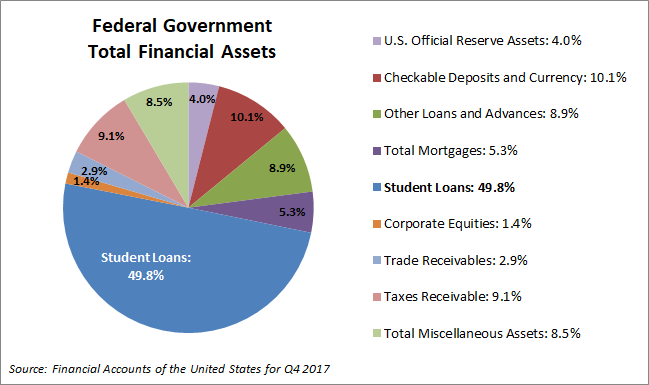

It shouldn't be controversial that we need an educated population and we need young people who aren't in debt up to their eyeballs. It's time for some hard choices, because the wheels are falling off.