Why do people focus on aggregate unemployment metrics so much? A $10/hr job with no benefits is tremendously different than a $60K/yr job with health care. The former is not a living wage. Yet both are just "jobs" -- what does that word even imply in 2020? Even worse are "job creation numbers", proudly brought to you by Aunt Mary who works three minimum wage jobs.
Is "employing" XX% of your population in virtual indentured servitude supposed to be something politicians are proud of?
Someone with a full-time job making $10 an hour (1) makes about the same minimum wage as France; (2) is either eligible for Medicaid or pays $67/month for healthcare through an ACA exchange; (3) pays almost nothing in taxes. It’s definitely a livable salary for a young person in a low cost of living area. (Half of people who make under $10 an hour are 18-30.)
Where I live, an hour outside DC and maybe 30 minutes to Baltimore, you can get a 2BR apartment in a nice new building for $1,000 per month. Share that with someone, and a person making $1,500 is spending the recommended 1/3 on rent. $67/month for healthcare on an ACA silver plan, and that leaves $900/month, which is totally doable for a single person, or better yet each half of a young married couple. And frankly, around here you’d get $15/hour just working checkout. In places that have a significant number of $10/hour jobs, rent is something you spend a few hundred a month on. You can eat at a sit down place for under $10.
An ACA silver plan means you have a $4500 deductible. You will NEVER go to a doctor. You will also not have sick leave, and if you don't show up for your randomly timed work shift you will be fired. Thats if you get hours in the first place.
So you pay your $500 for rent. Add 150 for utilities. Add 200 for gas and 50 for car insurance since you're gonna be living in a rural place. Thats 900 for a roof and ability to pay for it.
Now you have $600 a month for food and literally any other expense. Say you never eat out and use staples like rice and beans as the basis for every dish, thats $250 a month (maybe you can squeeze out another $50, but one must have a slight bit of slack for say, a single gallon of ice cream per month). $350 for everything else. Entertainment. A gym membership. Your medical deductible. Your sanity.
> An ACA silver plan means you have a $4500 deductible. You will NEVER go to a doctor.
Silver plans are eligible for Cost Sharing Reduction (reducing deductibles to $500-1,000), and pay for doctor’s visits before deductibles kick in. And preventative care has no co-pay and no deductible.
> So you pay your $500 for rent. Add 150 for utilities. Add 200 for gas and 50 for car insurance since you're gonna be living in a rural place.
How much do you think gas costs in Iowa? The median rural/town commuter travels about 1,150 miles per month. A 2000 Honda Civic gets 27 mpg. At $2/gallon for around 40 gallons a month, that’s under half your estimate.
> Now you have $600 a month for food and literally any other expense. Say you never eat out and use staples like rice and beans as the basis for every dish, thats $250 a month (maybe you can squeeze out another $50, but one must have a slight bit of slack for say, a single gallon of ice cream per month).
You are out of touch if you think $250 per month is a “rice and beans” food budget for a single person: https://mymoneywizard.com/how-i-spend-less-than-35-a-week-on... ($67 per week for two people). A weekly trip to Aldi for my family of five clocks in at about $100, and we don’t even try to save money.
> $350 for everything else. Entertainment. A gym membership. Your medical deductible. Your sanity.
In central Illinois, you can have a sit-down meal for $10, less if ethnic food. Coffee is a buck. The Y near my house is $40/month for a very nice place with heated indoor pool, and making minimum wage you qualify for financial aid. The county one, which is also nice, is $25/month. Netflix is $13/month. A Verizon MVNO is $35/month. In Iowa City, you can get $1-2 well drinks four days a week: https://www.brothersbar.com/iowacity.
Even in your best attempt to try and rationalize living off of poverty-level wages, your argument only makes things look worse.
> Silver plans are eligible for Cost Sharing Reduction (reducing deductibles to $500-1,000), and pay for doctor’s visits before deductibles kick in. And preventative care has no co-pay and no deductible.
Note that this is ignoring one massive part of healthcare: Dental care. As someone that lived in deep poverty I had to deal with teeth quite literally rotting out of my head because there were no options for me to get care and the insurance that I had didn't cover it. That's easily upwards of a few grand to fix a few teeth which no one can afford on those wages.
> How much do you think gas costs in Iowa? The median rural/town commuter travels about 1,150 miles per month. A 2000 Honda Civic gets 27 mpg. At $2/gallon for around 40 gallons a month, that’s under half your estimate.
Gas costed around ~3 dollars a gallon where I lived and our old car got around 20mpg. That alone creeps up to around $200 for gas and we couldn't afford to get a more efficient car for obvious reasons. The only reason why gas is cheaper now is because of the crash, it was not the norm at all for most people.
> You are out of touch if you think $250 per month is a “rice and beans” food budget for a single person: https://mymoneywizard.com/how-i-spend-less-than-35-a-week-on.... ($67 per week for two people). A weekly trip to Aldi for my family of five clocks in at about $100, and we don’t even try to save money.
You seem to be the one out of touch here considering what the USDA has said. Note that in your money wizard example the prices were incredibly off compared to where I live where things were easily 1.3-1.5x the price at the nearest grocery store. For example, 3lbs pound of chicken breast was easily around $2.80 compared to their example which is around $1.90. It also assumes people actually have time to cook and plan out their meals.
> In central Illinois, you can have a sit-down meal for $10, less if ethnic food. Coffee is a buck. The Y near my house is $40/month for a very nice place with heated indoor pool, and making minimum wage you qualify for financial aid. The county one, which is also nice, is $25/month. Netflix is $13/month. A Verizon MVNO is $35/month. In Iowa City, you can get $1-2 well drinks four days a week
At the very least we can reduce that remaining $350 by another $100 once we factor in internet and phone bills, both of which are required in today's environment.
So let's say you have around $250 left total. That's $250 for emergencies, for feeding your pets, for paying off dental bills, for putting towards loans, for dealing with everything else life has to throw at you.
And people wonder why your average American can't save money or put any of it towards stocks?
Cleanings aren't $25 though and those are recommended every 6 months. Along with exams once a year. You're looking at $100+/cleaning and $100+/exam.
From my experience of talking to people - seems like the quickest way to get cavities and ruin your teeth (beyond not brushing) is to not do the regular cleanings.
They may be "recommended" every 6 months, but practically nobody does that. In fact, in surveys, only about half of respondents see a dentist once a year. There's also little evidence to support the necessity of twice-annual dental checkups.
I think heredity plays into this. I’ve gone 10 years without and zero cavities. My maternal grandmother had all her natural teeth at the age of 94. Not everyone gets cavities
Cavities are caused primarily by too much sugar combined with inadequate home care. There is also a genetic component - some people are going to get more cavities than others no matter what they do. Cleanings and checkups don’t really prevent cavities, they screen for them.
The country i come from with free healthcare doesnt even suggest cleanings after reachign adulthood. You get a few free ones once every 5 years. Thats not a major part of healthcare lol
> Silver plans are eligible for Cost Sharing Reduction (reducing deductibles to $500-1,000), and pay for doctor’s visits before deductibles kick in
You’re right about the deductible - after doing the math I saw that youd qualify for the 150->400% bracket of the federal poverty level. But can you afford 3 weeks pay for that $750 deductible? On top of other stuff?
> You are out of touch if you think $250 per month is a “rice and beans” food budget for a single person
I didn't say it was only rice and beans, but a cheap diet consisting of the cheapest carbs. The USDA has it around $180 as the absolute cheapest per person. Your money wizard person lives in the cheapest area of the country. I'll bet they have a stocked kitchen as well so they never need to buy spices.
Having been thru Normal/Bloomington and Champaign, it’s extremely reasonable in price as rentals are dirt cheap, as long as you’re going to aldi. $1-2 well drinks aren’t a thing in a lot of the country. Coffee isn’t a dollar since the 90s. Your original example was between DC and baltimore. Things aren't so cheap there.
Oh, and I forgot about the actual premium cost of the silver plan, which is around $200 per month.
Sorry, but you're going into debt or homelessness the second your hours get cut. You have no stability. The smallest thing going wrong will ruin you. Have you seen the absolute hordes of people going into just APPLY for section 8? https://youtu.be/Q5ocjZ9GatA?t=140
> You’re right about the deductible. But can you afford 3 weeks pay for that deductible, and then your car breaks down because you can’t afford to maintain it?
What percentage of people suffer both an adverse health event in their 20s or 30s and a car maintenance event in the same year? I don't understand these types of arguments: you can't establish whether something is a "living wage" or not by reference to worst case scenarios achieved by piling on conjecture upon conjecture. Again, in France the minimum wage works out to $10/hour, and they have 20-30% co-insurance if someone has an adverse health event, and outside Paris most people have cars. It still works out fine for almost everyone.
> The USDA has it around $210 as the absolute minimum per person. Your money wizard person lives in the cheapest area of the country.
The USDA food budget is used as the basis for SNAP benefits, so it has to accommodate costs in high-COL areas. It is, in fact, designed to allow a healthy, balanced diet that most people can follow and is not an "absolute minimum" number. The person I linked to is not some wizard: https://www.thrillist.com/eat/nation/how-save-money-grocerie.... Regardless, the point is that $250 is not a rice-and-beans diet, like you claimed. This guy is eating lean meats, fruits and vegetables within the sub-$200 USDA Thrifty budget.
> While Trader Joe's stocks no shortage of reasonably priced pre-packaged indulgences, I stuck to my health-conscious diet of fruits, vegetables, eggs, and lean meats. For $39.68 I bought more than enough for the week.
Note that the co-insurance framing doesn't work out in your favor, because in France the costs for medical procedures or emergencies is far, far cheaper than the US. An emergency room visit might cost you around €10 while in the US visiting the emergency room is likely to bankrupt you.
Hell, it would likely put a big shock in my finances and I actually have good health insurance right now. You can't compare co-insurance costs like you are because it's apples to oranges.
Do you want to know how much it cost me to get my dental work done in the US versus how much it costs in France?
$250/month sounds about right for me for food+drink for a month, shopping at Jewel in Chicago, just getting whatever I want without caring about the price (based on about $300/month in total spent at Jewel, which includes cleaning supplies, toiletries, etc).
High deductible just means that you have to pay upfront for preventive care — like flu shots, bacterial checkups, and annual physicals. We pay out of pocket for tons of things, like food, clothing, and utilities. Insofar as this is undesirable, it's probably because the pricing system is impaired.
If you have a financially ruinous healthcare event, the ACA silver plan saves you — that's the whole point of insurance.
No it doesn’t. If you go in with a cold, they check your temperature and give you some Tylenol you get charged $600 out of your pocket, until you meet the deductible. It’s the preventative care stuff that is /sometimes/ not counting against the deductible.
Also literally any surgery is a financially ruinous healthcare event insured or not until you’re rich relative to the average person - I have the receipts of the tens of thousands of dollars of medical bills I’ve had to pay while insured to prove it.
That's all the more reason why the higher deductible isn't inherently a bad thing, even most of the basic needs are covered. Outside of that, it's just catastrophic coverage, just like car insurance.
1 gallon/month is 1 scoop of ice cream each on 5 or 6 days per week, or on average about 12–15 grams of sugar per day. It’s about the same amount of sugar you’d get from drinking one 12 oz can of soda every third day.
If it’s the only sugary treat someone is eating, that’s still well below average for people in most industrialized countries. If combined with soda/candy/cake/cookies/cocktails/... then probably not such a good idea.
That’s about 250 calories per day, which is pretty reasonable for a daily treat.
And I actually looked it up and it’s about a half gallon per American per month. I wonder if that includes children too. Probably. And then factor in the mountains of other garbage we also eat...it’s honestly a miracle that we’re not more obese than we are.
So to put the below in context: my first job (at the tail end of the last recession) paid around $12-13 an hour, and was enough to survive with more than double that rent figure. Granted, I had a couple factors on my side (namely: my grandparents in the next town over, who would insist on stocking my fridge and cupboards with the essentials), but even if I hadn't it was workable, even if not comfortable. I also didn't pay for health insurance at the time (I wasn't eligible for work-provided insurance until shortly before I switched jobs), since I think this was right before the ACA's individual mandate made it "mandatory".
That all being to say: $10/hr full time does not in the slightest bit seem unreasonable to me, even if I do strongly believe that workers deserve better than that.
----
> Add 200 for gas and 50 for car insurance since you're gonna be living in a rural place.
Or a bike, which is a thing, that people ride to and from work, even in "rural" areas. No gas and no insurance, even for an electric one (and those have come down quite a bit in price, to the point where the only cheaper cars are absolute beaters).
Even "rural" cities/towns often have buses, too. They don't always have the most exhaustive coverage, but bikes can make up for that for the "last mile" of each way's commute (especially if the bus has a bike rack on it, which is becoming increasingly common for exactly this reason and because it's relatively cheap compared to the cost of the bus itself).
> $350 for everything else. Entertainment. A gym membership. Your medical deductible. Your sanity.
You don't need a gym membership to work out (as I'm sure most of us trying to get even basic fitness in can attest over the last couple months, what with all those gyms being shut down). Jogging, hiking, bicycling, pushups, planks, jumping jacks, shovelgloving¹... all dirt cheap to do (if you don't go overboard and splurge on fancy bikes or backpacks or whatever; the basics will work fine). If you happen to live in a snowy area, snow shoveling is a good workout, too, and helps out your neighbors (you might even get paid for it).
All of those things can double for entertainment and "sanity", too, so that just leaves the medical deductible. That $350 would give you enough savings to cover that deductible in a bit over a year (even faster if you throw in the aforementioned $250 you'd be saving without a car). Anything past that is pure savings, enough to eventually buy a used car for the occasional out-of-town trip, or to eat out every once in awhile, or what have you.
Read the word "granted" and disregarded the rest of the post. Trying to pass off your experience as some kind of canonical working class struggle when you don't need to pay for food is about as tone deaf as it gets, not to mention starting it with "to put that into context" as if you have ANY idea what that context is.
I can tell you're just like "well, the poors can just ride bikes" having never ridden one yourself, otherwise you would know that a bike that you could cycle a 40km to 60km round commute on in a rural area is gonna set you back $2k and you won't get finance on it the way you do with a car, not to mention the fact that the cycling clothes you would need to buy to cover rural distances are mostly in the designer category and therefore very expensive. Not to mention your mechanical service, which if you're commuting daily is probably $80 every six months plus any parts which wear out, $15 for brake pads, $5 every time you puncture any wheel, $60 for new tyres every year, and the occasional unexpected uninsurable $200 "bottom bracket, crank and chainring all wore out at once" repair.
> Read the word "granted" and disregarded the rest of the post. Trying to pass off your experience as some kind of canonical working class struggle when you don't need to pay for food is about as tone deaf as it gets, not to mention starting it with "to put that into context" as if you have ANY idea what that context is.
No, you’re the one lacking context. Most low wage workers are young, and the median American lives 18 miles away from their mom. People making $10/hour living on their own for the first time who have parents or grandparents randomly drop by with food is a very common scenario. People making $10/hour trying to support a family is not.
Also, the notion of biking 60 km round trip in rural areas strongly suggests you’ve never been to one. Someone working a $10 service job in a rural county isn’t commuting 30 km each way. My wife grew up in Sibley, Iowa. It’s about a mile and a half across North to south, and less than that East to west. The apartments are all in town, and so are the stores.
The people who might need to commute longer are farmers and farm hands, but they make a lot more money. The average farm hand in Iowa with a high school education or less makes $30-40k/year: https://www.extension.iastate.edu/agdm/wholefarm/html/c1-60.... (The hours are long, so it works out to $12-15/hour.) They’re not riding bikes.
To expand on rayiner's comment a bit: Sibley sounds pretty much identical to all but the absolute smallest cities/towns I've visited or lived in. Just because they're small doesn't mean they don't have apartments (or trailer parks), nor does it mean they lack grocers or restaurants or auto shops or gas stations or offices.
If anything, the average commute is shorter (at least distance-wise) in a rural town/city than a large city, since there's less distance to cover to get from one end of town to the other. Cities tend to grow outward faster than they grow upward, so from a square-cube-law point of view, the bigger the city, the longer the commute (without having to pay through the nose for rent).
Most of America is closer to Sibley than to the big coastal cities. Median home value in Osceola County is $100,000, or about double the median income. According to ACS, the median American home is $217,000, about three times the national median income. The median California home price is $615,000, almost 9 times the median income. In the Bay Area, the median home is a million, ten times the median income.
> otherwise you would know that a bike that you could cycle a 40km to 60km round commute on in a rural area is gonna set you back $2k
Pot, meet kettle.
That's an almost laughably out of touch estimate for a 40-60km commuter bike. Speaking as someone who has cycle-commuted between 30 and 60km, full time, for the better part of two decades (including a couple winters in the upper midwest and a 10 year stint of not even owning a car), plus recreational riding on the weekends, my response is: Horsefeathers.
A nice gravel or cyclocross bike (with components one level below, say, Shimano 105, or SRAM Rival), one that will easily take 10 years / 75,000 miles of daily commuting with moderate maintenance costs, should set you back no more than about $1k. Paying more than $1k doesn't get you a more reliable bike. It gets you a lighter bike (which is often less reliable).
And, respectfully, if you're paying $5 every time you puncture a tire, that's a you problem. When you're on a budget, you patch tubes instead of throwing them away. Cranks generally last the life of a frame, and bottom brackets don't suddenly catastrophically fail without warning.
You're criticizing someone for not understanding what it's like to live on a low income, but all your cost estimates are from the perspective of an upper-middle income person who rides a fancy bike recreationally on the weekends. Like a politician who thinks that a gallon of milk costs $20.
And to expand on this: that ain't even factoring in the fact that used bikes exist. As do the dirt-cheap ones at Wal-Mart. Yeah, they suck, but they do the job. I don't know of any electric bikes in this category, of course, but certainly lots of regular ones.
Mine was probably nice when it was new, but it was 10+ years old by the time I got it.
> I can tell you're just like "well, the poors can just ride bikes" having never ridden one yourself
I did ride one to and from work for 3 years, specifically because I couldn't afford a car at the time (and then later did buy a car but couldn't afford to drive it for my daily commute because I was unemployed).
> otherwise you would know that a bike that you could cycle a 40km to 60km round commute on in a rural area
Maybe if you hadn't "disregarded the rest of the post" you would've read the part about using bus services to cover most of that distance. Bus fares are an additional expense, sure, but you can readily save money on a monthly pass, and plenty of transit systems offer discounted rates for low-income riders (though I think $10/hour might be above the typical threshold).
Not that such a commute is typical even in rural areas anyway. "Rural" areas include small towns/cities, and quite a few of the jobs in such towns/cities are within those towns/cities. Ain't everything way out on some random farm (though even in those cases, you'll typically have access to live either on or very close to work; this is a common living arrangement for migrant workers in California).
The furthest I had to bike for work was a one-time computer repair job about 13 miles outside of town, uphill in the mountains. Did that on my bike, even while carrying parts and tools.
> when you don't need to pay for food
Like I said in the comment: even if I didn't have that particular resource (for which I'm grateful and count myself lucky), I still had enough from my paychecks to cover that. That money went into savings and the occasional meal eating out instead.
And I still did need to pay for most of my food; the main things they brought were soup and Spam (because they could buy them on the cheap at Costco), plus a bag of rice if I remember right. I was on the hook for anything else.
And mind you this was with no roommates and more than $1k/month rent; there were plenty of other areas where I could've trimmed my budget and made things work.
> not to mention the fact that the cycling clothes you would need to buy
You don't need cycling clothes to ride a bike.
> Not to mention your mechanical service, which if you're commuting daily is probably $80 every six months, $15 for brake pads, $5 every time you puncture any wheel, $60 for new tyres every year,
All of this is still a tiny fraction of the $250/month figure for a car.
Though I will say that in the 3 years I did ride my bike daily I didn't change the tires once. Nor did I change the brake pads. Probably should've taken better care of that thing, lol
> Or a bike, which is a thing, that people ride to and from work, even in "rural" areas. No gas and no insurance, even for an electric one (and those have come down quite a bit in price, to the point where the only cheaper cars are absolute beaters).
> Even "rural" cities/towns often have buses, too. They don't always have the most exhaustive coverage, but bikes can make up for that for the "last mile" of each way's commute (especially if the bus has a bike rack on it, which is becoming increasingly common for exactly this reason and because it's relatively cheap compared to the cost of the bus itself).
Bikes are not a viable commuting option in most of America, you cannot transport groceries or children effectively on a bike. This is the strawiest of straw men arguments.
Children of certain ages are challenging, I'll grant you, but the rest of this is just dripping with privilege.
Go visit any of the rougher parts of a big city, and you'll find plenty of low income people transporting groceries and commuting on bike (You can find them in small towns, too). Look for people with plastic shopping bags slung from the bars. It's not just viable, but absolutely essential.
And it's not limited to just people with low income, either. A rack and a set of nice panniers can easily carry a week's worth of groceries for a single person, including bulky items like milk.
> you cannot transport groceries or children effectively on a bike.
I had a basket on my bike (hacked together with a plastic crate and some bungie cords) that worked great for hauling groceries (and computer parts / tools - hell, even whole towers - when I was doing freelance computer repair during various periods of unemployment), and I know plenty of people who have little to no issue with bike strollers/trailers for hauling kids.
> Bikes are not a viable commuting option in most of America
Yea - this was the main point bud. You ever ride your bike 10 miles to get to work in the dead of winter in Iowa or Minnesota?
Like I'm glad you were able to rig a basket and all for your bike but acting like your story is relevant for people who are in actual financial hardships is disingenuous and weird. You're pissing people off who actually struggled... like didn't have food sorta struggle. Stop.
> You ever ride your bike 10 miles to get to work in the dead of winter in Iowa or Minnesota?
Not Iowa or Minnesota, but it was the dead of winter, and yes.
> Like I'm glad you were able to rig a basket and all for your bike
My point is that anyone can. The most expensive part was the $10 for the part to strap the crate on (attached to the pole under the seat). The basket was literally in the trash. The bungees were, like, $5, tops.
> but acting like your story is relevant for people who are in actual financial hardships
It is relevant, because I was in financial hardship, despite what you somehow seem to think.
You're the one pissing people off who actually struggled - that is, you're pissing me off by shitting all over me because God forbid I accepted some help from family when I needed it and wasn't in a position to refuse.
> You're the one pissing people off who actually struggled
I have one person arguing with me - you. You have multiple people arguing with you, some even sharing difficult personal stories of having to go to a food kitchen to not go hungry...
I'm sorry "I'm pissing you off" and "shitting all over you" but you are not going to change my opinion: you had some serious help but still talk like you're an example..? I agree with others that you sharing your experience of being "poor" is punching down, tone-deaf, and invalidates those who actually find themselves struggling right now.
There are actually a couple people in this discussion who seem to be backing up my points.
> you had some serious help
What part of "less than $50 a month v. more than $500 more in rent" are you not getting here? Real fuckin' serious help. Obviously I was sitting there eating lobster and caviar every day, right? Is that what you think?
My intention is not to "punch down". My only intention is to describe a situation that I think is comparable, based both on facts (namely: the mathematical realities of having to live in a high-cost area with a low wage) and feelings (namely: the emotional toll of having to make the best of every resource available - which, yes, included a whopping $50 a month... wow, so extravagant and sheltered, that'll totally make up for my higher rent).
----
EDIT:
Nor should my experience be taken as "invalidating" anyone else's (except maybe the 1%ers trying to "relate"). Just because I was able to stay afloat taking home less than $1k a month after rent doesn't mean people should ever have to do that. We as a country should be paying our workers what they're worth, not merely "enough to live".
I think this stems from me misspeaking and saying $10/hour is "not unreasonable". What I meant was "not unlivable", and that much is true in much of America. We absolutely should be striving for a higher goal than simply "livable" for every American, given that this country was founded on inalienable rights beyond merely "life"; until every American can exercise one's rights to "liberty" and "the pursuit of happiness", this country has not fulfilled its mandate to its people and to the world, and every one of us should be working together to fix that.
> I think this stems from me misspeaking and saying $10/hour is "not unreasonable"
Right, which is why a ton of people got flustered. $10 is unreasonable. You posited it was, positioning yourself as some sort of positive example as-to why it is.
> What I meant was "not unlivable"
You said that $10/hr is reasonable. I see "livable", "not unlivable", "survivable", "reasonable", and "not unreasonable" as all synonymous. Your shifting of definitions and "what I meant"-isms doesn't add any sort of positive spin to what you were putting forth with your original comment, it's just backtracking because people called you out.
Clarifying things that people like you misinterpreted (or outright invented, like the "hundreds of dollars in support" claim or the claim that I had health insurance even though I specifically said I didn't) is backtracking? And fuck me for admitting a single word I mixed up, right?
I stand by my original comment. Just because some random jerks on Hacker News think I wasn't poor merely because I accepted what amounted to less than $50 of help doesn't mean I wasn't poor.
What you're saying is complete nonsense. Not only it is not true in most of the US (try to find cheap places in the US where you can have a reasonable life without a car), but it just takes ONE bad thing happening to you to disrupt your life: a broken leg, a lost job, or, wait for it, a virus pandemic!
What jobs or opportunities, exactly, exist in those small/medium towns?
I seem to recall having to move away from my town because there were zero job opportunities for me except for those that were outside of my career and minimum wage.
Thinking back on the various small towns in which I and family members have lived...
- Stores
- Restaurants (usually fast food)
- Beauty salons
- Auto shops
- Gas stations
- Small offices (think lawyers, accountants, etc.)
- Clinics (even full-blown hospitals, one of which being my employer for my second job / first IT job)
Not to mention various jobs without fixed workplaces. I did freelance computer repair to help supplement my unemployment checks (during the times when I was on unemployment), since that's what I was good at; landscaping, housecleaning, pest control, plumbing/electrical work, etc. all come to mind there, too.
There are certainly jobs outside of town, too (e.g. farm work), but those often have on-site or near-site housing (whether as simple as renting a room in a farmhouse or there being an outright mobile home park or somesuch) specifically due to the realization that a lot of people working those jobs can't afford to drive every day.
----
EDIT: if you're in a specialized career I can definitely understand why it'd be hard to find work. Bigger cities seem to have higher demand for specialized work, while smaller cities/towns more often than not need generalists. I've definitely felt that even in IT. Still, this pandemic notwithstanding, these towns/cities do tend to have up to tends of thousands of workers in 'em, doing the same things that a bigger city needs, albeit probably with less specialization and more generalization.
And indeed, I think that's why I'm doing okay now, even while working in a small-ish city: I learned the hard way that it probably ain't realistic to specialize on a specific technology or a specific role, and that if I'm gonna develop a lasting career I've gotta be flexible enough to be effective in any sort of role. I can't just be the "Linux and Erlang guy"; I gotta be willing to learn and work with whatever the job requires.
Of course, I'm also lucky enough to be working for a company that's not only able to stay open but actively thriving in pandemic conditions; I recognize most Americans - including multiple friends and family members - ain't as lucky as I am, which is exactly why I'm strongly in favor of helping them out wherever possible.
As someone who now has a cushy tech job but grew up struggling, it’s infuriating to read a post as out of touch as yours.
My main question is, as you yourself have admittedly never experienced it, why even bother commenting on it? All your comment provides is ammunition for those looking to dismiss the such wages as livable, when (if you experienced them yourself) they’re clearly not.
It's bizarre that y'all are willing to discount my experience solely because I happened to make two dollars more per hour and had slight support from family, neither of which come anywhere close to offsetting having to pay $500/month more in rent than the hypothetical to which I replied.
Like, I'm under no illusion whatsoever that I wasn't fortunate. I'm endlessly grateful that I had a family eager and able to help out, and I know that there are plenty of people who don't have that much. That doesn't mean I didn't still struggle. It doesn't invalidate paying that rent, or making things work. It doesn't invalidate being in that situation two more times due to extended periods of unemployment, or when I was later making less than minimum wage and living off my savings working for a startup that ended up failing.
I don't care that a bunch of FAANG employees think I'm too "privileged" to be able to speak about a situation that very much is comparable. Your downvotes do not invalidate my life experiences. Begrudgingly accepting help from family (that, mind you, added up to, what, $50/month, tops? Yeah, real fuckin' luxurious) does not invalidate my life experiences.
Sorry if you feel like myself and others are invalidating you’re experience.
My sole intent is this: you claim that such a wage is livable on its own today. Your evidence for that claim is that you yourself had a similar wage, over a decade ago, with additional family support, and other benefits (eg no healthcare costs).
The two are not the same. Not even close. By by claiming they are, you invalidate the experience of everyone else who actually had to face the struggle of living on a low-wage without any of the benefits you did.
I myself ate from a homeless shelter a handful of times in college just because I couldn’t afford food at that moment in time. That is not an exaggeration. So forgive me if it feels like I’m invalidating your experience - I’m sure you struggled as well, but that doesn’t give you the right to speak for the experience of something you’ve clearly never experienced for yourself.
A $10 wage is not a livable wage in the vast majority of the country today. It’s a survivable wage at best, but not in every city.
> Your evidence for that claim is that you yourself had a similar wage, over a decade ago, with additional family support, and other benefits (eg no healthcare costs).
And more than double the rent. That's the part y'all seem to be ignoring, and is the exact part that makes my situation comparable and - IMO - worth presenting. If you disagree, can you at least articulate why paying that much more in rent somehow doesn't matter?
That doubling in rent is greater in dollar value than the slightly-higher wages + the occasional Costco run from family. If anything, my income minus rent was lower than the $10/hr minus $500/month situation originally presented and to which I responded ($970 v. $1100, respectively, when factoring in that support from family; this assumes 40 hours per week and a 4-week month). And that's assuming zero taxes (which wasn't the case, especially since this was in California).
> I’m sure you struggled as well, but that doesn’t give you the right to speak for the experience of something you’ve clearly never experienced for yourself.
To be clear here, I don't mean to invalidate your experience, either. My only intent is to describe a situation that IMO is comparable to the one originally presented. If it's not comparable, then fine, but I remain unconvinced when the best that people can do is entirely neglect to read what I wrote and then assume that I was totally paid for and expense-free.
It does sound like your situation was worse than mine and the originally-presented one
> It’s a survivable wage at best
Which is really the only point I was trying to make. Living on that sort of a wage sucks, but it is possible, and it's better than nothing. I strongly believe that human labor is worth more than some measly $10 or $12 per hour, and should be paid accordingly, regardless of whether or not it's technically possible to survive on such a low wage.
That said, "survivable" does definitionally mean "livable". The trouble is that "livable" ain't really enough for class mobility.
> It's bizarre that y'all are willing to discount my experience
...Your experience of having a family or network subsidize $100s per month in various costs, which you are using to try and explain anyway the enormous and well-established economic inequality problem in the US.
Why? Can't you be grateful for your privileged position and not punch down?
> having a family or network subsidize $100s per month
As I've explained in multiple other follow-up comments now (EDIT: including, I now realize, in the exact comment to which you replied): it was not "$100s per month". It was barely $50, if that. I think the most luxurious thing was some protein shakes, and that was a box for, like, $20 (that'd be the thing in the fridge). They still give me boxes of those shakes sometimes, since my grandma likes 'em and I do, too, so why not, lol
And, as I already explained in the original comment, it was a $50 that I could've still paid myself. Instead, I accepted the help. I'm grateful for that help, and recognize that even that much is a privilege a lot of people don't have. That doesn't mean I wasn't poor at the time, nor does it mean that describing my experience is somehow "punching down".
> As someone who now has a cushy tech job but grew up struggling, it’s infuriating to read a post as out of touch as yours.
Makes your blood boil. Seriously - someone posited "hey - in most of the US a bike is not a viable commuting vehicle..." to which op just replies (paraphrasing) "yes it is! I jerry-rigged a plastic basket on mine to carry things!"
Incredibly out-of-touch and from directly from a place of privilege. This is a person who may have had to ride their bike/budget carefully for a year or two to get on their feet, not someone who's actually experienced poverty.
> to which op just replies (paraphrasing) "yes it is! I jerry-rigged a plastic basket on mine to carry things!"
Yeah, fuck me for figuring out how to make the best of my situation, right?
> This is a person who may have had to ride their bike/budget carefully for a year or two to get on their feet, not someone who's actually experienced poverty.
Three years, through both the aforementioned first job and two multi-month periods of unemployment, plus a period of making less than minimum wage as a contractor.
But no, apparently I'm "too privileged" to be able to talk about when I was poor.
3. didn't pay for health insurance, but still had health insurance
4. have the skills to do IT work (doing it from a bike is moot)
> Yeah, fuck me for figuring out how to make the best of my situation, right?
In good faith, I am not trying to say "fuck you"... I just don't agree that your past self was actually poor given the above bullet points. We have differing definitions of "poor" as you had the tools to improve your situation, without experiencing food scarcity, and all while having a health insurance safety-net.
As someone who's worked around extreme poverty - it's hard to not get flustered reading your posts. Sorry.
"stock" != "fill". We're talking, like, $50/month, tops. I could've swung that myself. Instead I put it into savings and graciously accepted the help.
> $12-13/hr wages
In an area with double the rent of the proposed scenario
> didn't pay for health insurance, but still had health insurance
No, I didn't have health insurance. I specifically said I didn't qualify for my employer's plan until I had already put in my notice.
(I was also uninsured after my second job all the way up to my current job, so covering about a 4-year span; given that the ACA's individual mandate was in full effect, this effectively ate hundreds of dollars out of my tax returns, at least for the years where I actually had returns rather than owing taxes on e.g. my less-than-minimum-wage contract work).
> have the skills to do IT work
That's cold comfort when you're stuck working a non-IT job (as I was), or when you don't have a job at all (as I was later, on two separate occasions, hence the riding of my bike to fix computers and supplement unemployment under-the-table).
Keep in mind I didn't (and still don't) have a degree. That probably helped with keeping expenses low (no student loan debt to worry about), but it also made it substantially harder to find solid work (given that even help desk positions typically required at least an Associate's; I got my first IT job specifically as a temp job that turned unexpectedly permanent).
> I just don't agree that your past self was actually poor
I mean, I obviously can't make you relive my working life (at least up until my current job, which does thankfully pay much better and is helping me bounce back). Nor would I want you to. Still, I definitely think I was poor, both when I was working my first job and after I lost my second job. Really boggles the mind how you'd somehow disagree with that assessment simply because of a marginal amount of support.
What kind of healthcare do you suppose a person gets for $67/month?
What sort of meal do you suppose a person gets at a sit down restaurant for less than $10?
How is a young married couple supposed to establish some wealth and make their way in life on $20K/year each?
Every day HN amazes me at how completely out of touch some people are. "I make six figures typing on a screen in an air conditioned room all day. Why can't these damn poor people just take their $10/hr and shut up?"
> What kind of healthcare do you suppose a person gets for $67/month?
It's not $67/month healthcare. Its $500/month healthcare that's highly subsidized by the government. You know, like the healthcare in most countries that have "free healthcare." (The ACA is similar to how the Dutch universal healthcare system works.)
> What sort of meal do you suppose a person gets at a sit down restaurant for less than $10?
Often, a really good one!
> How is a young married couple supposed to establish some wealth and make their way in life on $20K/year each?
They're not supposed to. They get better jobs, they get promoted, etc. From age 22 to age 38, the 25th percentile individual income (so 75% of people make more than that) triples from $10,000/year to $30,000/year.
> Every day HN amazes me at how completely out of touch some people are. "I make six figures typing on a screen in an air conditioned room all day. Why can't these damn poor people just take their $10/hr and shut up?"
It's the people earning six figures talking about hypothetical people trying to support a family of four on $10/hour that are completely out of touch. Yes, that's the reality for some people and it's sad. But for every one of those people, there are a bunch of 20-somethings making $10/hour who will move onto something better.
People imagine 35 year olds with kids making $10/hour, but that's an outlier. The median household income for people aged 35-44 is $80,000 per year, and for married people that age it's even higher. And remember: that median couple lives in Topeka, not Palo Alto.
I have lived, worked and paid taxes in Denmark, the UK, the USA (Washington D.C.) and Australia. I am absolutely blown away by how out of touch you and others are from the reality of people struggling to survive in the USA compare with other rich nations. Having the intelligence, interest and family support needed to learn how to program is in itself a huge privilege. One that I benefited from myself. However the difference is that I am grateful for it and know how privileged I am. The difference is that I don't use it as a hammer to attack the people who are less fortunate.
I used to make $9 an hour and was not eligible for Medicaid. ACA exchange in Kentucky (Kynect) wanted well over $100 a month which was not affordable for me, but then again neither was the fee imposed by not having insurance. I paid around 30% of my wages in taxes, which I consider to be quite a lot more than nothing. I was able to live in a very cheap place (with room mates, of course), but not put anything away.
The US does not have a negative federal tax rate, unless you are referring to an effective tax rate (which is the calculated rate you effectively pay based on income, deductions, credits, etc.)
The USA does effectively have a negative tax rate at that level with EITC, that's what he's saying.
$9/hr * 2080 hours = $18,720
After deductions that's $6,520 of taxable income. Eligible for EITC so a tax rate of negative $3,526. So if they paid zero federal income tax all year they'd get a "refund" check of $3,526 (except its not a refund, since they paid zero, its a negative tax rate)
Regardless, having a double digit percent of your income held hostage every year is not exactly a win for the worker. Rent is due on day 1, not day 365.
It's not a win, but it's only a problem for the first year of your employment. After the first year, you get the tax back, and you can use it to pay next year's rent.
Low wage and part time workers are typically not employed all year around. The tax back can be hard to predict in these conditions and vary quite dramatically. It's really hard to work with when one lives paycheck to paycheck and needs the money now.
Right, but then the problem is general lack of funds, not having them delayed by a year. With the exception of the first year of employment, one will have funds from previous year's tax return. I agree that this is annoying, but with minimum level of financial planning and responsibility (e.g. by withdrawing 1/26th of previous year's tax return every two weeks, or by withdrawing whatever fraction of the year one actually works), the effects of tax withholding can be almost completely mitigated.
Is your argument that low-wage and part-time workers are irresponsible and cannot be trusted with large windfalls of money around tax return time, because they will squander them faster than they would if the same amount instead was given to them via biweekly installments?
If you get significant tax back year after year and the delay causes you problems, increase your W-4 exemptions until that stops happening. There's no constraint on W-4 claims unless you've had tax consistently (which seems to mean for multiple years, though what the threshold is isn't clear) underwithheld, in which case the IRS may send a lock-in notice to your employer setting a minimum withholding level and preventing reductions, but if you have gotten any tax refund, you aren't having tax underwithheld, so that's not going to affect you.
I agree that many of the people who need to know this don't, though.
This is true, but but I've known a number of people in a similarly low-wage position who were never informed of that option until their 30s. I myself was only taught about that option at 20, two years into the workforce by a coworker.
Our education system often fails to deliver financial literacy and basic life skills to a large portion of the population, leaving them instead to overwhelmed parents trying to feed their families.
France is a wealthy, highly developed country with strong labor laws. Cost of living in France certainly isn’t cheaper than the US.
> (2) - Different discussion -- let's assume for sake of argument we are talking about a young healthy person anyways.
You should have insurance, and the ACA made it affordable (the government pays 80% of the premium for some at income).
> (3) - Sales tax is "almost nothing"?
You don’t pay sales tax on rent. I live in a civilized state, so you don’t pay sales tax on groceries and clothes either.
> With respect, this reply is coming off as completely out of touch with someone who can barely afford rent, food, gas
The point is that someone making $10 working 40 hours in a low cost of living place probably isn’t one of those people who can “barely afford rent, food, and gas.” Which goes back to OP’s question: why focus on who is working? Because people who don’t have work or don’t have sufficient hours are the people who are really struggling to afford rent, food, etc.
The people who are out of touch are the ones who apply their SF or NYC-warped glasses to the vast majority of the country that isn’t SF or NYC. I was in Clear Lake Iowa, which is what passes for a tourist destination in Iowa. You can get a 2BR apartment for $650/month. Someone making $10/hour there who is single with a roommate has a perfectly reasonable life.
No, $10/hour jobs won’t support a kid or pay for daycare. If that’s the concern, the government should pay people who have kids and provide free daycare. That’s also a perfectly reasonable approach.
>>> France is a wealthy, highly developed country with strong labor laws. Cost of living in France certainly isn’t cheaper than the US.
Pretty sure the cost of living is quite a bit cheaper in France.
- Education is free.
- Basic healthcare is free. Little known fact is that private coverage is mandatory in France and paid out of pocket. It's double digits a month instead of three in the US.
- Bills are cheaper. internet/phone/mobile/tv is fixed 35 a month with all providers while the US subjects on hacker news are routinely throwing all sort of crazy numbers for these. similar advantage with water. electricity depends on the US region.
- gas is very expensive in France. One litter is roughly the price of one gallon (3 litters). People don't travel as much and cities have must stronger public transportation (bus, tube, tramway, trains).
- Decent food and items are easier and cheaper to procure in France. Highly discounted food is similar I think (meaning lidl/netto can do cheap shit in volume like wallmart).
Overall French have a lot less money than American. The vast majority of the country is living on 1000-2000 euro salary a month after tax (outside Paris). There's nobody that's routinely making triple or quadruple of anybody else, so anything expensive simply has no audience.
The rent for a 2 bedrooms in the top major cities (toulouse/lyon with one million inhabitants and jobs) is 600-700 euro I'd say. The same rent in deep countryside with no jobs could be closer to 400 euro. Rents typically don't go below 400 (or 300 each for shared) because there are many too subsidies and benefits for people in need. I don't know what is clear lake iowa to compare, is it small city or truly the middle of nowhere?
K-12 education is free in the US. The majority of people in both countries don’t go to college. College costs are mainly an issue for middle and upper middle class people.
> - Basic healthcare is free. Little known fact is that private coverage is mandatory in France and paid out of pocket. It's double digits a month instead of three in the US.
The ACA heavily subsidizes healthcare for low income people in the US. Our hypothetical person making $10/hour pays $0-75/month for insurance in ACA states.
> The rent for a 2 bedrooms in the top major cities (toulouse/lyon with one million inhabitants and jobs) is 600-700 euro I'd say.
American cities are poorly managed, and a much smaller percentage of Americans live in cities. But a 2BR in say Memphis, which has 500,000 people, can be had for $700-1,000.
> The same rent in deep countryside with no jobs could be closer to 400 euro. Rents typically don't go below 400 (or 300 each for shared) because there are many too subsidies and benefits for people in need. I don't know what is clear lake iowa to compare, is it small city or truly the middle of nowhere?
Clear Lake is a small tourist town in the middle of nowhere, which makes it a bit more expensive. You can rent a 4BR house in nowhere Michigan for $500/month.
> The majority of people in both countries don’t go to college.
What is your source on this? From what I read about the stats in France, more than 75% of a given generation obtain the BAC, the diploma that grants access to university. I'm fairly confident that for the recent years the majority of any given cohort does go to higher-ed.
> College costs are mainly an issue for middle and upper middle class people.
It's not really an issue for anyone in France though. Maybe you can have a look at university fees here [1]. (<500€/y) Personally we didn't pay anything as it is entirely subsided for families with lower revenues.
You will go to great lengths to give a reactionary "it's actually not that bad" or "this is actually good!" to every suggestion that the status quo may not be that good for a lot of people, won't you? On a broad variety of topics as well. Wild cherry-picking, leaving out relevant information in comparisons etc.
Just in this post:
* No mention of childcare costs.
* Apparently the working class shouldn't bother too much with higher education.
* No mention of all the pitfalls within US health insurances that causes costs a low-income earner just can't afford.
* Some wild cherry-picking regarding housing costs in the US instead of acknowledging that in Europe these are much more general, in every city, albeit perhaps not in the city center.
My point isn’t “it’s not that bad” but rather “people are focusing on the wrong problems” or are enthralled by the wrong solutions. Just in this post:
> No mention of childcare costs.
That’s because I addressed it in my parent post: “No, $10/hour jobs won’t support a kid or pay for daycare. If that’s the concern, the government should pay people who have kids and provide free daycare.” The vast majority of people making $10/hour don’t have kids. If childcare costs are the concern, then let’s focus on childcare costs. It doesn’t make sense to talk about whether “$10 is a living wage” by including expenses that most people making that income don’t have.
> Apparently the working class shouldn't bother too much with higher education.
Yes. Just about 30% of young people in Germany, Switzerland, Spain, and Italy get a college degree. These are some of the most prosperous countries in the world. Most of the population doesn’t need to go to college. We should take the money that we would spend on free college (which will increase black-white wealth inequality) and use it for something worthwhile, like Corey Booker‘s baby bonds. Subsidizing a vast army of professors and administrators teaching kids underwater basket weaving is lighting public money on fire.
> No mention of all the pitfalls within US health insurances that causes costs a low-income earner just can't afford.
The ACA is a real game changer in this respect. People don’t really appreciate how much it does for folks in the $10/hour wage bracket.
> Some wild cherry-picking regarding housing costs in the US instead of acknowledging that in Europe these are much more general, in every city, albeit perhaps not in the city center
In fact, low-income American households have similar sized living spaces to average French households. The anecdotes about Memphis and Clear Lake aren’t “cherry picking.” I’m trying to show why America has such affordable housing. It’s because Memphis (or rather the suburbs) and places like it are where Americans live. Out of 315 million Americans, 260 million live somewhere other than the metro areas of New York, DC, LA, or SF. And whereas about half of Europeans in a metro area tend to live “in the city” in the United States 70-80% live outside the city. Even in DC, one of the most expensive cities in America, 85% of the metro area population lives in the cheaper areas outside the city. (And many of them are much cheaper.)
So what you are saying is that education is less free in the US than in other rich countries. I most definitely enjoyed getting my Master in Computer Science degree from a top European university for free.
> The ACA heavily subsidizes healthcare for low income people in the US
That does not mean that a poor person can afford it.
> nowhere Mitchigan
... where there are no jobs to pay the rent. Your cherry picking is amazing.
I agree that "It’s definitely a livable salary for a young person in a low cost of living area." is a laughable claim.
But, it is true that most Americans pay very little taxes.
> According to the Tax Foundation, the top 50% of taxpayers paid 96.96% of all federal income taxes in 2016, the last tax year for which comprehensive and vetted statistics are available from the Internal Revenue Service. This means that the bottom 50% paid just 3.04%. [1]
And yes, sales tax is "almost nothing". About 2-3% of an average American household's total income.
> With that in mind, the average American pays $10,489 in "personal taxes," representing 14% of the average household's total income. This includes federal and state income taxes, as well as other taxes such as personal property taxes, vehicle taxes, and certain other small taxes. $8,367 of this amount is federal income taxes, $2,046 is state and local taxes, and $75 is other small taxes. [2]
I agree with your points--my point is that any % of someone's wealth who _can_barely_afford_basic_living_costs_ is significant. Income tax isn't even remotely on someone's mind who can't make ends meet. Sales tax _is_ neglible for most wealthy people so it is easy for them to forget about it and massively overrate the impact of income tax on non-wealthy people.
If you can barely make ends meet, you do not pay income taxes in America. In fact, you get free money from the federal government once a year via the standard deduction rather than paying them.
If you're scraping by on, say, $500/month after rent is paid, $10 of that on sales taxes is insignificant imo.
Excepting rent, the remaining wages are going to go towards things that are more likely to have a sales tax. For most states that is ~5%. An extra Jackson a month adds up quick for someone in this position.
> "But, it is true that most Americans pay very little taxes."
no, that statment is only applicable to income tax, which is intentionally progressive. most other taxes, like employment taxes, are highly regressive, so it's not true that most americans pay "very little taxes". americans pay their fair share of taxes, but not the same proportion to each taxing entity.
no, the trope that most people are freeloaders who don't pay taxes needs to end. even the lowest quintile paid an average of 16% of their income in various taxes. for someone making $14K, that 16% ($2200) is a serious cut of their living. for comparison, the upper quintiles pay ~30%. see this chart[0] found in this article[1].
Virtually no one who works jobs at $10 an hour works full time reliably. These aren't career-style 9-5 regular positions, they're ad-hoc shift work. At best, someone like this works several part time jobs whose hours add up to 40/week on average. In general people in this income bracket end up hopping between jobs and dealing with dry spells where they can't find work. Which is what the linked article is about.
Your numbers are frankly just delusional. I mean, yes, if we had a program that could actually guarantee a regular $400/week income to someone, they could live on that reasonably comfortably in most of the US. But just "having a job" doesn't qualify, not remotely.
Not only that, but these jobs have no benefits. The person subject to this needs to pay out of pocket for insurance (Obamacare helped a little, but it is still an added cost). It is basically indented servitude, and if the person is not willing to do this he/she may end up homeless or in jail for some stupid reason.
You cannot raise a child on $10 an hour. One might argue then that that person should not have a child, but very often those arguing that are also advocating for a reduction in birth control and against the raising of the minimum wage.
Continuing with the French comparison, in France if you have a child you get 16 weeks of maternity leave as well as an 'allowance equal to their average income over the three months preceding the birth'. In France, 80% of childcare is generally covered, in the US its very expensive unless you have a relative that lives nearby that can watch your child.
So while you are indeed correct, it is possible to survive on $10 per hour, many states have a minimum wage under $8.00.
On the whole I very much agree with you, but it can get very complicated very quickly.
Every time that HN gets talking about poverty and how it's easy to "just budget!" my eyes almost roll out of my head because I'm damn-near certain every one of us here is making enough to support ourselves, or is being setup to support ourselves in the future (ie: school). We're so far removed from the actual experience of what it's like to "pull yourself up by the bootstraps".
If you've been around extreme poverty you know how expensive it is to be poor... You're talking jobs that demand overtime to keep the position, old cars breaking down every other month, being more prone to health problems, the cost of education, the real cost of debt, lower COL housing and theft, etc etc.
I'll argue that those who are advantageous, responsible, and disciplined can absolutely budget/work themselves into a better situation like OP suggests (ABSOLUTELY without children) - but if you've been around poverty (esp. in America) you know that this type of person is the exception and not the rule.
Not disagreeing with anyone - just want to point out that most poor people aren't going to be able to get themselves out of that situation with "just budget!" advice when most of them can't do simple math and/or can barely read... let alone delay instant gratification (drugs/alcohol) for long-term prosperity (positive goals/aspirations).
I agree with your comment so much. Thank you for pointing out how quickly OP's "just budget!" advice breaks down..!
Absolutely. Being poor is very expensive. I make a good salary and have my car paid off, a ~5 year old SUV. Monday I heard a grinding noise and took it in, new radiator belt fan assembly required, $800. That would cripple someone on minimum wage even without the car payment. On top of that I had to drop ~$300 on some new part for my home AC and $1800 on getting trees cut before hurricane season. 2 weeks before I spent $600 after another tree collapsed into the neighbors yard. Home ownership is another dream they try and sell poor people and they don't tell them how incredibly expensive it is.
In the US, if you are poor it is very hard to become not poor, the few success stories are by and large the exception to the rule. Most people don't have bootstraps made out of luck and fairy dust. In America the greatest predictor of where you end up is where you start.
> but very often those arguing that are also advocating for a reduction in birth control
Okay, but "people often have the wrong basket of opinions" isn't a strong counterargument to the central point being discussed.
> against the raising if the minimum wage
Raising of the minimum wage comes with price increases, which is a regressive way of guaranteeing a minimum standard of living. Expanding the EITC (or better yet a UBI) allows one to raise a child even if they are earning $10/hour.
So are you saying that anybody paid minimum wage in the USA, no matter where they live, can afford food, housing, a car to drive to work etc.? Are you sure you are not talking about a European country and not the USA?
> Why do people focus on aggregate unemployment metrics so much? ... Is "employing" XX% of your population in virtual indentured servitude supposed to be something politicians are proud of?
The answer is multipart and long, but a couple of highlights are; -
- the social point that work is a "quadruple remedy" against deprivation, boredom and isolation, social disrepute, and mental illness. Phrased positively: work gives a person material comforts, social contact, respectability, and self-respect.
Edit: this applies no matter the content of the job or the working conditions. Simply "having a job", any job, provides these things in some measure.
- another aggregate measure, the Gini index, bears on the answer. If a country has both a low Gini index (inequality) and low employment, then unemployed people are able to properly participate in society in that country. The answer in that case might be "no".
Trouble is, such countries are as common as rainbow-colored hens' teeth.
Sure, work is good, but it’s hardly a decent measure of economic health. The idea of someone not “participating” in society is ridiculous. Paid labor is only one of many ways to participate in society.
There are several different unemployment numbers reported in the US that all have slightly different meanings[1]. While none of those official reported numbers match your definition, the U6 rate would be the closest. The number that you generally see reported in the news is the U3 rate. The U6 rate also includes people who have stopped actively looking for work or are underemployed (dictated by hours and not pay). The numbers reported in this article don't fit any of these definitions and are mostly meaningless due to weird choices like including children.
"Is "employing" XX% of your population in virtual indentured servitude supposed to be something politicians are proud of?"
In 2020, in the U.S. for example, yes.
This is why these "jobs" disappeared so quickly when there is a slightest sign of economic trouble.
Someone has to do "real work" and so there will always be a need for indentured servants. Those sort of jobs will always exist. However the need for many other "jobs" has been put into question. When things get tight, companies today are more aware that they can eliminate those positions and carry on, sometimes with increased profits as a result. The pandemic is a perfect wake-up call as it purports to separate "essential" from "non-essential" jobs. With some exceptions, the more you are being paid, the more you think you are worth, the higher the chance that your job is, in fact, "non-essential". Eliminating these higher paid, non-essential positions, even temporarily, saves companies a lot of money. It is not easy to eliminate these positions under normal conditions, however in an "economic crisis", the process becomes easier.
As an employer, I can get those workers back anytime. They will be crawling over each other, lying about their qualifications, doing whatever it takes to get hired, because, on the "strength" of their non-essential job, they have built-up a standard of living that they must maintain.
When your party is in power you focus on the metrics that make you look good. When your party is out of power you focus on the metrics that make them look bad.
This is why, at some point, a party in power needs to actually just change the metrics to be meaningful and "good", and thus lead to actual societal change.
> A $10/hr job with no benefits is tremendously different than a $60K/yr job with health care.
It's also tremendously different than not having a job at all. We need to be at "okay" before we can be at "good".
And $10/hr is a living wage in most of the US. It ain't comfortable by any means, and doesn't leave room for savings, but it's doable in areas that have a reasonable cost of living (namely: not SF or NYC). That's not to say we can't or shouldn't do better, but it's a start.
$20/hr is where things start to get "okay" for a young single American living with roommates. As in, not constantly stressing about trying to make ends meet and your future. Being able to pay off student loans or slowly build savings.
As a single man when? $10 an hour today is significantly less valuable than $10 an hour in the past. Since the minimum wage is not tied to inflation, every year the minimum wage is effectively cut. Not to mention the skyrocketing costs of college, increasing rent in a lot of major cities where jobs are, and the constantly increasing cost of healthcare.
> Not to mention the skyrocketing costs of college, increasing rent in a lot of major cities where jobs are, and the constantly increasing cost of healthcare.
I hear you but you are looking at it from a very skewed perspective.
Look at college - you don’t need it to gain a high level of education anymore. It’s still very useful to get into better jobs - but those jobs are paying way more than $10/hr.
Likewise where I’m from rents have been fairly stable for the past decade. The major cities with ever increasing rent have average jobs paying a lot higher than $10/hr.
On healthcare - it’s already been covered better by others here but it’s not a big concern.
By "okay" I mostly mean "has basic essentials" - namely, food, water, and shelter. It means you ain't homeless and dying of starvation. It means you're surviving. The difference between that and "good" is financial independence - being able to afford to save money, and to afford health insurance (though I'd prefer single-payer), and to afford hobbies or leisure.
And for the record, I believe we all deserve no less than "good". Our country is, after all, founded on the idea that everyone has the inalienable right to "life, liberty, and the pursuit of happiness", and we shouldn't be satisfied until everyone can exercise those rights. We can't get there, however, unless and until we get to at least "okay".
This is the wealthiest nation on earth in the most prosperous period in history, someone working 40 hours per week to support this society should be doing a lot better than "not dying of starvation." Food, water, shelter, and nothing more is the wage of a slave, not a free man in a free society.
> someone working 40 hours per week to support this society should be doing a lot better than "not dying of starvation."
I agree 100%. That doesn't change the fact that if we can't achieve "not dying of starvation" we have absolutely zero chance of achieving "free man in a free society".
> Humans are more than the dollars they "produce", in my opinion.
Sure. And in a society with the wealth ours has, there should be a certain baseline minimum income—as income with the freedom of choice that entails—but minimum wage may not be a sensible way to provide that. UBI funded by progressive taxes on income that include equal treatment of capital income may just plain work better. The problem with minimum wage is that it amounts to a minimum labor value at which it is worth hiring, but working at a lower value job is often the best way to get skills for a higher value job.
There's plenty of evidence that within a certain range, increasing minimum wage is a net win in the absence of an alternative income floor, but it doesn't mean that minimum wage is the best way to provide that floor (it's inherently leaky) or that it doesn't start falling apart as a mechanism if raised much higher.
I'm happy with increasing the baseline minimum wage significantly, say to $15/hr in current dollars and indexed to inflation, but also adding a UBI and reducing the actual minimum wage to the baseline minus the $1/hr for every $2000 in annualized UBI.
>Humans are more than the dollars they "produce", in my opinion."
Sure they are in some abstract moral sense. But they're not worth paying more than the value they produce, otherwise the company goes under and no one has a job. There's no way around this.
If you think making a min wage $25/hr would help, why not make it $1000/hr? Once you understand how this fails, you'll understand why all changes of a forced price floor forces a tradeoff with a downside people want to ignore.
Forcing min wages to whatever level always results in someone at the edge being pushed below the employment level. For example, the CBO estimates that raising the federal min wage to $15/hr will push 1,000,000 people out of jobs. Those people are worse off.
Next, min wage rises also result in inflation for products at the low end, because the products made by low wage people cost more to make and low wage people now have more money. If someone is willing to work 10 hours at X/hr for to pay for an apartment costing 10X, then raising wages to Y/hr means the lanlords can raise prices to 10Y, since the same person is still willing to work 10 hours to pay rent.
A better solution is to tax (which we do), and provide assistance to those truly needing it. A high school kid living at home making $10/hr is not the same as a 30yr old making $10/hr. And neither are the same as a comfortably retired person making $10/hr just to get out of the house.
Use targeted assistance to allocate resources always results in a better use of resources than a ham-handed one-size-fits-all approach, with less unwanted side-effects.
"Humans are more than the dollars they "produce", in my opinion."
You can believe this with all your heart, soul, mind, and strength, but it will not change the inescapable law of economics that hiring someone at a wage which is higher than the value they produce is called charity. This is, of course, unsustainable for the sector from which nearly all demand for labour is derived (business) and therefore it would be an axiomatic truth that this situation will not result in net benefits for those with skills that do not justify a wage equal or higher than a legal minimum wage.
> You can believe this with all your heart, soul, mind, and strength, but it will not change the inescapable law of economics that hiring someone at a wage which is higher than the value they produce is called charity.
So mega-charity for boardroom vampires and Big Finance thumb-twiddlers is acceptable, but not for workers? I don't follow your reasoning as it relates to reality.
It is possible to govern a society that doesn't worship money above all else. It's okay to be charitable.
Tell me why it's in my interest to pay $20/hr to someone who will only perform work generating an equivalent of $13/hr in value? I'd be better off not hiring him.
Remember; using those laws to mandate a minimum wage does not mean that everyone is entitled to that wage. It means many just legally cannot sell their labour. It's mandatory hiring discrimination.
It's not in your interest. It's in your interest to pay your employees as little as possible regardless of the value they produce. Your determination of the value of their labor being worth $13.00/hr is based not on any objective calculus, but the subjective nature of the labor market. You would of course pay less for the same work if you could, as your objection to the existence of minimum wage laws demonstrates.
It is in the interest of society, however, that your employees are able to feed and clothe themselves, find shelter and medical care, and participate in capital transactions with the ability to pay their debts.
Society forces you to afford your employees a modicum of dignity and value above that of livestock, furniture or raw materials, despite the fact that, in the cold calculus of supply and demand, cost and profit, they are precisely the same - purchased assets from which business value is to be extracted.
The inconvenience of having to consider the human condition in your valuation of human employees is the cost you pay for civilization and the benefits it provides (among which is a labor force to exploit) and the cost civil society pays to suffer sociopaths who would only consider ethics in their capitalism at the point of a gun.
> as your objection to the existence of minimum wage laws demonstrates.
Can we make the min wage $1000/hr? Why not? Once you understand why not, you must admit there is a tradeoff between price floors and employment. The higher the min wage, the less people can produce that value, so they're unemployed.
The CBO estimates around 1 million people will lose jobs as a result of a $15 min wage.
Those people will certainly not be better off. And, if they're priced out of the job market, they will lose the opportunity to get work experience and move to higher wages, as virtually everyone that gets a job does. Almost no one has the same wage their entire life.
If you think the value paid is unrelated to value added, then if a person could add a ton of value for the employer, more of those companies would spring up. Then as there is less people to employ, they have to compete for employees to absorb this free money you claim exists. Finally, the wages are forced to near the sustainable level for both sides.
Look at some SEC filings for company profits versus salary paid to employees. Profits do not, per employee, support your claim.
> hiring someone at a wage which is higher than the value they produce is called charity
In the vast majority of cases it's the other way around: workers are producing value and being paid a fraction of it. Some of this might be somewhat justified (someone's gotta pay for equipment and property), but some of it definitely ain't (e.g. managerial rent-seeking middle-men skimming that value).
My comment comes from direct first-hand experience earning only slightly more than that in a high-cost-of-living area with no roommates (albeit 8-ish years ago).
EDIT: and also comes from having been unemployed twice and living on unemployment, which - again - only paid slightly more than that (in the same highish-cost-of-living area).
I would like non-farm payroll jobs broken down into further categories. Basically call out how many McJobs are included in this category, as parent comment mentioned they are not paying a living wage and do not reflect a healthy economy. Also I would like to have gig-jobs included as well, as they offer no benefits and pay low wages(slightly higher though) then a McJob. I suspect at the end of 2019/early 2020 when we were supposedly at peak-jobs/peak employment, how many jobs were in these two categories. I suspect the rise of the gig economy pulled alot of workers from Mcjobs as gig jobs pay slightly better, and led to higher wages across that sector(fast food/retail) as they could not find workers.
Maybe total employment percentage is an antiquated measurement and doesn't take into account the full measure of valuable things people do all day. On the other hand, it is a measure of societal engagement with activities significant to sustaining it. A society that promotes human flourishing is one that engages every person in the act of serving others to each person's highest ability, aspiration and need.
Is the best generalizable statistic to measure societal engagement "jobs?" No, there are many vocations that don't get counted as "jobs" for government statistics. And given the dematerialization of culture maybe jobs as a concept are on their way out. In the short run the percentage of people employed is a statistic that can inform those interested that many people who were formerly engaged with society in the mode called a job are no longer. Many people who had an identity in some occupation are effectively being told that society does not want or need their effort. I think that is not helpful in developing humanity.
Young people generally aren't in charge of the government and also don't vote nearly as much as old people. The old people in charge and voting to keep them there are from a time when a job was a thing to be proud of, when a hard day's work would get you a living wage.
It's a little strange how out-of-touch so many people are with the new reality, but it is not so surprising given how little Americans tend to interact with the world outside their personal space.
I completely agree with you, but often that $10 per hour job is the difference between a roof and homelessness in a household, so they count. At the same time, if I lose a 60k a year job and have to take one for $10 per hour, I am very likely going to lose the house I am already in. The US though has accepted a subsistence wage as good enough though.
When unemployment is low companies have to compete with other to attract people just to work there (instead of when hunting for talent). When it's high, there is no competition for unqualified workers and they are completely not valued.
Living wage is an argument advocated by inherently privileged individuals, you can tell because a livable COL rarely comes up in the same breath. If the person is alive and doing the job it's a living wage, just because Californians don't like having to confront that their elitist policies are wildly exacerbating the cost of living doesn't mean the job should be disregarded because without it that individual would require even more support or have to leave the state (which most Californians seem fine with because there's nothing prejudice about driving out the poor apparently).
There are cheap parts of California to live in, people just don't want to live in them. The real problem is that everyone wants to live in California. I do think that California should build more density but I think covid will temper that for another 10 years.
While I agree with the tone of this when talking about record employment levels, when talking about stratospheric unemployment, this is even more important.
An extra 10% of the population can't even get a crappy job.
I am in strong alignment with this comment. Our metrics for success need a serious makeover. Average wages per quartile or something of the population or something like that.
Its plain misleading. A job that doesn't pay the rent should logically be classed with 'no job' and not 'adequate job'. There's the suspicion that folks are getting play for 'creating jobs' when that's just sophistry.
"Employed" is maybe shorthand for "probably has a place to stay , can afford to eat and can travel to work"..? Longer term, underemployment has its own set of issues. But unemployment is a more urgent problem.
In broad terms, USA is largely funded by global economy. This is done by setting US$ as master currency, so in effect, America's biggest export is dollar that gets consumed by rest of the world. When Fed prints out $6T, the inflation transfers to rest of the world and little to US. The ownership of US$ allows Americans to buy expensive goods manufactured by labor and materials in rest of the world by merely manufacturing currency as primary export.
I think it is possible that in future, Americans don't have to work and rely completely on their export of US$ as world currency. The global currency must be protected military might and a constitution that allows for fairness, justice and ability to challenge authority. This is necessary for the trust and stability in global economics. The country owning the global currency would also need to setup military restrictions so that other countries may not be allowed to match military power. All this might look bad but it is truly an economic service that is needed to be provided by someone. US citizens job is then to protect constitution, military powers and the currency. For that job, they get goods and services from rest of the world. As merely 5% of population is engaged in providing this economic service, it is probably not an inefficient either.
Thesis: US global power will continue to wane as long as the domestic situation (socioeconomic, cultural, institutional) worsens and geopolitical multipolarity is established by China. And that's okay, time's up! As long as the US doesn't do something enormously stupid in retaliation.
It's not coming out of a textbook if that's what you're wondering.
This post is the true meaning of "grift". Anybody that talks about reserve currencies as some sort of military tool instead of because it's the best financial instrument is showing themselves to be deeply disconnected from reality.
Here are the things that make up a reserve currency:
Very interesting comment. That being the case, the biggest fallacy is the ability of challenging the authority, as long as the US politics are protected by US sovereignty (even if they involve and affect the rest of the world).
It's called "a wild overstatement of generally accepted mechanisms".
As but one rebuttal: The European Central Bank has acted mostly in concert with the FED since 2008, "printing" about as much money via quantitative easing and similar mechanisms.
The Euro is nowhere close to the US$ as a reserve currency, and even less as a trade currency.
And yet inflation in Europe has been just as non-existent as it has in the US.
Euro isn’t a reserve currency because of absence of true military powers and dependable justice system that is overly complicated and fragmented to the whims of individual countries. Further, Euro is always risk of countries leaving it and weakening its strength and future. China is still far from developing military powers and world cannot trust that reserve currency won’t be manipulated outright. So, no, there are no real options right now to provide the same economic service.
My 18 year old son has been trying to get a job for 2 years, without success. All of the jobs that used to go to high schoolers are now going to adults who are working low end jobs to help make ends meet. And then the quarantine hit making it even harder to find work.
As an 18 year old, I had zero job experience so I could never find a job.
I bought a lawnmower on craigslist and started putting up flyers. This set me back ~$75 at the time. I also did odd job painting and handyman jobs. I found a solid collection of clients fairly quickly and just walked around the neighborhood.
I'm 18 and am working two jobs this summer, though I have had one for over a year. While I'm in development, I've got several friends who are working as lifeguards at a pool. It stinks that your son can't find one, but there are jobs.
Are your pools still open? All of ours closed down at the beginning of quarantine and they have already announced that none of the pools or rec centers will open this summer ( and possibly this year).
Open-ish. They've got physical distancing enforced, and some have limited hours, but yes. Water isn't known to transmit the wuhan coronavirus (and these pools are chlorinated), so I figure it's decently safe as long as people aren't dumb when out of the water. No lounging around on pool chairs, though.
Coronavirus isn't descriptive. SARS-CoV-2 is unbearably clunky. Covid refers to the disease caused by the virus (it's short for "coronavirus disease"); people don't communicate a disease, they communicate a virus. This is like the HIV/AIDS distinction: you can't "catch AIDS". Hence my terminology. Talk about petty, though. It's from wuhan, so calling it "wuhan coronavirus" or "chinese coronavirus" strikes me as more than reasonable.
Encourage him to start a business, do all the financials, etc. and set up a scheme whereby you get a percentage ownership in lieu of rent. Step one might be management accounting literacy, specifically financial projections. For bonus points, demand a board report and get an experienced adult friend of yours to be a proxy board member for thorny issue resolution. You can start with non-monetized assets, like crops grown on personal property for repayment in kind. This way, capital outlay is minimal and real skills are developed, and there is even scope to involve others in exchange food and an education in business, without needing to crash-tackle tax accounting or financial services.
Has he explored working holiday opportunities in other countries, perhaps Australia or Europe? Not a solution to the employment situation in the US, but perhaps an improved chance of success.
> Has he explored working holiday opportunities in other countries, perhaps Australia or Europe? Not a solution to the employment situation in the US, but perhaps an improved chance of success.
Why are people downvoting this? Teenagers in EU and Australia routinely travel around the world for jobs. Once they grow up, they become excellent hires at "real" jobs because of skills gained at such jobs.
The travel bans will last as long as it takes for the US to get their pandemic under control, and given the current (lack of any) progress towards that outcome "forever" might not be much of an exaggeration.
I wish we were talking more about how to support the jobless long term rather than focusing on the numbers as a signal of the apocalypse (yes, I'm being hyperbolic). Seems like an inevitability we'll have to deal with one way or another.
I'm a bit of a bumpkin so I'm not familiar with various labor theory and whatnot... but in the long run we should maybe have more people working, but working less overall.
A world where most people don't do productive labor is going to require multiple radical changes. We'll have to handle that eventually, but right this second we just don't have the social bandwidth to enact any more radical changes.
Is it radical for the richest country in the world to make sure people who are out of work don't get evicted when the extended pandemic benefits end this month?
It seems with the current political climate nothing radical can really happen at all, but there are pragmatic steps that can be taken to help ensure we can keep people fed and in their homes.
if by "social bandwidth" you mean "convince people in power that they need to do something," I don't see America having much social bandwidth for anything any time soon.
Data indeed is not reliable, growing up in that area, I can say Slovakia and Czech Republic have similar demographics and employment rates, while occupy very different places in the linked data source.
Here is a more reliable source from worldbank, claiming ~60% labor participation rate [1].
Yea it's not useful. This could be the result of positive forces such as more kids going to university instead of entering the work force (improvement in educational attainment) and/or people able and choosing to retire earlier OR of very negative forces, as they seem to imply.
Rolling the statistics up to the population level is not the best way to look at this. They should have broken out the trends by age bracket. Pretty shoddy journalism.
When I first read your comment I thought you meant “all minors”. It looks as if this is for “working age population”, which means ages 15 to 64.
“The Organisation for Economic Co-operation and Development defines the employment rate as the employment-to-population ratio. This is a statistical ratio that measures the proportion of the country's working age population (statistics are often given for ages 15 to 64) that is employed.”
Exactly. I can't understand why people don't just say the thing it is, especially a thing that's already bad. Wording it like this feels very dishonest / clickbaity.
Well, 47.2% of the U.S. population does not have a job, and the headline was "Almost half of the U.S. population does not have a job" - what are you objecting to?
(Note: that is the headline of the Axios article - I don't know what the old headline of the HN submission was.)
This does not mean that the unemployment rate is 52.8% - and that is not what the headline claims.
FWIW, all the main indicators show a massive spike:
1. It gives an idea of how many people are being supported by means outside of regular employment. In most cases this will have some form of impact on the economy.
2. Other job figures are misleading in different ways. Job creation numbers are irrelevant unless you know how many people are seeking work. Unemployment numbers only consider the number of people actively looking for work, ignoring those who are able and willing to work but are unable to seek employment.
How is the economy even functioning at this point? We have half of the country being unemployeed. I know that a lot of organizations are running on the bare minimum.. but this is extreme.
That everyone needs to keep working to keep the economy going isn’t some law of physics. If the people producing agree to keep producing everyone can get what they need. Atleast in theory.
this is the important realization from this time. This whole thing is made up - we can organize society around a model that isn't based on forcing people to work a (many times useless) job in order to eat food and sleep somewhere.
You’d think that’s obvious. But even with this pandemic making it almost crystal clear this seems too hard to accept for most people. Capitalism is almost a religion at this point.
The media considers the stock market as "the economy". They would be in tears if the stock market had lost 50% of its value, but since the Fed is buying everything, there is this crazy idea that everything is fine.
The line has always been only loosely correlated with economic quality as experienced by the masses, and now it has finally become completely untethered.
Also, see reverse factoring, the new financial tool that let's companies pretend to have much better financials then they do and is probably the next big bubble that will entirely collapse when people start digging into it.
Ha ha, money printer go brrr. That's basically it. Enough artificial stimulus and enough buying of junk debt and investors know there are profits to be made in the short term. The fact that it's handing the federal government more power and ruining the economy in the long term doesn't matter for today's stock price. Don't fight the fed, don't fight the tape.
Err.. I mean, according to them, they are expanding the pool of money available, by buying out the junk bonds issued by corporate America. The same bonds from the cheap loans that they took out at super low interest rates, in order to buy back their shares, thus increasing their stock value, and enabling them to give millions of dollars in bonuses to their executives. While everyone else, gets an unpaid furloughed vacation and unemployment.
The Fed Reserve balance sheet is up about $2 trillion dollars due to COVID policy.
The Treasury has also spent about $2 trillion on jobs programs. About 70% of people on unemployment are currently getting more money than they were earning while working.
The Fed made it very clear that they will put as much money as needed to prop the stock market. They are even buying ETFs, which is one step short from buying stocks directly in the open market. That's why people holding stock feels confident while the economy is burning.
As I said, they're just one step short of buying equities. They're throwing money at investment companies and buying corporate debt, this can have no other result than inflating the stock market.
companies don't have to pay as many employees anymore so that means more money possible to be returned to shareholders
what's not to get about that
let me break it down:
money from a business operation goes into account. some money goes to costs such as employees. the rest doesn't go anywhere but is owned proportionally by shareholders. now the employees are fewer and most never needed to be there to begin with, but people - the clients - keep putting money into the account. the proportional amount for shareholders keeps growing, so other people are willing to pay an existing shareholder more for the existing share.
Some fraction of this change is attributable to the $2 trillion CARES Act that pays workers $600 per week, contingent on them not working. I assume that the change would still be horrific if this effect is deducted, but that it isn't insignificant.
>the $2 trillion CARES Act that pays workers $600 per week, contingent on them not having a job available to them.
FTFY. Your original language implied the choice to work was up to the individual person. You can't stay on unemployment insurance if you were given the option to return to work and declined. Many people believe that part of the reason many governments were so quick to reopen in the US was because opening businesses allowed people to be kicked off unemployment insurance if they refused to return to work due to health concerns.
Of course there are jobs. They may not pay as much as they used to, and they may not even be in one's chosen field, but both of my companies are hiring full-time workers with benefits and all.
What is the point of having any unemployment insurance system if no consideration is made for what job a person had previously or is qualified to do versus what is currently available? Someone is always hiring. Should no one receive any benefits as long as there is an open job somewhere that they could potentially fill?
> Should no one receive any benefits as long as there is an open job somewhere that they could potentially fill?
Yes? The point is to make sure people aren't starving, not to preserve their ego and satisfy the "This isn't why I got a college degree" crowd. Obviously there's a good bit of frictional unemployment, which is really what unemployment is designed to handle. That may go up a bit during times of economic stagnation or contraction, but unemployment isn't supposed to handle the "I was making X dollars before and can't maintain my lifestyle if I take a lower-paying job" sort of situation. In this sort of environment, most people will experience a significant reduction in quality of life, and probably should, as there are fewer goods and services being produced. I guess that doesn't win votes, though, so the politicians are out here telling people they shouldn't have to. And I'll get to have my retirement taken in taxes to pay for it.
>$2 trillion CARES Act that pays workers $600 per week
Having helped an older American (not on social security) to try to obtain the said $600 / week, I can tell you that it is practically impossible to get that money.
In California it was added onto our unemployment check; not even a checkbox to click. The unemployment web site was difficult to get into for a few days, though; I'm sure people trying to apply for the first time had trouble.
Like most things job-related, this is different in each state. More progressive states try to be flexible, but don't count on this happening everywhere.
how would one, in good faith, cite a self-survey of people committing unemployment insurance fraud. people get laid off and are making ok money are likely not going to try as hard to find a new job.
Here's a calculation to consider. Would it be more expensive to subsidize the income of a $15/hr worker for a year, or treat them for a COVID infection? I've heard treating COVID patients can cost up to $40K in resources.
It might not be a good idea to put a dollar value on lives, but considering <1%-5% of cases require hospitalization the cost of subsidizing lower income workers is incredibly higher even at $40,000 a patient.
Wasn't trying to do that, but I see how my statement comes across that way. With something like UBI calibrated between $1-2K/mo, a worker could make the risk calculation themselves. Right now, low income workers don't have much of a choice, so are being forced to risk their health. UBI gives them an out.
Most high income jobs in this country are performed by foreigners. I have data to prove this, scraped all of the top firms LinkedIn’s. The labor force in the USA is way more hollow than this data even shows. It’s harrowing to see how few American college graduates enter roles that have a bright future. I am currently working on a website to expose the reality of American employment.
Other factor here is the fed printing money to inflate financial assets, making the rich richer and driving up the housing market.
Ultra capitalist policies by the left and right to completely outsource American jobs.
The effects of all of these have not been realized yet. But they will. We’re 15 years off from real crises when both the left and right middle class populations realize they’ve been had
> Most high income jobs in this country are performed by foreigners.
Citation? There are only about 3 million H1B visa holders in the US. The remaining ~120 million workers are citizens or immigrants in non-specialized work.
I'm pretty sure you know to what it refers and are just trying to make a point/start an argument. "American" is the only demonym of which I'm aware for a resident of the United States of America. Rarely (if ever) does someone require a demonym for residents of two continents, and I don't think I've ever heard someone use "American" to refer to a resident of "the Americas" outside of an irate non-American.
The article headline was more precise though ("Almost half of the U.S. population does not have a job"), so here editorialising made the headline worse in at least one respect.
The title was actually changed because a bunch of people thought it was sensationalized and sounded too close to a 51% unemployment rate (which isn't, "percentage of people without a job".) See here: https://news.ycombinator.com/item?id=23706562
Yes. The headline was changed for that reason, making it better in at least one respect (namely less confusing for people that do not know the distinction between unemployment rate and employment population ratio), and worse in at least one respect (replacing the specific "U.S. population" with the less precise "Americans"). As I said.


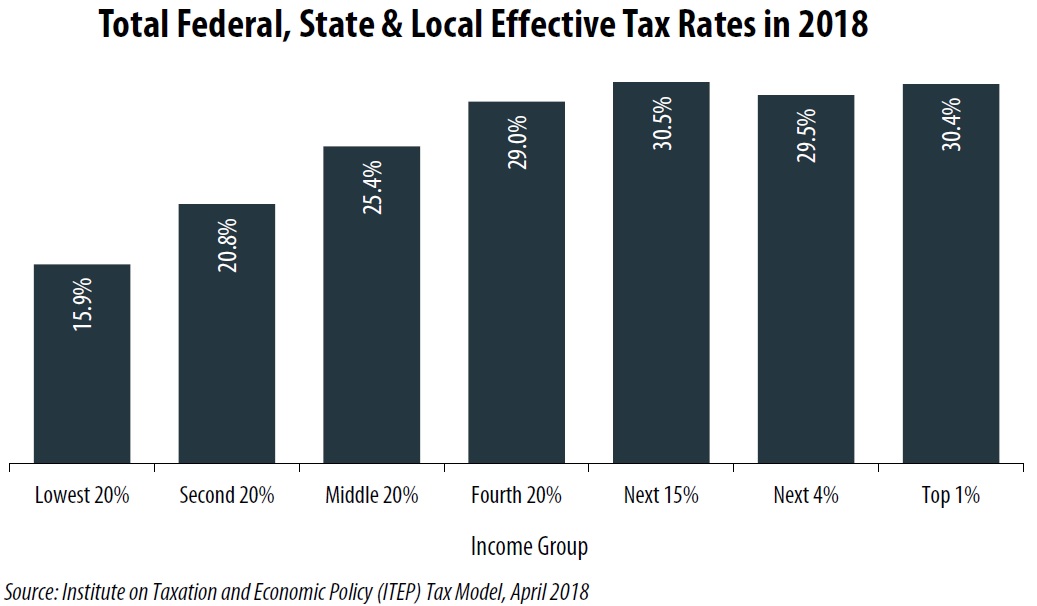
Is "employing" XX% of your population in virtual indentured servitude supposed to be something politicians are proud of?