There is a ton of misconceptions out there about paper. Not saying using less isn't a good thing, so.
Most paper uses a very decent amount of recycled paper, has ti actually. To the point the industry faced issues last Q1 when demand went down and there wasn't enough recycled paper on the market. Trees are grown explicitly for paper production, and are regrown in the same forests. Net forest losses are mainly due to farming, e.g. in the Amazon region. Energy wise, paper production offers great opportunities to balance the grid.
Most paper, at least in Europe, is actually recycled.
And electronics do have there issues as well. They consume raw earthes, are consumed as well, end up in land fills and also have quite extensive supply chains and CO2 foot prints. And they consume electricity, which has to produced. And we are nowhere near the necessary levels of renewables.
I do support getting rid of useless paper consumption, it just not as straight forward as it seems.
"Logging forests," "working forests" are not forests. They're tree farms. Calling them forests evokes a bunch of assumptions about conservation that are mostly not true about forestry trees.
We have a great deal of logging going on in temperate rainforests and there are whole swaths of the food chain that require moss growing on old growth trees. Clearcutting kills all of this. So does leaving a few trees intact, which is seen as some sort of improvement to conservation. It is not. Everything dies, it just dies slower. Most of the flora and fauna are adapted to full forest cover and high humidity. A copse of trees does not provide any of this. Summer comes and everything dries out.
We are still in need of a very different process for creating paper products. Fishing exclusion zones are an interesting model, but fish can move a lot farther than ferns, and a hell of a lot farther than moss and the habitat they provide. We may end up having to leaving a considerable amount of land intact (larger blocks, closer to everywhere) to avoid tree farm situations.
Well, that covers the paper, for the most part. Thanks for explaining that.
Now, let's talk about the other components:
the ink (petrochemicals, for the most part)
the production, transportation, and containers for the ink
the runoff into our biosphere from the ink production
the transportation of the paper to the printing facility
the binding (glue)
the transportation of the catalogs to the stores
the plastic wrap and other packaging for the catalogs
the labor put into it (perhaps those people could be paid to rest instead? probably better for everyone all-around)
Did I miss anything?
How many dead, displaced, or injured animals do you think that is per catalog? How many humans harmed by exposure to manufactured poison? How many gallons of diesel extracted, transported, refined, transported again, and burned? How many dozen pieces of trucks, trains, and container ships mined, produced, and worn down? Is it still better than viewing the same catalogs online on an already existing computer screen?
Every single artefact produced by our system has a similar footprint. It's not just money cost. And I think it's worth considering.
That's not really an argument against paper catalogs specifically, it looks more like an argument against consumerism in general.
But taken to the logical conclusion, that argument can look rather hypocritical, for example why is the discussion about paper vs electronic catalogs for buying furniture and not about why we even need beds and chairs to begin with, while people in japan are fine w/ futons[0] and kotatsu[1]?
One can take the argument to extremes and argue that amazonian forests burning in Brazil are partly due to you and I existing and needing to eat and wanting to have kids who need to be fed.
It's clearly a slippery slope, and if one draws the moral line to make others bad, while conveniently claiming to be "kosher" themselves, that's not really a convincing line.
Anything taken to an extreme becomes absurd, sure. You're right that my argument is not just against paper catalogs, but against consumerism in general.
However, my aim is not to take it to the extreme, nor to suggest that we shouldn't eat. It's merely to introduce a measure of "seventh generation" thinking and consideration into buying habits, beyond the amount of funds it takes to procure something.
If I take it further than sounds comfortable to you in my own life, it is only show what is possible, and to shift the needle of normal a little bit towards the direction of prudence and restraint.
Do we still need food? Of course! Do we need a place to sleep comfortably? Of course we do, and I do not suggest othrwise.
But what about new clothes when we already have quite a few sets which are still good, or a new pair of shoes when we still have a couple which are just a bit scuffed?
My argument is to consider the full systemic impact of buying those items, something no one else will do for us, before going through with it. If you consider this idea next time you are about to buy something, that each {dollar} spent comes back around in so many ways to harm us and our close relatives on the biological tree of live, then I will consider my writing a success.
I think your argument is the one falling down the slippery slope. How does considering protecting the environment to be good inevitably lead to arguments against both our existences when a line can be clearly drawn at the point where protection is advocated only so far as to maximize humanity's survival? This extreme is so clearly on the opposite side of that line compared to eradicating paper catalogs which honestly isn't going to kill anyone or stop us from "feeding our kids".
I'm not saying one necessarily implies the other. That was reductio ad absurdum precisely to demonstrate that any argument of this type, no matter how sensible or true, can be considered dismissible by someone.
I'm speaking to the idea of in-groups vs out-groups. For example, think about veganism and how their activism generally falls on deaf ears outside of their own circles. Bringing supply chain arguments to this discussion is very similar in the sense that they are strictly true but easily dismissible by someone who doesn't share the same set of values/priorities.
The line of argument might potentially even be self-defeating, for example, if the takeaway is that electronic catalogs > paper catalogs, never mind the rare earth mines and sweatshops in china and that drawers in ikea furniture still invite further consumerism. That's a very very different takeaway than "geez I should buy less stuff".
I'm not fluent in this logic lingo, but I don't think there's a point in pointing out that someone might believe in the absurd if its, well, absurd. Yes, surely there are crazy people who will jump down every slippery slope to misinterpret the very simple proposition that something, all things considered and along the line I have stated before, makes the world better, by taking it to the absurd, but I don't think arguing on this person's behalf like you are doing is particularly worthwhile if you even acknowledge that the slippery slope is absurd.
In the context of this discussion (i.e. the suggestion that consumerism is bad from an environmental impact perspective), that'd actually qualify as a feature of futons/kotatsu.
Sort of the whole point of a futon is that you put it in the closet during the day so you can reuse the space as your living room. Your bed just takes space that you don't use for 2/3 of the day.
Transportation has propably the highest negative impact, paper is aheavy bulk product after all. Animal impact, i would say comparativley low. We are talking about decades old economic forests here (there are of course exception which should be prosecuted to the fullest where ever possible). In Europa at least, these activities are not having any more negative impact on wild life. Again, these are not age old natural forestsanymore and haven't been for quite a while.
I am not saying pushing the catalogue to digital is a net negative, no idea how that could even be reliably quantified. Just that paper and print production is by no means as negative to the environment as is believed.
I generally agree with your direction. That said, this is incredibly hard to quantify (and also: [1]); because wildlife is not uniformly negatively affected in a clear-cut area. Any "artificial" intervention by humans will favour some animals and harm others. Ignoring the fact that it was probably humans who first cleared out primordial forests, the very act of re-planting a forest probably negatively impacted those species who don't thrive in a forest setting.
I'd say having such forests which are relatively unmolested for several years before being harvested are less negative than clearing them out and placing say farms in their place. So, overall it's not the biggest thing to go after, but then, I'm no expert.
[1] also depends greatly on what type of cutting we're talking about. I would say it's clear that illegal and / or legal but permanent deforestation is a negative. Above, I'm talking about forests which are planted and re-planted to obtain their wood.
> I think it's safe to say that there is no wildlife in Europe, so this is more or less correct.
You don't go out too much, do you? In my municipality we have wolves - at a population density of 214 ppl/km² no less. Since there's no recorded killings of livestock by wolves and they have to eat something, it's save to assume we're OK on boars and deer, too. Not to mention the rabbits, hares, badgers, various songbirds, birds of prey, insects and other critters I encounter on a daily basis when walking the dog. Through the local woods. Which are very much filled with wildlife.
edit: I got the population density wrong - it's actually much lower if the entire area is considered, not just the town :) the correct figure including all land would be ~45 ppl/km².
But are you sure this is not all dwarfed by the overall quantities and volumes which IKEA produces, transports and sells? i.e. the furniture, decorations, fittings, textiles etc. ?
Possibly true, but so what? Every little bit helps and this seems like an easy win, ecologically speaking.
I hate to think how much junk mail I receive every year. We use a 14 gallon recycling bin and it's about half full of waste paper mail EVERY WEEK in the USA. Catalogs, flyers, credit card offers, loan offers, etc. It's disgusting and I can't opt out.
I agree, but to me it is still like holding a cup over your head while it is raining outside and functionally does almost nothing except spread the fake idea that we are actually turning society green. Paper in general is probably one of the least things we should be worried about because it is one of the easiest things to farm and uses minimal input compared to the bulk of material it produces.
> Every little bit helps and this seems like an easy win, ecologically speaking.
It is likely not helpful if IKEA gets to enjoy the image of an environmentally-friendly eneterprise based on a token gesture. Many companies engage in such gestures to get themselves off the hook for their involvement in problematic practices.
I'm not saying that it's IKEA's fault that people buy throw-away furniture, or that the population is growing etc, but still.
They are very good at minimizing packaging. Also, my kids use my IKEA dresser that I had when I was younger, bought in 1989. I had to replace the rails and a few of the knobs, but it's still in fantastic shape even after going through several changes of residence.
Just throwing this out there -- it's not like all of this stuff is ending in the trash. This dresser is over 30 years old now.
You're right, of course. The catalog is dwarved by all the other products that come out of Ikea. I personally don't partake in buying them for 10+ years now, because I think about the stuff above. Plenty of furniture I can get without pulling on that supply chain.
This is why I have not bought a new computer in 10+ years, and have only used hand-me-downs for the last 8, with a similar track record on mobile devices.
You are right, but it would be possible to produce like 99% of that from trees, if we bothered to spend to effort. You can distill trees into petroleum products, however doing so breaks the illusion of how much organic material we are burning through with just a single gallon of fuel or oil. Rather than thinking "its just a single gallon of gas" it turns into "well that as at least like 3-4 trees worth of fuel."
Well, yes, although glossy pages create some extra impact.
However, if the book in question is one which will be kept for a while, actually read or referred to, perhaps it is a more worthwhile endeavor?
Compare that to the other end of the spectrum, e.g. supermarket ads, most of which do not even leave the plastic bag which carries them into someone's front yard and straight into the trash.
I'm not sure it's misconception. When I was a student a very long time ago on holidays I used to work in a paper mill in various departments laboratory and engineering departments, mechanical, instrumentation, electrical etc.
The UK paper making industry has (and had) been in decline for decades for many reasons but the main issue is cost, more specifically energy costs. Second to those costs were material resources.
This paper mill was a recycling paper mill and the cost to produce acceptable standard paper was enormous. It used an enormous amount of gas to feed it's huge boilers producing steam, it even had it's own water turbine generators fed by the local river it was built alongside to produce electricity. It supplemented this with electricity from the grid which was even more expensive. It's biggest customer I'm fairly sure was McDonalds
Pulp was shipped in from Norway because again it was cheaper, at that time 100% recycled paper was not profitable and pulp from the UK was too expensive. When the company went into administration most of it's equipment which was old even at that time was bought by companies from China.
This mill was old, dating back to 1880 and it's infrastructure was part of the reason of it's demise. But there were 2 other paper mills in the same small town that eventually met the same demise, one being a much more modern construction, however it lasted longer by specialising in more profitable products such as tissue.
The paper industry is not carbon efficient, it will be much more efficient than it used to be but it still takes a huge amount of energy to produce. In lower volume it could be but consumerism dictates it isn't, it's why China is the largest paper making country in the world now.
I do have some fond memories working there even though it was hard work, at christmas time when the mill would shutdown it was absolutely freezing and doing a 12 hour shift on boxing day working inside a 5 storey high boiler was maybe not so pleasant. There were some wonderful quirks about the place, where the turbine generators were you could climb below the workshop floor where the bypass outflow was and you'd find one or 2 people sitting on wooden girders above the water fishing on their lunch break
Silviculture is an interesting subject, and while you're right that a lot of pulpwood is sourced from timber plantations, that isn't entirely benign. It is an an agricultural process and many use fertilizers (haber-bosch process, natural gas inputs), insecticides, and fungicides. On the production end, the modern kraft process plant still produces air and water pollution.
>Most paper, at least in Europe, is actually recycled.
Recycling is terrible too, you waste tons of fresh water to wash out the color and contaminate it with soap and all that toxic colors, and the glossy paper is even worse because it's normally not recyclable, so it's made to carton or burned.
How much energy and water goes into recycling? Collecting, sorting, processing?
Trees grown explicitly for paper still require energy to plant, manage, cut and still represents a habitat loss. Europe has absolutely obliterated its forests. Anything that isn't a net gain is a major issue at this point.
> Please don't use "Europe" when comparing unless it applies to all 50 countries.
As someone who lives in a smaller European country, I can empathize. At least on HN, it seems like both Europeans (in the regional sense) and non-Europeans are guilty of this. However, while the parent claim may or may not be accurate in this case, I think the use of "Europe" can reasonably be interpreted as referring to the region in aggregate, just as North America or Oceania might be used.
My larger problem with the parent and GP comments is that they both make specific claims about "Europe" that aren't self-evident without any citations.
That seems a bit unfair since I was replying to someone that was making positive generalization about Europe.
Also, at the risk of moving the goalpost, having more trees than some arbitrary point in time isn't particularly reassuring. In central Europe, at least, 1925 would have been near an all-time low. The deforestation in central and northern Europe has been going on for millennia (https://www.nature.com/articles/s41598-017-18646-7)
Not to forget, trees used in paper store a lot of CO2, CO2 that is not released until said paper is ultimately burned. Which takes a while.
As wth everything, hyper industrialisation didn't do anything good. Sustainability used to be a hallmark of forestry. If we could just go back to that, and adopt it to maximize CO2 capture, it would be great. As would be going back to pre-industrial animal farming, better for the animals, better for the environment, better for the farmers and better meat.
Calling the place were they grow trees for paper a forest is an exercise in grammatical pedantry at least. The flora and fauna in those places is not similar to a real forest at all.
I some cases they don't even provide the same amount of carbon capture because of all the energy spent on irrigation that wouldn't be necessary without the groundwork they do to make harvesting the trees easier.
Yeah more paper doesn't equal less trees, but it does equal less forests because you can't grow a real forest if you are constantly irrigating and harvesting trees.


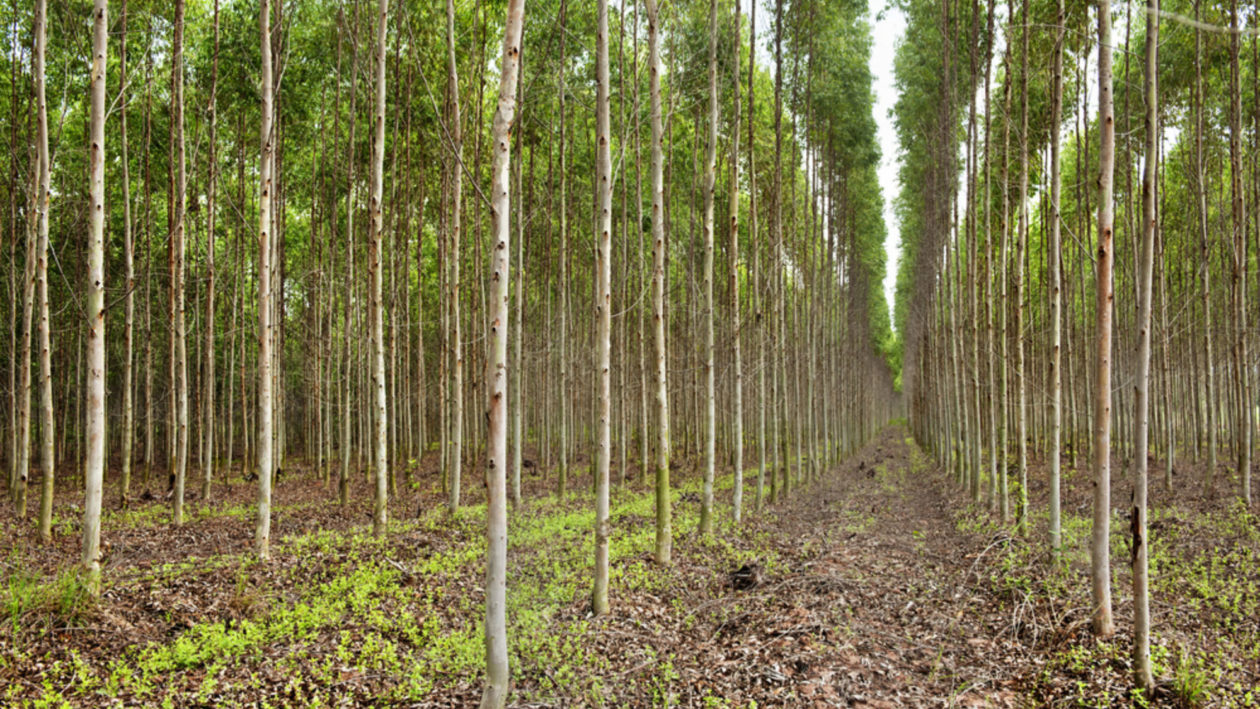
Most paper uses a very decent amount of recycled paper, has ti actually. To the point the industry faced issues last Q1 when demand went down and there wasn't enough recycled paper on the market. Trees are grown explicitly for paper production, and are regrown in the same forests. Net forest losses are mainly due to farming, e.g. in the Amazon region. Energy wise, paper production offers great opportunities to balance the grid.
Most paper, at least in Europe, is actually recycled.
And electronics do have there issues as well. They consume raw earthes, are consumed as well, end up in land fills and also have quite extensive supply chains and CO2 foot prints. And they consume electricity, which has to produced. And we are nowhere near the necessary levels of renewables.
I do support getting rid of useless paper consumption, it just not as straight forward as it seems.