What I read in this article is that German government did a thorough analysis, but the author dismisses the conclusions of it because the tolerated risk level there is too low and because it’s done by a minister from the Greens party.
If this was written by an expert, that could make some sense, but it is not. Nuclear plant is not a startup, where you can just skip the QA part to release faster or put a not working cookie banner for few months, because nobody really checks compliance. You have to conduct safety tests, there should be enough staff and replacement parts, fuel supply must be secured, waste disposal must be planned in advance. Calling to accept risks of not doing this properly is not exactly what German public supports. The polls are tricky thing to do. If you ask certain questions you will get whatever results you want. I’m sure it was not explained to the public in the poll that they will have to accept higher risks of nuclear disaster if reactors will be allowed to operate. Everyone thinks that it is as safe as it was in the past - no wonder majority would support it to help Ukraine.
The thing is, this majority also includes supporters of Greens and the party itself is not the same as it was in 80s. Greens are no longer unconditional pacifists and anti-nuclear hippies. They are the biggest supporters of sending heavy weapons to Ukraine now. They would extend nuclear if possible, because it advances the more important agenda of reducing emissions and helps Ukraine. They were ready to wait 20 years to phase out nuclear in 2000s, and it wasn’t Greens who accelerated shutdown after Fukushima. It was pro-business CDU with Merkel as a head of the government. This is why I would rather trust Habeck with his report than some random guy from the Internet with a political message.
You're repeating some of the excuses the article addresses.
- The author says they studied nuclear in grad school, and are probably therefore an expert.
- They quantify the additional risk of meltdown due to delaying new safety regulations. It's negligible compared to operating plants according to the new regulations.
- Their proposal would increase Germany's stockpile of nuclear waste by 3%, which is surely within engineering tolerances, ignoring the fact that the disposal facilities were planned before they decided to prematurely close the plants.
I don't see how it matters which political party made which political decisions in the past. Conditions have changed.
The way the author dismisses engineering concerns lets me strongly doubt that he is an expert. There is a discussion on fuel, spare parts and personal, where he basically says that he doesn't care.
The burning of nuclear fuel is actually very closely managed, fuel elements are regularly shuffled around because the ones in the center burn up faster than the ones at the edge of the core and the shuffling around is planned a long time in advance. So, when the end of life is planned for 2022 then the plan is actually to have the fuel spent at that date and you couldn't get much additional power out of it.
The same is of course true for spare parts. First of all, the industrial environment that supplies spare parts knows since 20 years about the plans to phase out nuclear and plan accordingly. They are actively trying to run out of spare parts right now, while of course all the maintenance task that get a rating of "should be ok for some time" get skipped in the power plants. That means, that they would need major maintenance right now, while the spare parts are planned to be not there and the industrial capacity to build spare parts has been re purposed or dismantled.
The same of course also for personal, they knew for a long time this was coming and planned their careers accordingly, though this is probably the least problem of the tree, but still that lets me doubt wether the author ever did plan a moderately complex project, let alone being an expert about nuclear power.
He has a couple of masters in non-nuclear engineering and an MBA with a focus on psychology. He is not a nuclear expert nor does he have the scholastic background to say he is. I’m not an expert in all but a few of the topics I studied in graduate school, and without a doctorate degree a great deal of people wouldn’t consider me an expert at those, either.
You can see in his profile on LinkedIn that he never ever worked for anything even remotely related to engineering. All his positions were related to Marketing.
> They quantify the additional risk of meltdown due to delaying new safety regulations. It's negligible compared to operating plants according to the new regulations.
First of all, that estimate was not made by an expert, as other commenters pointed out. Second, the additional risk is created not because of new safety standards, but also from all other factors where deviation from standard procedures could accelerate the process. This risk is hard to quantify, it can materialize in unexpected ways (just like nobody expected Chernobyl or Fukushima) and it will cost such rich and densely populated country as Germany trillions. The choice between „you may loose everything but Russia will suffer next year“ and „let’s try something else to actually stop the war“ has pretty obvious outcome.
> This risk is hard to quantify, it can materialize in unexpected ways (just like nobody expected Chernobyl or Fukushima) and it will cost such rich and densely populated country as Germany trillions.
You know everyone who died from Fukushima died from the evacuation not radiation, right? You know more people are killed in Germany every year from coal pollution than have died as a result of Chernobyl in total?
So what if they died of the evacuation, the nuclear accident caused the evacuation. I find this argument mind-boggling, because people didn't die directly of radiation exposure it is somehow ok that Japan had to evacuate a significant population? If this would happen e.g. to Krümmel you'd have to evacuate the second largest city in Germany, that's 2 million people.
A few years after Fukushima we had a even large evacuation done in California, 180,000 people (and the relocation of a fish hatchery) compared to 150,000 people in Japan. It did not make international news, the death toll was not estimated, and things went back to normal fairly fast.
Large evacuations are rare but they aren't that uncommon. It just doesn't get the news attention. It is a bit like traffic deaths, which might also be a significant portion of the deaths caused by the evacuation. Force 180,000 to take to the road and some will not return back alive.
Living downstream of a hydro power dam is actually more dangerous than living near a nuclear plant. The destructive forces of a dam is barely being maintained by a thin layer of concrete, and it only takes a bit of human mistakes and bad weather to cause mayhem and death.
Disasters like flood or fire don’t usually render large areas uninhabitable - people can return home, rebuild and live as usual. Nuclear incidents on the contrary have long term economic effects and public health dangers. My Russian grandfather died from cancer after unknowingly spending some time in unrestricted area of radioactive fallout 15 years after the incident (see Mayak plant [1] and Techa river [2]). The local population of Muslumovo there was resettled long after the catastrophe when the details of the incident were made known.
The discussion around Fukushima is not about the loss of land that got rendered uninhabitable, it is exclusively focused on the loss of life. If you want to change the discussion into be about the loss of land we also need to consider how an hydro power dam changes the landscape, turning habitable land into uninhabitable lakes or turning arid land into deserts by changing water flows. For the amount of energy that nuclear power produce, I am uncertain if land usage that can't be used for housing/farming is something that should be argued as an point against it.
It sad that your Russian grandfather died because the government was dishonest and didn't protect their citizens. I know similar stories from mining towns where especially radon tend to be of such high levels that people end up getting cancer and die. Most nations have regulations to prevent that but it took many lives before those regulations where in place. Fossil fuels are particular guilty in creating large uninhabitable areas because of increase radiation risks, but basically any mining has been guilty. Cut into the ground and significant amount of radioactive material will end up in the air and water.
>The discussion around Fukushima is not about the loss of land that got rendered uninhabitable, it is exclusively focused on the loss of life.
This conversation is happening in response to my mentioning of Fukushima (see the thread above). I did not focus exclusively on the loss of life and do not see why the discussion should be restricted to that topic.
Nevertheless, "uninhabitable" means people cannot live there so it's still within your frame. You cannot live in the area with significant radioactivity without risking your life. Loss of life can be prevented by quickly moving people from the dangerous area, but this is also undesirable. This is not comparable to environmental effects related to construction of dams or mining activities, because those can be estimated in advance and mitigations including resettling can be planned. This is also the reason why new mining projects in Germany are rarely happening and there's ongoing process to stop mining coal. If you want to account for possible radioactive fallout from a nuclear plant incident and plan mitigations in advance, there's simply no place in Germany where you could put a circle with 30-50 km radius and just remove all people from there. Practically all land in Germany is covered by urban areas, agricultural lands or natural reserves - increased risks associated with extension of timeline for existing reactors without major and time-consuming investment are unacceptable there.
Are you saying that its acceptable that an energy source is creating large areas of uninhabitable land, as long as it slow enough that people can plan for it?
Quickly moving people from the dangerous area is undesirable, but as I said previously, California did exactly that. It would be interesting to see an estimate on how many died from it so we could make an apple to apple comparison.
When looking at energy sources it is good to look at statistics. Per unit of energy produced, how much land is used. How many lives are lost. How many are maimed or injured.
If we are jumping directly to unacceptable risks, continuing funding Russian military is unacceptable risk to Germany. Continuing burning fossil fuel and causing global warming is unacceptable. Not having enough enough electricity produced to meet demand is unacceptable. Paying more for electricity than the economy can handle is unacceptable. Continuing having nuclear power plants is unacceptable. Solving the unacceptable problems seems to be impossible, and thus some things that are unacceptable will need to be accepted. The question is which one people are willing to stomach. Personally I kind of dislike the idea of funding civilian slaughter and Russian quest for lebensraum.
> Personally I kind of dislike the idea of funding civilian slaughter and Russian quest for lebensraum.
Germany stopping buying gas now will neither stop the war, nor it will prevent Russian military from receiving money from Russian government.
Everyone who repeats this idea as you do is just diverting the discussion from other options.
Yes, you may feel some moral obligation to cut off economic ties to Russia, but there are always stupid moral choices (doing more harm than good) and reasonable ones. Continuing with nuclear, stopping gas imports are both stupid choices.
Locking cash paid for gas on an escrow account in neutral country could work better. Accelerating investment in renewables and energy conservation, cutting red tape, shipping heavy weapons and offering other support to Ukraine are more pragmatic and impactful options.
The risk that continuing buying gas from Russia will cause more war and further destruction is higher than the risk that continuing operations of nuclear power will cause a nuclear accident.
We can call names if we want. Continuing heating the planet up by burning fossil fuels when we have a cleaner option is stupid and history won't look favorable to fossil fuel advocates. There is a mass extinction occurring all over the world, especially in the oceans, just because people are afraid of a once in 100,000 year risk that with modern technology is even smaller risk. There has never been a earthquake recorded in Germany that has been large enough to interfere with German nuclear plants. Utterly madness how afraid people are to something which won't occur.
Conflict resources are internationally known to be a factor in war, in contributing to war, and to prolong wars. It doesn't matter if the aggressor is an IS, some warlord in Congo, or Russia. A major tactic dealing with IS was to cut their funding, and while it did take many years, the effect of cutting IS funding is rarely disputed.
> Utterly madness how afraid people are to something which won't occur.
What you are doing here is a perversion of facts and opinions. Nobody is afraid of a nuclear incident caused by an earthquake in Germany. Nobody in this thread was talking about it. The examples of Fukushima or Chernobyl were provided only as examples of unforeseen events, that illustrate why safety must be taken seriously, why any „acceleration“ is dangerous and why actual risks and costs can be higher than some people wish to see.
>The risk that continuing buying gas from Russia will cause more war and further destruction is higher than the risk that continuing operations of nuclear power will cause a nuclear accident.
Europe will stop buying gas from Russia relatively soon to ensure it has less resources to wage new wars. It is absolutely baseless claim to say that immediate stop will have a significant positive impact.
> Germany stopping buying gas now will neither stop the war, nor it will prevent Russian military from receiving money from Russian government
Please provide your facts that providing Russia with more funds won't prolong and extend their war in Europe.
We can call your assertion a perversion of facts and opinions if you like. It is absolutely fact-less to say that immediate stop will not have a significant positive impact. An opinion one might say.
It is a fact that nation do see the purchase of conflict resources as an contributing factor for prolonging wars. Europe might stop buying fossil fuels from Russia in 5-10-20 years from now. It is also a Fact that we don't know if it will be too late, what Russia will do in the mean time, nor how they will react to more sanctions. The risk is that Russia will invade more countries if funding continue is only something which people can estimate, like the risk that a nuclear accident might occur within that time frame.
Why do you think so? To me the argument sounds like:
> no one died of radiation, since they were evacuated. The people who did die, because of the evacuation, shouldn’t count because they didn’t die from the radiation. The evacuation wasn’t necessary, which is proven since no one died from radiation.
And the notion that more people would have died from the radiation if they didn’t evacuate is just ignored. Well, no one died in the fire. The only people that died did because they jumped from windows. But that no one died in the fire proves that the fire wasn’t dangerous and they didn’t need to jump in the first place.
The downside of nuclear power is, potentially & in rare circumstances, a large number of people have to move.
I don't want to trivialise that - it is a big cost. But it isn't exactly like we're talking a threat to anyone's health and well-being. And when I say "rare" I mean once, globally, every 25 years with 1970s plant designs. It is quite a bit safer now with the absurd safety standards people make nuclear keep.
Basically, although costly, it is a tiny risk once we estimate [danger x likelihood = risk].
The problem with nuclear plants is the risk is really unknown. One cannot say it is small.
For example, nobody considered that Russia would fire artillery against nuclear reactors. And now a threat of attacks with powerful conventional weapons against nuclear reactors and waste processing/storage has to be considered very seriously.
Similarly we cannot assume that technological progress would not allow a single terrorist with right equipment to trigger another Chernobyl.
> For example, nobody considered that Russia would fire artillery against nuclear reactors.
I think in that sentence, the scary part is not the nuclear reactor part. And my understanding is nuclear plant design includes consideration of missile impacts.
The biggest downside right now is that it is to slow and to expensive to build new plants to make any meaningful impact in either gas deliveries from Russia or climate disaster.
Some of them likely would have been completely fine and completely unexposed to dangerous levels of radiation.. but not all of them.. and it was impossible to know which were which until weeks and months later when they did more thorough testing.
Many local areas were reporting over radiation of >500 millisieverts/year, which is ~150x the typical background dose. The famous XKCD Radiation chart shows a bunch of Fukushima related doses -- it was actually pretty dangerous for people close to the exclusion zone!
> So what if they died of the evacuation, the nuclear accident caused the evacuation.
I wasn't aware that the nuclear accident caused massive flooding (the person you're responding to is saying that everyone died from the tsunami, not the radiation). Your point still stands about large economic costs to exclusion zones, but I don't feel you responded in good faith. As per the article (and as someone who actually did study nuclear physics), the risk of creating an exclusion zone in Germany is extremely small. Last I checked German doesn't have many earthquakes nor large bodies of water that could lead to danger from tsunamis. Germany seems fairly stable from an environmental standpoint, so the only real causes for a nuclear disaster would be from a freak accident. Considering we've learned a lot about safety in the last decade (and way more since Chernobyl), this risk is pretty small.
How is it different than shelling a water dam? I would wager it is much easier to do huge harm that way than to shell a concrete hull made to withstand two planes simultaneously hitting it, or even cutting the main pipe in half, which will still safely shut down the plant. The only real (and exceptionally tiny) risk with modern nuclear plants is some contamination, but it needs several several fuckups to happen even with a goddamn tsunami hitting it
If nobody provably died because of the Fukushima accident, it was because of expansive and costly evacuations. The Japanese minstry of trade estimates the cost of the cleanup to $187 billion, though I'm not sure if that really includes everything. And that number is certainly not the upper bound on what could happen when other plants have similar or worse accidents.
It's a very small risk with a huge downside. The fact that scientists have consistently underestimated the likelihood of these events - even though so far there has never been one caused by ill intent - is not reassuring.
Is the cleanup related to nuclear, or the whole tsunami?
Also, how is it underestimated? There was an exceptionally huge tsunami there, and even with that there would have been no trouble given the backup-generators would work well and even then, only a slight radiation exposure happened. There have been orders of magnitude more failures in other power plants causing much bigger damage (not even counting the environmental effect of them!).
Can you name such accidents specifically? I just stated a figure from the Japanese Ministry of trade, and that seems to be the radioactive cleanup and paying of benefits etc.. while there is another figure that decommissioning the plant will cost about 750 billion US Dollars.
A particular problem are millions of square meters of radio-active top-soil and where to store it. Yes, those problems have not been solved yet, and most evacuees have not yet returned and will probably never return. No amount of propaganda will convince them that the site is safe after the "safe" reactor blew up and contaminated everything. Meanwhile nuclear power has become really unpopular in Japan. People like you will dismiss this as irrational fear. Or is it irrational that you think that the future risk is a) actually quantifiable and b) tolerable? Because neither of these is scientific consensus.
Also, Chernobyl was due to a completely incompetent plant manager. They intentionally disabled many fail safes in order to get the plant into a vulnerable state.
I think human error is one of the kinds of error it's really hard to work around. You are always going to have people who make mistakes or even intentionally cut corners or do unsafe things, depending on the circumstances.
Would I expect a German plant to be run in a safer manner in the 2020s than a Soviet Ukrainian plant in the 1980s? Sure, absolutely. Both because of the design of the plants, and because of the different safety cultures. But I don't think we can just hand-wave a disaster away and claim that it only happened because of X or Y or Z, without being certain X, Y, and Z have been eliminated. And I don't think we can say that with certainty.
Chernobyl was no error per se. It was conscious decision with political background, possible, because entire system of values in USSR was upside down. In normal country there would be no reason to do any of that.
This type of issues? No. I assume you mean nazis, but while it's hard to find words to describe their crimes, they had pretty robust approach to engineering. On the east side from the other hand ideology always beat logic.
Also, if we're going to assume, that everything we build will be foundation for the next Hitler, then there's hardly point in doing anything.
Of course it was present, like in any authoritarian system.
But you can see that the scale of fuckups for these two is nowhere near of each other. Modern evidence is Ukrainian war, which Russians believed, can win in 48 hours.
I'm not sure what side of the argument you are on.
My point is that authoritarian regimes are possible anywhere; they lead to information being surpressed; and this could be dangerous in the case of nuclear reactors.
The example of Russia seems an excellent example of the same pattern.
Not sure if I have to pick a side. Usually there's some truth at both ends. :-)
My point is, that chance of USSR-like regime in western Europe are pretty low, and being afraid to do anything, because it might be used by this hypothetical regime will probably cause more harm than good.
For eg. right now we're feeding Russia with money, which is guaranteed to be bad for us in the long run. I assume we are doing that, because it will be easier to find single scapegoat for nuclear plant failure, than for years of bad foreign politics.
> that chance of USSR-like regime in western Europe are pretty low
Why? Surely if Brexit or Berlusconi or Le Pen or Orban or Erdogan shows us anything it shows how democratic outcomes are unpredictable, especially over the 50 year plus timeframe of a Nuclear Plant.
It's important to note that Chernobyl and Fukushima have quite different (multiple!) causal factors leading to their meltdowns. Chernobyl was mostly do to highly secretive nature of nuclear (with information actively being suppressed by the Soviet Union), lack of safety equipment, poor staffing, poor response time, and a lack of knowledge of physics (xenon spiking). People mostly chalk it up to incompetence, but saying that's all that happened is naive. A lot of this isn't as surprising since the tech was very new at the time and the cultural warfare going on. Fukushima was a combination of cheaping out on safety concerns and a lack of scientific understanding that such a large earthquake could happen in the region (remember, that was the largest in recorded history for the area. Tsunami records indicating similar sizes are hard to differentiate fact from fiction). We've also learned a lot about fault dymanics since then (e.g. that Cascadia can have a massive quake too). Germany on the other hand is geologically stable and there's not many environmental concerns like tsunamis, earthquakes, or tornadoes. So we just have to hope we've learned some safety things in the last 50 years.
Tell that to the families of the "exterminators" in Chernobyl. Tell them that it had nothing to do with radiation from Chernobyl that most of them died by cancer years after the accident.
You're emotionalizing the discourse. The people killed by other types of power plants have families too, you know. Your level of propaganda implies an ideological agenda against nuclear power. I do think the general sentiment for environmentalism and against the governments and industries that destroyed the planet was and is justified. But the anti-nuclear ideology was the wrong conclusion and has done more harm than good (lots of burned coal, lots of misguided activists/politicians). Nuclear power is comparatively healthy (even considering your inflated worst-case numbers), albeit expensive.
This is an urban legend. There are 4000 statistical casualties.
Liquidators (not exterminators) were well over 100,000 and while I was too young in 1986 to participate in liquidation efforts, I knew a few personally later on. They got their share of health problems from poor logistics on the ground. Like sleeping for months in tents at sub-zero temperatures. But not from radiation exposure.
The Fukushima plant was older than the Chernobyl plant, maybe we should just shut them down and build new ones to save us the cost of another nuclear exclusion zone?
In software development we patch and upgrade libraries to remove security vulnerabilities.
With nuclear plants we first of all do not acknowledge any vulnerabilities and if we do find one we do absolutely nothing because upgrading safety costs billions or requires building a new power plant which costs 10s of billions. Running nuclear power plants in unsafe conditions is an everyday business affair.
Depending on politicians - or anyone's - ability to completely eliminate that risk is completely naive.
And that's why scientists (and politicians listening to them) have consistently underestimated the risks. Scientists somehow think it is not their job to account for Human error, fallibility or even depravity (see Russians attacking nuclear plants in Ukraine).
If you're assuming that political situation will come anywhere near this known from communist block, then random nuclear plant failure is probably pretty low on the list of the issues they caused. Much more people died due to simply saying something against propaganda than as a result of Chernobyl.
I know that politicians suck, but if we do everything assuming that next Stalin and Lenin are inevitable, then even knfie production starts to look suspicious.
The number of deaths from a nuclear incident will be significant in Germany in any case, either as a result of evacuation or from radiation.
The economic damage overall will be much higher than in any incident of the past, due to environmental impact, destroyed or de-valued property, disrupted businesses etc. Half of German GDP will be the lowest estimate.
And you know that there is no reliable casualty count from Chernobyl? The Soviets didn't count and follow up, nobody else wanted to do that neither. And long term effects, e.g. highe cancer rates, are extremely hard to quabtify and correlate woth a singluar event.
> According to the official, internationally recognised death toll, just 31 people died as an immediate result of Chernobyl while the UN estimates that only 50 deaths can be directly attributed to the disaster. In 2005, it predicted a further 4,000 might eventually die as a result of the radiation exposure
The USSR, and successor states, lost track of the liquidators, completely. It helped in not paying them. The West was fine with it, it made it easier to sell nuclear as save. It also meant that any Liquidator who died of conplications after Chernobyl was most likely not included in official figures, because nobody officially counted him as having been there in the first place.
Without disagreeing per se, some of the reasoning is dubious.
Studying something in grad school likely makes you familiar, not an expert. I would be skeptical of anyone without at least a decade of industry experience. No one becomes an expert by going to grad school; you have to build real things under real constraints. I went through a selective hard sciences program (coincidentally including nuclear chemistry) and industry people forgot more than we ever learned.
School creates confident sounding opinions but it rarely creates deep domain expertise. I would put more value in the opinions of people that have built or worked on real systems.
And to be clear, I am broadly pro-nuclear. I think it is a critical part of the energy mix that has been maligned on anti-scientific grounds by parties with an agenda separate from providing clean, inexpensive energy.
> I would put more value in the opinions of people that have built or worked on real systems.
+100. It took me a while to internalise Nassim Taleb's point of skin in the game. Now that I exactly know what he means I've learned to more or less disregard opinions of non-practitioners.
Just be aware that you very easily talk yourself into believing that someone does or doesn't have skin in the game on accident or to maintain a certain opinion.
This one[1]. To be clear I haven't read the book. However, I have read quite a bit of his articles and watched his talks all of which I highly recommend.
The crux of the argument is simple enough. One should attach more weightage to opinions of who have stake in what they talking about. For instance, an a bond trader will have more realistic picture of economy than someone like Paul Krugman. Bond trader earns his wages by being more correct about economy. Paul Krugman on the other hand can change his opinion at the drop of a hat with zero negative impact to his earnings.
Measuring expertise is particularly tricky with the nuclear industry.
Is it enough to be an expert in the underlying physics? Should you be an engineer with experience in any one of the dozens of disciplines? Do you need to be familiar with the specific design of a reactor (that is probably confidential)? Everyone is an expert but no one has a holistic view of everything. It's complicated!
In this particular case it's rather simple to define who is an expert: if you want to challenge government report, you have to understand the challenged topics very well, have to have a lot of factual information about the state of the German nuclear industry and have to understand how possible solutions will work.
Not to argue the case, but they surely had ample opportunity to be briefed by persons who were very qualified-- and if they failed to get those briefings they were failing in their duty.
Ah yes, completely unscientific... Like the Russian soldiers who dug trenches in the "red forest" near Tschernobyl, got radiation poisoning and scattered the stuff all over the place where people still have to work to contain the impossible accident that happend decades ago.
Yes, things like that and "Oh, from now on nothing will happen, science says so!"scares the shit out of people. Anti-scientific? There is just no public support for storing the waste anywhere near where people live. And there isn't a safe site in Germany anyway.
Safe nuclear reactors may be decades away from broad commercialization.
You realize that this is not a coherent and rational response, yes? You don't address anything, you just throw out oddly random straw men. Maybe I am incorrect but nothing you wrote would contribute to that discussion.
GP might have ranted, but after decades of searching a suitable place for long-term storage of nuclear waste in Germany, the list of candidate sites is empty. And the willingness of anyone in Germany to tolerate a nuclear waste storage facility in their neighborhood is non existant. That is the reason why nuclear is unpopular in Germany. On the other hand, Germany also imported most of its uran from Russia. So that would have to change as well if Germany where to return to nuclear.
The original article also treats all sources of electricity as interchangable. Some kind of plants are slow to turn on and up (e.g. nuclear plants) whereas others are very fast to turn on, off, up, or down (e.g. natural gas plants). The latter kind of plants is needed to compensate the unpredictability of solar and wind energy. Nuclear plants cannot fulfill that role.
In my opinion Germany should have started to invest way more in the last two decades in synthetization of natural gas from thin air and cheap solar and wind energy. That would provide us with huge storage facilities for energy. And we could make huge amounts of natural gas heating unit eco-friendly without having to replace them. And even ten or fifteen years back it was clear that not being dependend on Russia would be a good thing.
In my opinion the opposition to nuclear power is not anti-scientific. It is bullshit to just label all the proponents scientists and the opposition non-scientists. There are two factions arguing on scientific grounds.
That there is another level to the discussion, the fear of nuclear disasters is another topic. It is impossible to say where the "rational" level of fear is. Scientists have been wrong about the risks too often. With the huge downsides, people will gladly err on the side of caution.
My arguments are examples why the "anti-scientific" argument is just BS. The fear is not always rational, but always legitimate. It is all about risk tolerance.
I've heard a lot of supporters who generally disregard the possibility of future such accidents happening. Certainly you wouldn't want it to happen anywhere near you?
And there is no clear, scientific reasoning that nuclear power is safer than the best mix of alternatives. First of all, any calculation to that regard is horrendously complicated on the nuclear side. Second of all, it always depends on the likelihoods observed in the past. There better be nobody sabotaging a nuclear plant, or stealing waste material for a dirty bomb and so on. Because that's impossible to calculate, so it is entirely reasonable to err on the side of caution.
> The author says they studied nuclear in grad school, and are probably therefore an expert.
That's not how it works. Just going to grad school (and it appears this is just for a Master's) doesn't imply you're suddenly an expert on an entire discipline. Even full professors don't generally claim to be experts in their entire fields; they become experts in their niches sub-fields/areas of research. You'd need to know what topics someone has actually studied, what their work/research was like, etc. before you can assume they're an expert in the areas you care about, and that information isn't given here.
> That's not how it works. Just going to grad school (and it appears this is just for a Master's) doesn't imply you're suddenly an expert on an entire discipline.
I think it makes you pretty knowledgeable. Expert is a bit vague. Many would consider expertise in having extensive knowledge beyond that of the public. If he studied in undergrad he'd have this. He'd get more in grad school. But if we're talking expert as in "leading expert" then no, he clearly isn't that. But by your own definition, it means that the politicians that made these evaluations and decisions themselves were not experts. If a full professor does not qualify then even a PhD in nuclear physics but working in politics certainty does not qualify.
So I'm a bit confused by this comment. I appreciate an appeal to experts as opposed to assuming that we here on HN know better, but I feel this comment moved the goal post too far and just shifted the decision to experts in an inconsistent manner.
I don't think the line between "expert" and "knowledgeable" is in any way blurry enough for it to affect this discussion. For something as serious as nuclear power plants and their safety (not to mention political factors), I don't think "let's expect considerably more than a Master's degree in nuclear engineering... we need an expert" is a remotely controversial statement or a movement of any goalpost. I'm pretty sure that's exactly what the public sentiment/goalposts have been and will continue to be on this issue.
My main point here is that the gp said "op isn't an expert because they don't have xyz qualifications so can't criticize these experts (who also don't have xyz qualifications)". It's the inconsistency.
Also, the piece is at such a high level that it really doesn't take a lot of expertise to write. The summary of the article is "I'd rather take the risks of nuclear by restarting our existing nuclear infrastructure rather than to continue to fund the Russian war machine." That's really it. He gives more support and tries to sound scientific, but it's just an opinion and the guy is an actual expert in marketing. Seems fair enough.
I think this is moving the goalposts. According to you it's not enough to have the qualifications, you need specific ones in specific sub areas. What's to stop you dismissing him by dividing it up even more if it turns out he's actually studied the right area?
To me it sounds a bit like when anti vaxxers dismiss doctors who aren't epidemiologists, or when people dismiss Krugman because he's a trade economist and not some other subspecialty.
Just give the guy credit for his claim that he's studied this, chances are he's closer to the area than people who don't claim expertise and otherwise let him present his case, which is what really matters anyway.
Being expert in this case means being familiar with the current situation in German nuclear industry and knowing it from the inside. Just knowing how nuclear plant works in theory is not enough.
> I studied nuclear energy generation in my two MSc in Industrial Engineering.
which to me sounds not like he actually did a masters in nuclear power generation, but took some courses during his masters. But even if he did, that doesn't make him an expert, whom of the software developers here would let a grad student come to their company and say "I did a masters in CS I will tell all of you how to do your dev work"?
So yes this sounds exactly like the anti vaxxers, who say they studied some bioscience (or are even some doctors) and can somehow dismiss World renowned experts.
> whom of the software developers here would let a grad student come to their company and say "I did a masters in CS I will tell all of you how to do your dev work"?
That's a fair point, but does a few courses make someone a subject matter expert? Probably not. Could they still have something constructive to say? Probably? Should that verified with other sources? Of course.
> What's to stop you dismissing him by dividing it up even more if it turns out he's actually studied the right area?
I would think my reasonableness would stop me in that case, but there's not much I can offer you when you've already assumed otherwise.
And to be extremely clear: I was merely responding to the metric/reasoning used in the parent comment, not making any claims about the author's qualifications in particular. It would've applied to anybody, whether Einstein or just a random dude. Even for Einstein, you don't say "I know Einstein was an expert because he went to grad school", you say (for example) "I know Einstein was an expert in mechanics because he came up with relativity, an expert in electromagnetism because he explained the photoelectric effect, etc." That was my point, is all.
Everything in life is a tradeoff. To me, the risks of keeping the nuclear plants in Germany are much lower than the risks of continuing to fund Russia.
The economic effects of stopping gas consumption are not immediate for Russia due to large financial reserves and it will not stop the war.
It will certainly harm Russian economy, but several months later and EU has no power to fully stop Russian exports - China is a big consumer too.
This is the beginning of a multi decade conflict. The end game is Russia becoming a North Korean style vassal state of China. Every world leader that is speaking about the conflict seems fine with this outcome.
Also, it will take a while for Russia to build enough natural gas pipelines to China.
In practice, those pipelines will be Putin's leash. (He will need China, but they have no need for him.)
I hope Ukraine maintains its independence, but it's just the first battle in a war Putin accidentally created, and will surely lose.
> This is the beginning of a multi decade conflict.
Germany is currently removing the dependency on russian gas. There is a consensus on this within Germany. The discussion on this topic revolves entirely around the question of how quickly to do this.
If this is or sure a multi decade conflict, what does it matter if this takes 1-2y instead of 1-2 weeks?
Agreed. Many folks in this thread seem to be saying things like “it will only help some” or “it will take a long time” which are not arguments against going back to nuclear power.
> I hope Ukraine maintains its independence, but it's just the first battle in a war Putin accidentally created, and will surely lose.
Putin did NOT accidentally create this war. It's clear that this was intentional and that there are real people suffering because of that intention. He tried opening more doors to see what benefits he could gain. That isn't an accident.
Maybe OP meant it in the way that Putin wanted to just rush over Ukraine, replace the government and be done with it. That would have been a very short war at best. But that is not the war he got, so yes, he "accidentally" created the current one.
I meant he accidentally started WWIII at the same time he made it clear Russia's military is collapsing from the inside out.
It probably won't escalate to a shooting war outside of Ukraine, but that's mostly because the rest of the world will probably be able to stop him via a proxy war.
He showed spectacular lack of judgment. I'm sorry if anyone thought I meant he lacks responsibility for his actions. I hope Putin is charged and convicted of war crimes.
I agree, there is no way an oligarch just simply starts a war he knows he is going to lose. The least you would expect is that he wants to maintain his power as long as possible, not accelerate his demise
Gas was chosen because it is a cost effective transitional power source. You can turn it off the moment you have enough renewables. You're not going to turn off your nuclear powerplants, they are too expensive.
Gas and electricity are not at all fungible for Germany or the EU. You’ve repeatedly made this claim in the thread and other commenters posted detailed reports showing the use of gas in the German economy.
It’s suicidal for the EU to give up gas short or mid term.
To make the point a little clearer - natural gas is an important resource for the chemical industry, for example input to the Haber-Bosch synthesis of Ammonia. The Hydrogen used is mostly gained from methane, that is natural gas. Ammonia is fundamental in producing fertilizer - cutting of natural gas could severely reduce fertilizer production, at a time when two of the largest grain exporters are at war and unlikely to produce much in terms of exports.
It’s possible to produce the required hydrogen using electricity and electrolysis, but not at a moments notice. You can’t just easily replace gas in electricity production by using nuclear- gas power plants are used for peak load, nuclear power plants for base load.
Sure but the article says 30% of Russian gas is used for electricity which is fungible with other electric production - nobody denies that Germany needs gas for other things.
Although if greens in Germany were actually committed to reducing energy use they would have subsidized converting buildings from gas heat to using heat pumps instead of subsidizing solar production in Germany.
Gas in electricity production is mostly not used for base load - it’s peaker plants that need to spin up and adjust load within minutes. Nuclear replaces coal, not gas in most use cases.
Heat pumps are subsidized in germany.
And if you want to blame the greens - they’ve been the most vocal party asking for energy independence, subsidizing energy efficient technologies and were very vocal against nord-stream 2. It’s just that they weren’t in power at all in the last decade.
That’s not how base load/peak load works. You can’t just increase the base power output - that would lead to too much more electricity in the network, you need to balance the energy provided with the energy used. That’s exactly why you need peak load plants that can follow the load curve quickly. Gas turbines and water turbines can do that, thermal power plants cannot. They’re too sluggish.
If your argument would hold true, that load would already be taken by coal power plants which fill the same role. Gas peaker plants are substantially more expensive to operate per kWh of electricity produced than base load plants. They fill an important niche, but do not provide substantial continuous output. Nuclear replaces coal, coal replaces nuclear. Renewables plus gas (or storage) replace both.
There are other niches where gas is used to produce electricity, for example we have a gas micro power plant that produces both electricity and heat for the apartment complexes on the local compound. This too, cannot be replaced by a nuclear plant.
Gas used for electric production and nuclear electricity are absolutely fungible. I suspect that at least some nuclear power could be brought back online within months if there was a will to do so.
To me the likelihood of even the remaining nuclear reactors having serious accidents is higher than Russia trying something successfully against Germany. You can say to Putin: "You and what army?" It looks like virtually any NATO member state would be able to defend itself alone against the conventional army of Russia, much less with allied help.
Nuclear weapons is another topic, but those won't be affected by short term sanctions in the slightest...
Nobody can quantify these risks and that's a big problem. Assuming the risk conforms to what happened before is a dangerous fallacy. For example so far nobody purposefully sabotaged a plant, stole radioactive material for dirty bombs and no semi-rogue country used a nuclear weapon. None of that risk is quantifiable.
But what happened in Fukushima or Tschernobyl is bad enough. The damage caused by the Fukushima incident might well run into the trillion US Dollar range. No, it's not cleaned up yet, they still don't really know what to do with all the soil and how to demolish the plant. You really don't want anything like that happening in your country, even at the low probabilities the nuclear lobby claims.
The author is misrepresenting or misunderstanding the nuclear waste argument in the report. The report says that you have to consider the costs of storing the waste if you want to run the reactors longer than planned, that's it.
And we have not solved the storage at all in Germany, there is no plan yet on where to put long-term storage for nuclear waste. This is certainly a solvable problem, but the fact that it has not been solved until now does not inspire confidence.
There's nothing really to solve. Dry-cask storage can be used long term. The waste is secure, easily monitored, and if at some point in the future reprocessing makes economic sense that can be done too.
People don't remember the Hanau scandal of the 80s/90s.
It was the 'Atomic village' of Germany, home to the two largest nuclear companies of Germany (one was, funnily, called Nukem). Their managers were accused of taking bribes, selling radioactive waste for weapons, and mislabeling atomic waste for cheaper disposal (including just chucking it into the sea!). It's one of the reasons why the early Green party was so anti-nuclear, there was no trust.
Atomic waste can be securely stored, but there will always be corners to be cut to make a quick buck.
We have a responsibility to future generations. Which is a really long time, considering the half-life involved.
"Secure and easily monitored" doesn't account for: Natural disasters, human error or human depravity (sabotage, shooting, terrorism etc). And what if the government breaks down for some reason? If for any reason the "securely and safely monitoring" gets neglected...
To stop climate change with nuclear power, you wouldn't risk "a few tons of nuclear waste" (which we already can't store safely), but it would have to be scaled up by a factor of ten at least. The plants and waste storage sites would have to be everywhere. Including where there is no trustworthy government. Including where people can shoot at the sites, steal material for dirty bombs, start their own nuclear weapons program and whatever.
So no, "a few tons of nuclear waste" really doesn't capture the problem...
The quantity of highly radioactive waste honestly isn't that large. It probably won't have to be stored that long; per [0] (turn on captions if you don't speak Dutch) that volume, given current energy usage in a first world country like the Netherlands, might amount to that of an apple per lifetime. That's tiny! Given advances in spaceflight in recent decades, we might be able to affordably send that amount of radioactive matter off the planet entirely. The sun seems like a fine place to safely put it for 100,000 years.
I don't think anyone wants to send radioactive waste to the sun. The possibility of it exploding during launch and spreading over a wide area is way too high.
Burying it deep down in the earth is far safer. Sure, someone might eventually dig it up someday, but that'd be limited exposure in a confined area.
Most of the waste is inert after a decade. 58% is Very low level waste, 34% low level, 9% intermediate, and only 0.03% is high level[0]. Only the high level needs long term storage and deep geological repositories are well suited for this[1]. These big cask storage containers are mostly holding low and intermediate level waste. High level is often stored in the reactor or in another pool.
Mind you, in comparison the waste of gas is CO2, which is creating an existential crisis. (There's also other wastes like lead and heavy metals, from anything electronic, that need to be stored _forever_. Lead and heavy metals don't decay. They are dangerous forever.)
I went to grad school. I never, ever claim to be an expert in the field I studied, because I have virtually no real-world industry experience in it. Two more years of school does not make one an expert; it prepares one to become an expert.
> ... ignoring the fact that the disposal facilities were planned before they decided to prematurely close the plants.
That is not true, there are zero long-term storage facilities for nuclear waste in Germany. We only have short term and midterm storage facilities. That is the root problem. Nuclear power plants were build and operated without a plan how to dispose of the waste.
To be fair the same is true for every power generation source that ever existed. CO2, coal slag, disused solar panels, composite rotor blades, all lack a clear strategy for long term disposal.
Fans of nuclear power really love those "negligible" risks, don't they? The general public not so much. Certainly not after "impossible accidents" keep happening. And then the nuclear fans say "Now it's all better, pinky promise with cherry on top!" Well...
No, the author doesn't seem to be an expert. Also for his claims you don't need a nuclear engineering background, you need economics.
If the political party doesn't matter, the author shouldn't have made false accusations against the Green party and used those as "support" for his argument.
Usually in 2022 when a "fan" of nuclear power points "negligible" risks, it's regarding climate change, i.e. they think the industrial risk of not getting to the emissions targets in scenarios without a nuclear outweigh nuclear risks. Here is a recent relatively neutral study of different mix scenarios for 2050 in France with their different risks category assessed: https://assets.rte-france.com/prod/public/2022-01/Energy%20p...
One should also not forget that Germany's nuclear industry is identical with its fossil-energy industry: RWE, Vattenfall, E.ON/PreussenElectra, EnBW. (STEAG is the only major fossil-energy company that was not involved in nuclear energy.)
The situation Germany finds itself in today is the direct result of these companies lobbying the various Merkel governments between 2005 and 2021. Instead of relying heavily on renewables, too much emphasis was placed on coal and gas when nuclear power was phased out. These companies were able to continue operating their old coal-fired power plants for a very long time, despite strong opposition, especially from the Green party.
Of all the parties represented in parliament, it was the Greens that was most critical about this policy in the last two decades. It was the Greens who, from the very beginning of his presidency, repeatedly and most strongly spoke out against Putin, his criminal warfare and suppression of human rights. It was the Greens who criticised North Stream 2 the most. It is the Greens, whose supporters today are most strongly in favour of a ban on imports of Russian gas and oil[1], and most strongly advocate the supply of heavy weapons to Ukraine.[2]
Guess whose judgement I trust the most, both with regard to the war in Ukraine and for a future energy policy.
That nuclear power plants are operated by fossil-energy companies explains why I keep hearing from Germany that the companies running the nuclear plants have no interest in expanding their life at this point.
It has more to do with profits. Companies tend to take profitable opportunities. Nuclear power isn't that profitable if governments insists on those pesky regulations.
Germany has about 40GWh of pumped water storage. This is used for extending solar into the evening/morning (on a typical day about 1300GWh of electricity are consumed in total).
About 5% of electricity need can be provided by Norway through pumped storage (Norway has a storage capacity of about 100TWh, but the grid is limited).
Much more storage will be needed in the future, but many storage projects have been delayed since the demand for them is not there yet.
Rarely 50% of the available coal production capacity is used. There will be spare capacity available for the near future even if a lot more coal plants are shut down.
It's kind of absurd that 16 years of Merkel were ignored in the article. She was the one who made the decision to shut them down. You can't just undo 11 years in half a year. If Germany wanted to have more nuclear power it would be better off designing a new nuclear power plant and building a dozen of them.
Correct. From a German perspective, it is also easier to support France in maintaining its Nuclear Power Plants (and focus on renewables at home), than to resurrect the few German ones.
From a French perspective, the fight over nuclear green taxonomy did not went well here. And now that they suck Putin's d** I start wondering if Germany is an ally, or a foreign agent leech.
> What I read in this article is that German government did a thorough analysis
I am unsure how you came to that conclusion. A cost–benefit analysis need to include the benefit aspect, as otherwise it is by definition not a cost–benefit analysis.
> Everyone thinks that it is as safe as it was in the past
The article explicitly states that the security is just as safe as it was in the past. That is the issue that the German government analysis brings up. The German government has regulations that require plants to be more safe than it was in the past. It need to increase from one accident in 100,000 years, to less than one accident in 100,000 years. The German government analysis do not explain why this is more important than the benefits.
Major PR investments are made by oil dictators to undermine the only real competition they face: nuclear. Nuclear has killed a few hundred people in it's whole history while oil pollution kills millions a year and is controlled by the most evil humans on our planet.
Have you been to Germany? As a non-German who has lived there, I wouldn’t trust government to make good well-founded decisions in the interest of their voters.
It typically is sufficient if German voters trust their government's decision. Sure you can argue for another smart dictator, but the German majority IMHO is backing the anti nuclear course of their government.
The question currently is not gas vs nuclear at the moment. Building new reactors does not make any sense, given the current risk/cost/value IMHO: https://www.worldnuclearreport.org/
Running the remaining reactors that account for a fraction of Germany's energy production longer probably does not solve much. Particularly heating in Germany cannot be switched easily to gas. For power gas particularly addresses peak energy production from what I know. If you do not want to build back renewables that are fluctuating there is a need for gas currently. As it is about coal vs nuclear it is a bit of a different story.
Here we might come to the part were we might see politics failing in Germany, but this is very much because coal mining is a very central element to Germans culture. Government really only represents it's citizens. I think this is a good thing. I do not want to live in another country regardless of the political party currently ruling.
Looking at countries >80M citizens where are the more trustworthy governments???
Smart dictator isn't typically a sustainable strategy, there are democracies that do much better, the most typical example being Switzerland.
My impression is that this is a typical German reply to criticism, yes there are worse cases, but it's not helpful to find a worse comparison if you want to grow.
From my outsider view and having lived in a bunch of places, I don't have the impression that the German government is doing a good service to their citizens (and definitely not to expats in high earning jobs). The policy around nuclear power and coal is making Europe as a whole less stable and prosperous (again, my view).
Anyhow, not going to argue with a German, best decision I've made was to leave, worst was to move there in the first place.
Switzerland has some advantages... being smack in the middle of the alps means nice trade routes, small population, hard to invade. They can afford "neutrality", they can afford taking advantage of their neighbors (by not joining EU but having some similar deals) because they are so small their neighbors can ignore that. Poland tried to stay neutral in WWII, by the way.
What Switzerland does is not scaleable. Small countries tend to deviate from the average. Some win, some lose.
Being anti-nuclear is deeply engrained in the DNA of Germany's green party. Even more so than climate change. In fact, when the anti-nuclear movement started, climate change wasn't even a topic.
In other words, the only thing that needs to happen is the German green party to admit a mistake in fighting nuclear power harder than fossile fuels...
It's not just the green parties. There's a sizeable part of the population in the German speaking world (and I'm sure elsewhere too) that just views nuclear power as something unnatural and perverted. Something that's always going to be more dangerous than beneficial. I think this notion started even before the Chernobyl accident but that plus Fukushima really reaffirmed the fears lots of people had. It's a very shortsighted view of things but it's unlikely to change.
There's a name for this type of thinking https://en.wikipedia.org/wiki/Appeal_to_nature which I find a little ironic since a natural nuclear fission reactor has actually been discovered.
my personal experience living in several places in Germany: the whole appeal to nature argument is unreasonably effective here. Most germans will try an array of homeopathic remedies before taking ibuprofen. Most GP doctors advertise a secondary expertise in some woo or other, be it homeopathy, crystals, or osteopathy. It is downright tricky to find a doctor who will give you evidence based pharmaceuticals for your complaint; I can't tell you how many times I've come home from a doctor to look up the "medicine" they gave me, to find that it's some variant of hyper-diluted rosewater.
> I can't tell you how many times I've come home from a doctor to look up the "medicine" they gave me, to find that it's some variant of hyper-diluted rosewater.
Non-Germans might be shocked to find that most public/mandatory health insurers actually cover this. Even the language reflect this, since they're called "homeopathic pharmaceuticals".
oh yeah, plus there's a whole FDA equivalent for homeopathic pharmaceuticals. On the other hand, at least here, when you buy a supplement, you are guaranteed that it contains the active ingredient as it says on the bottle.
this is plainly wrong or exaggerated. I have never had a single doctor tell me to use homeopathy or something similarly silly, and I've been to quite a few doctors. Also, it's not 'most germans' who even consider homeopathy as valid, it's a portion.
As (south west) German, I think the world's of medicine here are pretty far apart depending on where you are, as a city person it may be a none issue, but living in the countryside I had no other gp than two homeopathic selling doctors in 23 years(in 1h travel range with public transport) , luckily these days we also have a great gp. But Boi it's pretty ingrained into a lot of older people in my environment to take snake oil over physical therapy/fitting pharmaceuticals.
It’s not just the German greens. Australia’s greens are staunchly anti-nuclear despite it being the only viable solution to the baseload problem, which renewables haven’t yet solved.
There's not a 'baseload problem', there's a 'supply meeting demand problem'. And nuclear and renewables are not a good combination to solve that problem, because they don't complement each other at all: what both would need to efficiently supply the grid is either lots of storage or highly dispatchable cheap generation. The former is being developed and the latter exists but is still fossil fuels. The other option is massive overbuilding, which is far more doable with renewables because they're so cheap.
Isn't battery storage the baseload solution for renewable power? And it doesn't have to be lithium batteries, there are cheaper alternatives if you don't need the batteries to be that small.
Battery manufacturing, at least with the chemistries we have available right now, won't scale to the point where we can store several weeks worth of power in the foreseeable future. Afaik Power2Gas is the only currently available technology that can be scaled relatively quickly. Most countries already have the infrastructure for strategic gas reserves.
Why would you need to store several weeks worth of energy?
> Most countries already have the infrastructure for strategic gas reserves.
Some do. Some that you might think would, do not, UK for instance.
"The Rough storage facility in the North Sea, owned by British Gas owner Centrica, provided 70% of the UK gas storage capacity for more than 30 years before it shut in 2017 following a government decision not to subsidise the costly maintenance.
...
The UK’s stores hold enough gas to meet the demand of four to five winter days, or just 1% of Europe’s total available storage. The Netherlands has capacity more than nine times the UK’s, while Germany’s is 16 times the size."
You would want to store several weeks of energy so that you're prepared for once in a decade windstill cloudy freezing winter months without people freezing to death in their homes. How many weeks depends on how well your grid is interconnected and how much you've overprovisioned your generation capacity. But even one week worth of energy consumption is impractical to store in today's batteries.
With over provisioning of production and storage, and accounting for 10 year storms, etc., nuclear is still cheaper (in countries with reasonable regulatory regimes).
Also, this is a war, and the nuclear plants have already been built. (and we only have a year or so left on the climate change clock anyway).
We do not have the capability to build enough batteries (chemical or otherwise) to power the grid entirely from renewables. Certainly not the capability to do it for less than the cost of nuclear power.
You can't back up a whole country with batteries, or use it to flatten out the demand and supply peaks. Maybe with other storage, but I don't think it will work with batteries.
You would use batteries for example in a local small scale power plant, powering a small city district or a hospital or similar.
Most of the "concerns" people have are the result of propaganda and lobbying by the American Petroleum Institute. Most of the original flower power anti-nuclear groups were funded by oil.
> Most of the original flower power anti-nuclear groups were funded by oil.
Where does that come from? I'm pretty sure I wasn't funded by anyone when I protested against the building of the Torness station on a site of special scientific interest (SSSI).
David Bower is the most notable example. He was the executive director of the Sierra Club in the late 60s early 70s and was a strong supporter of the clubs "Atoms Not Dams" initiative to protect natural waterways.
Suddenly he became staunchly anti-nuclear and tried to create enough chaos to destroy the club. After failing to do so, he left to start a competing organization called Friends of the Earth that was anti-nuclear first environmentalism second. They went on to fund and facilitate protests and anti-nuclear action around the world.
It was later discovered he received half a million dollars (about $7m today) from the CEO of ARCO around the time all the trouble started.
You're referring to cobalt, presumably, but lithium-ion is being replaced - now - by lithium-phosphate in cars, and base loads will probably use sodium or iron batteries, and none of these use cobalt.
The solution to the baseload problem is flexible demand. If it is cloudy and non windy, don't smelter aluminum, to put it bluntly. It is pretty easy, but we have to adjust our expectation of having 100% power at all times, and of the private sector being able to exploit it to 100%.
Solar, wind, water, geothermal, biogas and battery storage together are more then enough to "keep the lights on" at all times. And in peaks we can already produce more renewable energy than we can use. It is "just" a matter of investing into storage and flexible consumption.
What about prolonged weather crises that may affect supply for weeks on end? And how would that affect working hours in factories? How much of a GDP hit are we going to take by using "flexible consumption"?
There is no way to run a modern economy with intermittent energy supply.
Pumped storage isn't a generic solution. You need two huge volume reservoirs with as much vertical separation as possible. That's just not feasible in most places of the world.
At this point, nobody wants to change the policy. Not the greens, not the conservative party, nor the companies that own these power plants. It is simply not possible to run a dozen nuclear reactors on a two-weeks'-notice timescale, at least not in a democracy that respects property rights and safety practices.
It's also economically unsound and technologically misguided, since nuclear power cannot replace the role gas has in the European grid.
Nuclear can't replace the role of gas in Europe, but getting rid of nuclear makes the problem much worse. Germany has been warned about this constantly and they seem to think they know better. We'll see, right now they look like stubborn fools that are now unable to do much of anything to help stop Russia.
I have seen a lot of stubborn fools who keep claiming nuclear power is safe and the impossible accidents either don't happen or aren't really that bad.
"Much of anything" is a malevolent exaggeration. Germany is basically changing its entire stance on military spending, sending tons of weapons and other supplies to Ukraine, taking in hundreds of thousands of refugees and risking its economy by enacting strong sanctions and getting off imports from Russia eventually. For some people that is "not much of anything", but I suspect there is an agenda...
The article argues for a 9 month timescale, not two weeks, and suggests replacing the role Russian gas has in the European grid. It then shows the decommissioned nuclear plants and the gas plants it proposes shutting down have enough capacity to do exactly that.
Gas usage for electricity is insignificant and irrelevant for the discussion at large. What Germany is concerned about is usage of gas for heating and in industry. Turn of the gas and realistically, parts of German industry will be destroyed at a 0.5-6% loss to GDP.
But the "insignficant" gas usage for electricity is more than total Russian imports. So, ramping up alternative electricity production would avoid the GDP hit and the dependency on Russia.
That's only a reasonable comparison to make, if there are no other options. If there are other options, which is clearly the case, you have to compare to those.
A refugee crisis isn't all that bad by the way. Politically it's a problem but economically a 2016 scale refugee crisis every year would be quite good for Germany. Germany needs huge amounts of people, especially people working in trades, to do the work necessary to switch heat pumps, install solar, build more housing etc. They have to come from somewhere and demographics means they have to come from a massive increase in immigration.
Restarting nuclear isn't a bad idea, but it needs to be approached systematically and cautiously such that the risks from natural disasters and economic impacts are minimized, while also weighing the risks of continuing to support Russia.
Unfortunately, many plants across the world have not had accurate risk assessments done, both for natural disasters and economic risks.
Flawed logic. Closing the nuclear plants has very large, real, tangible and undeniable costs. One cannot discuss the cost of opening them while ignoring the costs of closing them.
>while also weighing the risks of continuing to support Russia.
There are many options. Specifically, Germany can...
1) Continue with BAU, which is Germany paying the costs of closing the reactors and relying on Russian gas.
2) Restart them as quickly as possible. This would minimize the costs of relying on Russia for gas, but would increase the risks of reactor problems from natural disasters.
3) Harden them for natural disasters while restarting them as quickly as possible, which costs more.
4) Use the money spent to harden them on other sources of generation/storage/load shifting/etc, which I suspect costs more.
5) Some of the above based on the specifics in each case.
In addition, Germany would still be reliant on Russian gas for other industrial uses even if nuclear/renewables/coal/storage/etc were able to completely replace gas in the grid.
> Restarting nuclear isn't a bad idea, but it needs to be approached systematically and cautiously such that the risks from natural disasters and economic impacts are minimized, while also weighing the risks of continuing to support Russia.
smells like $$$ and more delays. nuclear is already by far the safest method of power production, and emits far fewer radionuclides than coal, and those numbers are the old generation more dangerous pressurized water reactors.
Nuclear is less safe than grid solar, it slightly beats rooftop solar because standing on roofs is dangerous and most solar installs are new.
Hydroelectric vs nuclear is tricky because large dams save lives and by reducing flooding etc, and installing hydroelectric when building a dam is much safer than building the dam in the first place. Which makes calculating the deaths from hydroelectric power tricky. Low head dams on the other hand are dangerous, but are largely abandoned technology.
> Nuclear is less safe than grid solar, it slightly beats rooftop solar because standing on roofs is dangerous and most solar installs are new.
Yeah and making the solar panel, how green is that?
I would like to add that they should bring in bouncy castles around homes when installing solar panels, the kids can play on them and primarily will definitely save the installer from falling. You could also package them together, like "Daddy daddy let's install solar panels" and kids could play in different places in the neighborhood that installed them one after another.
And then you get a better image for the kids, plus you get to lower down the "people falling off roofs" statistic and make solar panel look even better.
Those things are always factored in. Also the mining for the fuel has to be included, which is also quite expansive. The costs for decommissioning a plant seem to get underestimated a lot though.
There are sometimes calculations where nuclear comes out on top of renewables. But these calculations are hugely more complicated for the nuclear side, and require nothing going wrong, or at least not much more than in the past, which is a dangerous assumption in my opinion. And with nuclear you lock yourself in.
A country needs to build up a large nuclear industry to make it profitable (or pay extra for imports), and to decommission plants or stop building them ahead of schedule increases the costs.
Not trying to defend the parent comment going off about bouncy castle, but I have a hard time believing that statement is true.
This is the share of photovoltaic pannel production per region.
I am not saying that every panel is. I am just saying there are companies which do exactly what i claimed exists. In particular i was referring to Meyer-Burgers. This company was a developer of photovoltaic production machines which they sold around the world but they recently shifted to building and owning their own high automation "giga"factories and have plans to build them in various western countries producing premium, long lasting cells with top efficiency. Those panels are sold today too. By the end of 2022 they claim to >2.0 GW (with plans to extend it to 2.8ish GW) of solar panel manufacturing capacity which gives them 1.X% market share world wide. Since they are a publicly traded company we will learn whether they made it or not.
They also their own line of solar roof tiles in the pipeline.
the source I was looking at contradicts that, but w/e. a further consideration is that for solar/wind you have to consider energy storage associated mortality as well but I think that's besides the point. they're all on the order of 0.1 deaths/TwH. the public perception is that nuclear energy is dramatically more dangerous than other methods of energy generation. data says, it isn't.
there are a lot of reasons why dramatic expansion (of the kind needed to take the edge off climate change) of hydro power isn't feasible. for one most of the suitable sites are already used. and the environmental impact is substantial
The chart often used by pro nuclear sources comes from 2012, compares things to rooftop solar, etc. But more recent data is down as wind and solar deaths are extremely front loaded during construction.
PS: As to batteries etc. The fact nuclear power plants have hundreds of people drive to them every day is going to have associated traffic accidents over the lifetime of a power plant. Where you draw lines as associated deaths or not is somewhat subjective.
Opposition to nuclear power isn't a political ideology. You aren't for or against nuclear power because you don't generally like the people who are against nuclear power.
I don't see the major arguments against nuclear power being negated by either climate change or the war in Ukraine. So no, there is no mistake. Nuclear power isn't the right way forward for Germany.
Sorry, I don't get this. Of course your opposition on something can be based on ideology. That is the case if your opposition is more based on your history and tradition than on current facts.
I personally think that there are enough facts to say that nuclear is not really a great option, but I also think that the Green's opposition is based more on ideology (i.e. because they have been historically against it) than on facts. For me, that is evident when they talk more about nuclear risks in general than about financial considerations.
The distinction of "history and tradition" and "current facts", as well as "nuclear risks" and "financial considerations" is entirely arbitrary. You assume people are against nuclear power not because they are convinced because of the facts (as they see it). Or are you confusing your opinion with "facts"? That may explain why you think that a different tolerance for risk is not fact-based, because it is counter to your opinion what a reasonable risk tolerance is.
Most of the Germans who would vote against nuclear power have nothing to do with any combination of "Greens", "Socialists", "Hippies" or whatever other pejorative you can come up with. Individuals largely decide this on their own and the consensus was reached.
If you think Greens are opposed to nuclear power because "they always been against it", you just never heard them out and just assume that. Ignorance is bliss, I guess.
Of course it's political. Schroeder went with Greens for various reasons - some of them include his voters being coal miners on verge of protests. Others may be connected to him being on board of the Gazprom.
Something can become a topic of political decision without being a political ideology. The broad majority of Germans who where anti-nuclear are just not ideologically uniform and don't behave that way. We don't dislike nuclear power because we hate the proponents of nuclear power and vice versa. Of course there are exceptions.
> We don't dislike nuclear power because we hate the proponents of nuclear power and vice versa.
You're right. We need to go one level deeper on that.
Germans hate nuclear power, because they were subject to well constructed propaganda, that very well exploited Chernobyl events.
This propaganda was result of political plays, but did not called to any political views by itself. Thus the current situation, where most Germans think it's reasonable stance, while living surrounded by harmless nuclear reactors everywhere in Europe and burying thousands of people dying due to coal pollution.
Your labeling of "political plays" and "propaganda" is entirely arbitrary. You neglect that those who did what you say is "propaganda" were just as worried about the technology.
The fact is there are lots of legitimate concerns about the risks around nuclear technology, with and without nuclear weapons in the mix. Opposition to nuclear power is driven by a different tolerance of such risk and especially a lower trust in what some scientists say about the risks, after they had been wrong a few times. Not all scientists, because quite a few don't see nuclear power as a risk worth taking. To me, what you are doing is itself dishonest and ignorant, by broadly calling all of this "propaganda".
Dear Western Freunde, please tell me what should happen for you to think my reasons are legitimate?
Let me tell you some facts:
* Current number of nuclear plants in the world:440 (103 in EU)
* Current number of high profile nuclear plant failures in the world: 2
* Direct victims of the nuclear plants failures: less,than 300(direct), less than 19k (indirect, non confirmed)
* Coal victims:800k PER YEAR. This x40 as much.
* Just for the comparison - wind power death tool is similar to nuclear plants.
Enshuldigung, aber, if anyone is on arbitrary side it's you(in my opinion). No hard feelings. My country had bias for the miners also, which pushed us for many shitty decisions.
It's a fallacy to assume future risks can be calculated from past data. In the case of nuclear power this is is especially dangerous.
You are simply lying and dishonest. Coal is not the only alternative to nuclear power. Nor can you stop climate change with the level of nuclear power (and thus risk thereof) we have right now. There would need to be a nuclear industry in virtually every country, including the less trustworthy ones.
You think the situation around nuclear weapons right now is contained? Wait until most of Asia and Africa have nuclear plants and can think about weaponization. Dirty bombs with stolen nuclear waste within a few decades are almost guaranteed.
> Wait until most of Asia and Africa have nuclear plants and can think about weaponization.
Good thing, that decisions in Europe will stop Asia and Africa :) /s
> You are simply lying and dishonest.
Where exactly?
> Coal is not the only alternative to nuclear power.
What is? Assuming you need this in "virtually every country", and some of the richest (such as Germany) fail to implement alternatives, you expect "less thrustworthy" to somehow manage it?
> Dirty bombs with stolen nuclear waste within a few decades are almost guaranteed.
And again, how exactly blocking nuclear plants in Germany changes anything here?
Here [1] is an interview with the German president of the BASE (Bundesamts für die Sicherheit der nuklearen Entsorgung) essentially the nuclear safety administration. He essentially calls the arguments about extending the nuclear powerplants difficult to comprehend. He lays out quite clearly why it doesn't work, and while the article addresses some of those points it does not back up any of the assertions with evidence.
I am also quite doubtful about someone asserting we could just use nuclear powerplants for substituting gas peakers, that's not how things work.
Ran that through Google Translate, here's a fundamental point:
> "An extension of the service life would not make Germany less dependent on Russian natural gas, since gas is only used to a small extent for electricity production in Germany, adds König. In addition, Russia is an important supplier of uranium and fuel elements, which are absolutely necessary. In view of the fact that the six active nuclear power plants would have contributed 12 percent to Germany's electricity supply in 2020, the great effort required to start up the nuclear safety apparatus again is not worth it. "With renewables, we can achieve our goals of climate protection and independence from Russia much more safely, quickly and cheaply," says König."
The article is calling BS on this exact paragraph. Replacing 12% of the electricity supply with something other than Russian gas, along with the other measures being taken, is enough to eliminate 100% of Russian gas imports.
Enough nuclear fuel could be easily shipped to Germany, unlike the necessary natural gas.
Here [1] are statistics on usage of natural gas in Germany.
Roughly 1/3 is used for heating, 1/3 is used by the industry. None of those can be replaced by electricity in the short run, nuclear or otherwise. Probably only part of that could even replaced by electricity in the long run. Only 14% is used for power generation, but this part is for the "we need more power right now for current demand, and not more power in 10 hours after we've started the nuclear plant".
> Replacing 12% of the electricity supply with something other than Russian gas, along with the other measures being taken, is enough to eliminate 100% of Russian gas imports.
There are plans to reduce Russian imports (currently 12%) to 25% of current levels. That means 3% of the electricity supply needs to be replaced. They could run the nuclear plants all day, and waste the excess generation in times of low demand.
Peaking power plants are typically used to provide the extra electricity needed when the supply of renewables start to fall off in the evening and the increased demand from HVAC and other loads coincide. They ramp fast (or start in a spinning reserve mode) to supply power in 5 to 10 mins. Nuclear plans can ramp but they're not really designed to ramp to replace all of the gas peakers.
Another issue is that the grid requires a certain amount of connected inertia in order to resist changes in frequency. Imbalance between generation and loads will lead to frequency changes. Frequency changes can affect motors, fans, negatively (over fluxing leading to premature failure), so there are typically protection systems that disconnect loads or generation outside of a nominal frequency band. Renewables compound this problem because they are variable (generation fluctuates), and because they are inverter based and provide no physical inertia. Therefore, as you increase renewables only, you see greater problems with frequency stability.
To combat the frequency issues today, you use more agile generators (typically gas) that can provide some inertia but also do fast power changes to arrest changes in frequency and restore system frequency (see primary frequency response).
It's hard to see how turning off all gas and displace it with nuclear will work unless you expect nuclear to provide all of the primary frequency response, which includes needing to both increase AND reduce power to stabilize frequency. Large nuclear plants with high inertia generators on their steam turbines do help keep frequency more stiff though, so that's helpful.
If you were to use nuclear to replace gas, you'd also need to make them fast ramping to manage variable renewables. Or you could retain some gas to be the variable load management units, but then you'd basically be keeping gas peakers.
Alternatively, if there is greater adoption of energy storage to help make renewables more dispatchable with more predictable power, that solves part of the frequency issue. I believe gas peakers typically run for under 4 hours a day, so 4 hour duration energy storage would be effective at retiring a lot of the gas except for that kept available as emergency power plants during disasters or weather events.
Part of the frequency and inertia problem will also get solved in the next decade or so. Generators provide an electrical response to the rate of change of frequency that serves to stabilize frequency called the inertial response. Essentially, the change in kinetic energy from one rotational velocity to a lower one results in an uncommanded power injection into the grid. This power injection then counteracts the lack of generation that led to the initial drop of frequency. Inverters are starting to get deployed with grid forming capability in which they can provide synthetic inertia, and over the next decade could reduce the need for synchronous inertia.
It's not an easy problem to solve so I always take sweeping recommendations with a grain of salt.
(I have been doing control system design for gas turbines, batteries, and renewable/thermal/battery hybrid systems for 15 years).
Shutting down the current reactors has been planned for a while, and that is simply not a decision that is trivial to reverse. You can disagree with that initial decision, but this does have significant effects and if you are in the process of shutting down everything it does get much more complicated to suddenly reverse course.
The article seems rather dismissive towards many real problems like availability of nuclear fuel and personnel. The report also clearly states that due to the lack of fuel the nuclear power plants would only be able to supply additional power in late 2023. And it does not mention at all one of the conclusions in the report, that if it comes to a situation where the gas supply from Russia is shut off Germany would compensate with coal power plants.
the article also doesnt mention france's gas consumption, which was mostly about electricity, while german uses the gas 50:50 (heat and electricity). basically nuclear won't replaces gas and gas won't replace nuclear.
if we want to discuss about electricity generation, coal is the thing that germany could reduce with nuclear, but not gas. it's always the same thing about these articles, blame germany for a mistake (shutting down nuclear too early) but than just blame it on the bad gas, which is basically needed for nuclear operations anyway...
and no german citizens won't replace their gas heating because of the war, that will simply not happen (of course some people do reduce gas heating but a lot of people just can't).
The sentence about simply replacing gas with heat pumps is almost delusional. You can't just switch out the main heating system for an entire country. Heat pumps require quite a lot of conditions that simply are not met by many older buildings. And even if that weren't an issue, there is still the sheer scale of the problem.
This is pre-war thinking though. Germany needs to think of itself as being at war and mobilise as such.
Less efficient portable heaters can be used as stopgap measures, qualified heat pump technicians can be brought in from other countries, people with transferable skills can works as installation assistants, local production of electric heating systems can be increased (convert other factories if needed).
It's Spring in Germany right now. They've got about 6 months until next winter rolls around and should use that time wisely.
One could also ask for the US to replace their car centric mobility with bikes and trains to save oil. It’s spring right now, they’ve got 6 month until
winter rolls around, time to be used wisely.
Our apartment complex uses a small central gas power plant to produce electricity and use the waste heat for heating/water, supplying about 20 buildings with roughly 500 - 1000 units. Replacing that system is not something that’s planned and executed within a handful of months. I’m not convinced that air heatpumps of the required size even exist - drilling for a ground heat pump in a city will require even more planning.
How well would it work if all of those unit just pulled another extra 5kw continuously from the grid for heating, not to speak of warm water? I’m not even convinced that the grid itself could sustain that - it’s never been planned for that kind of usage.
Heat pumps have gotten very good in the past couple of decades, especially in the east Asian markets, and even older homes have fairly drop-in options available, assuming the market demand is there.
Yes, it's a solution that requires a significant investment in (individual) infrastructure, but so does almost every other solution to anthropogenic climate change. If the solutions were totally easy, we'd have done them by now. Moving to heat pumps is on the easier end of the spectrum, though.
I think the biggest ask the article is making in an unreasonable way is to somehow find millions of contractors who can actually go home by home and refit the heating systems in a timescale that'd actually be relevant for the war in ukraine.
If Germany wanted to switch everyone over to a different kind of lightbulb they'd need to ensure the production capacity to make the new bulb exists and set up logistics to actually distribute it. You'd have a fair amount of non-compliance due to paranoia and other factors but I think you could probably get it done with a year or two of warning... Once you hand the household the lightbulbs they just go through and replace them all and dispose of the old bulbs...
To change out a heating system you need to remove large appliances, install other large appliances, fiddle around with gas lines and the breaker panel (probably you'd need to replace a fair number of breaker panels in older houses to handle the higher throughput), deal with the wiring which might be unsafe for the power you'll be sending over them... then you'd need to actually install the radiators, that involves tearing up floors to do it right (floor radiation can be extremely efficient and generally creates a higher apparent heat than traditional radiators placed next to windows for fire hazard reasons), or else popping in some other more module style of radiator. Those radiators might use direct electric generation or you might opt for additional boiler capacity (much more sane for efficient stand-radiators) which comes with piping requirements along with a lot more wiring work.
All of that is in addition to all the problems I mentioned around lightbulbs - you're still going to need to actually produce and distribute all the material needed to execute this change.
If you, as a person, want to swap out the heating in your house it'll be a weeks (maybe if you're lucky) or months long renovation - imagine trying to do that on the scale of a country, the only way it'd be even plausible is if you essentially drafted large portions of the population and trained them up on trades - that might not be a terrible economic investment, but it certainly isn't going to happen fast.
But German homes already have pipes to move hot water for heating. German homes also usually are made of concrete or stone, not wood sticks and sheet rock. It would be an enormous effort to put air ducts in that instead. If that's even possible. A quite frankly most Germans wouldn't want air to be blow around their rooms. All Germans who visit my home in the US are weirded out by the blown air and also complain about the noise.
Minisplit heat pumps solve this problem. You run compressor lines from shared outdoor compressors to each room, and each room gets its own thermostat / blower.
They're relatively affordable and extremely popular in places where retrofits of buildings without central air are common.
German homes already have pipes that go to every room for heating and already have pipes in the floor or radiators installed. Most people wouldn't want air to be blow around and wouldn't want a compressor outside. This would totally clash with German housing standards.
That is, in fact, one of the neat facts about Strassburg/Strasbourg - the Neustadt (lit. New Town) built during the German occupation of Alsace Lorraine between the Franco-Prussian War and WWI was designed specifically as a capital of the west and outfitted with the latest technologies - as a result it's one of the oldest european city districts constructed entirely with in-building heating via distributed radiators connected to central boilers.
This isn't at all a counter to your statement, just an interest fact nugget.
That's a disadvantage. Radiative heating using radiators or floor heating actually enables you to have a lower temperature because it feels warmer. That said you can run heatpumps with radiative heaters, still moving to heatpumps from on day to the other is completely unrealistic, that's sort of like saying we should switch over all cars to electric immediately to get rid of the dependency on Russian oil.
In some buildings, installing a heat pump is "only" a matter of swapping out one large appliance with another (since you're able to reuse the ducts, etc.) but that's still widely expensive and logistically complicated to do on scale of a country.
In America. Heating/cooling ducts and "outdoor units" that could be swapped are very rare in Germany. We use mostly radiators, and in newer buildings in-floor heating.
You can use heat pumps to heat water... in fact, it's a very good form of energy storage for off-grid homes in cold climates: You put in a 100 gallon water tank, use a heat pump water heater to bring it up to 150deg F when the sun is shining. You use fail safe mixing valves to provide hot water for the taps/showers (which greatly increases the effective size of the hot tank), and the hot water can be used more directly for heating.
Retrofits can be hard though, since the water loop may be designed for a rather high temp... though there are some heatpumps that get to rather high temps.
Well, at least for single apartments/houses (cannot really say for huge multi-apartments buildings) heat pumps that exchange with water exist and are very well suited to in-floor heating (but not suitable for radiators).
The generic issue with heat pumps AFAIK is that they have only a relatively small range of temperatures (outside) in which they are actually efficient, in the sense that (with old prices of energy) they are competitive with gas in costs, I believe that Germany is a bit too cold.
Not really, of course it depends, but IF the actual heat diffusion system is compatible (fan-coils or under floor) it can be pretty much "swap one unit with another", at least for single units.
Still, to give you a single datapoint, I just replaced on a unit a small gas heater with a heat pump and it was really a "swap one unit with the other", still a few issues came out:
1) the cost of the unit, even considering that it doubles as air conditioning/refreshing was only affordable because of some government subsidies (think of 6-7,000 Euro compared to 2,000 Euro for a gas heater and 2,500 Euro for a more traditional conditioning unit)
2) for some reasons, the heat pump is much slower in heating, the net result (in my specific case) is that the unit needs to be kept slightly heated on weekends (it is a small shop that closes saturday and sunday) otherwise when it opens on monday it will take forever to reach a suitable temperature.
Besides, from an infrastructure point of view, if many people change from gas to electrical (though gas powered heat pumps do exist, BTW) the local increase of consumption from the grid needs to be taken into account.
My parents in France ditched their 40 year old gas furnace for a heat pump, more than 50% subsidized by the French government, and they couldn’t be happier.
Paris outskirts, halfway between Versailles and St Germain en Laye. They did have to install an external compressor/heat exchanger unit which would have been harder if they didn’t own a single-family detached home.
The temperature you achieve is lower than for older gas heating equipment, so your radiators are likely not dimensioned correctly if you switch. You really want floor heating for heat pumps, and very well insulated walls. The moment the heat pumps can't provide enough heating you have to heat with electricity, and that is incredibly expensive especially in Germany.
Modern heat pumps work well below freezing, in Chicago 2021 there were 4 days that gas heating would be more efficient. Maybe don't use a radiator? American heat pumps hear air directly.
Heating the air is less efficient, by a significant margin (you need a high temperature for the same comfort level). Using US houses as an example is quite laughable, the energy consumptions of US households is much higher than German ones.
I doubt heating air to a higher temperature with a heat pump is less efficient than natural gas heating.
The heat pump will have a coefficient of performance over five for small temperature differentials. For huge differentials, the thermal loss of the building is linear in the differential, and dropping the thermostat a few degrees only drops a few percent of thermal loss. In those scenarios, the COP of the heat pump is still something like 1.5 or 2.
That's a slight win for Germany, but it's not by much. For the most part, US houses are simply larger than German ones, which is where that energy use comes from. (US temperatures are also harsher, in both directions.)
A vapor-compression heat pump generates hot air. But many old buildings transmit heat using hot water. This only works if the water is quite a bit hotter than a heat pump usually gets, because the water heats by blackbody radiation, the radiation power is proportional to T^4, and the effective surface area of the existing radiators is calibrated to the old drive temperatures.
Heat pumps are a drop-in replacement if you have forced-air heating, but if you have hot-water radiators, it's not so easy. In theory, you could add another stage, but now you're sacrificing a lot of COP. New buildings should always be built with heat pumps (and heat exchangers) but old buildings take a lot of work to fix.
> But many old buildings transmit heat using hot water
I thought hot water heating was still by far the norm in Germany for homes with new homes having water heated floors. Has this changed recently?
So much this. While recently the energy production used a bit more gas (shifting from coal) due to less CO2 output, the main reason for gas in electricity generation is the ability to quickly switch power output to match quickly changing electricity consumption. You cannot replace that with nuclear or coal as both are rather slow switching.
> Green is good, but it’s also more focused on the environment than on geopolitics.
Shows how little the author understands about German politics. Greens are also ideologically against delivering weapons into crisis areas, however they were the ones pushing for weapons delivery the strongest. Also they gave up on getting out of coal earlier which was their main goal in this government.
Why? Because they are doing Realpolitik. They do what’s best possible in those circumstances.
It’s not just the politics that say no to a prolongation of nuclear power, but the companies running nuclear as well. Just like shutting down nuclear power plants needs years of planning ahead running them needs as well.
In the end it’s now not just cheaper and more practical to build up renewables than building new nuclear, but even more than keeping the old crumbling ones running.
And if there is no wind or sun for an extended period of time, I guess we just shut down our factories then?
The fact that the Greens have been flexible in some elements of their politics doesn't mean they are committed to a realpolitik approach when it comes to energy generation. They absolutely are not. In fact their record when it comes to science is really spotty, as they also oppose transgenics and even animal experimentation to a certain degree. They are clouded by preconceptions that are dangerous to us all.
That’s what you have a grid for. It’s not cloudy and windstill at the same time all over Europe.
Also you can have similar problems with nuclear too.
In the last 4 months Germany has been exporting a lot of electricity to France because several nuclear reactors of the same type had to be shut down because they may have a common flaw.
Wind energy is currently responsible for about 15% of the energy produced in Europe. So relying on wind is absolutely impractical even if we invest 10x more than we do, and you would have to prepare for days with low wind availability in the whole continent as well, because they do occur.
The problem you describe is serious, but I would guess over 90% of nuclear power generation in the continent remains unaffected, if not more. So a grid here makes a lot of sense, and works as a reliable alternative. It is also pretty easy to design a grid that does not rely on the same types of reactors.
> According to the text, they might even need a constitutional amendment. I am no expert in German law, but this strikes me as an unlikely requirement that would nevertheless be doable.
A 2/3 majority is needed in both the Bundesrat (senate) and Bundestag (house). Not happening.
> This is what they say: The existing nuclear reactors should have passed a lengthy security inspection in 2019, which they didn’t pass since they would close at the end of 2022. They would need to pass such an inspection, and it takes a long time.
> ...
> Yes, of course Germany can afford to take some more time to pass these inspections!
The author makes it sound like those are cars which can be easily refitted, upgraded and certified. This would take enormous amounts of time and money for the three plants which are still online, and who knows how much for the ones which are offline. Let's say it would just take a year (very optimistic), it wouldn't have any effect on the conflict.
It's simply not worth it, when the money could be spent on other technologies. It would probably be easier and much cheaper to build new nuclear power plants (like ThorCon which was on HN a few days ago).
> A 2/3 majority is needed in both the Bundesrat (senate) and Bundestag (house). Not happening.
Absolutely not ever going to happen.
> The author makes it sound like those are cars which can be easily refitted, upgraded and certified. This would take enormous amounts of time and money for the three plants which are still online, and who knows how much for the ones which are offline.
Even Lindner says that extending the lifetime of nuclear power plants isn't really a realistic option. With what the FDP said in the past and what they are saying now this makes me really believe that there is something more to the whole debate than the fundamental opposition of the green party towards nuclear power.
> It's simply not worth it, when the money could be spent on other technologies.
It likely is. Nuclear isn't really a feasible option for short term actions. Given the political barriers and the progress of the nuclear exit it would be an extremely long play with little to no effects on the current conflict. My gut feeling is that investing this into increasing renewables and investing into improving the energy efficiency of buildings (where the majority of gas import goes) has a significantly bigger impact on energy requirements.
Generally this is a debate that nobody seems to want to have. Everybody is talking about how we can substitute energy imports. Everybody talks about LNG terminals, storage facilities and nuclear power but nobody talks about the low hanging fruits. We do have basically free measures to take to at least slighly reduce the fossil fuel consumption. Mandatory home office availability for suitable jobs, car free/reduced days, speed limits, encouraging less heating, etc.
> With what the FDP said in the past and what they are saying now this makes me really believe that there is something more to the whole debate than the fundamental opposition of the green party towards nuclear power.
My guess is that there is somewhere a non public classified report titled something like: "Reassessment of the safety of Nuclear Power plants using modern standards and in context of environmental catastrophes." With a conclusion of: "PANIC!!!".
Just as an example one of the nuclear power plants is build on a geographic fault line...
> We do have basically free measures to take to at least slighly reduce the fossil fuel consumption. Mandatory home office availability for suitable jobs, car free/reduced days, speed limits, encouraging less heating, etc.
Also rationed gas, electricity only a few hours a day for retail customers, and others. Lots of basically free measures indeed, we don’t need no nuclear.
We don’t know how long this—let’s not water it down with words like “conflict”—war will last. We also don’t want members of NATO to be dependent on a hostile foreign power for heating fuel.
If it takes longer than a year, fine, it’s something that should have been started years ago but there’s no other time available to us than the present and future, so let’s try the present. Solar+Wind+Batteries are a necessary but not sufficient part of a future energy plan for a large industrialized nation, so see if infrastructure that already exists today is usable and can be brought back online in a useful capacity for a bill of materials competitive with the alternatives.
> We need to expand renewables, rigorously cut consumption at all levels, diversify, and rapidly ramp up hydrogen. [1]
Russian coal imports are projected to go down to 25% (from 50%) in the next month or so, and by autumn should be more or less zero. Independence from gas should be achieved by 2024. LNG terminals will be build and floating LNG terminals have been secured.
That's about the same timeframe which could be reasonably expected for the recertification/upgrading/etc. of the nuclear plants. The goal is to get independent of Russia.
Sounds good. What is the argument against getting those plants back online if that’s how little time it will take? I assume Germany seeks to grow and prosper as a nation, not stagnate at prior energy usage levels, or make themselves overly dependent on imports from another but different nation?
There are multiple reasons, first that 2 years would still be a very optimistic time frame. The energy companies got a huge reimbursement for the shutdowns and are therefore not interested in prolonging, because it would actually cost them more money than investing in other technologies. But the biggest reason is sadly the German publics prolific anti-nuclear views. There is basically zero public support behind the idea.
Well that’s just unfortunate, because more than likely that means they’ll always be dependent on some kind of energy imports when they don’t have to be.
Yeah, either that or major investments in energy storage. My strong feeling is that Nordic countries will invest more in nuclear and export to the rest of Europe.
Is security there the same as what we'd call security or is it like `securité` in French which is safety? I'm pretty sure the former is not that hard, and you can bypass it if there is a real national need.
The real thing is that Germany has NS and NS2 and so they're happy to just guzzle gas.
> The real thing is that Germany has NS and NS2 and so they're happy to just guzzle gas.
NS2 is dead. They stopped certification, dismissed all employes and it's sanctioned by Germany/EU and the U.S.
I think what a lot of people don't realize is that Germany just had a major political shift after the election last year. The new government now has to work around the failures of the last 16 years, in which nothing really got done. It really is a rock and a hard place. Stop all Russian imports and kill the economy, or try to find other sources (LNG from Qatar) and switch as fast as possible. Both options are bad, and the minister is also not happy but has to make it work somehow.
If you haven't noticed it, those gas pipelines are practically dead. NS2 is, and NS1 is being ramped down. Make no mistake, Germany is getting out of Russian gas as long as Putin is in power. It is all about ramping it down without impacting the population and the industry too much.
That reads like a nuclear-fan-boy article. No, we can't just waive security requirements to modernize the old plants and keep them save. No, I don't see where you could eliminate all the Russian gas just with those reactors already standing.
The war in Ukraine remains us of one thing: You don't want unpredictable things to happen around a nuclear plant. Nuclear power can be relatively cheap. If you subsidize it heavily. If you scale it up (and thus the risks) to drive down costs. If and only absolutely nothing goes wrong. No unforeseen natural catastrophes. No other "impossible accidents" of the kind that keep happening. Absolutely no possibility for ill intentions...
Stopping the import of Russian gas now instead of allowing more time does absolutely nothing for Ukraine except for a little bit of moral support, while tanking the German economy. Russia is already in a downward spiral.
> Stopping the import of Russian gas now instead of allowing more time does absolutely nothing for Ukraine except for a little bit of moral support, while tanking the German economy. Russia is already in a downward spiral.
You truly believe that stopping to transfer multiple millions a day to Russia will not have any effect in how it spends money? Even though, in your words, they're in a downwards spiral?
Russia is financially teetering on the edge of bankruptcy (if they haven't gone over yet). Wars are expensive. The absolute best the EU could do right now to affect the war is to stop purchasing Russian gas for a week. Sure, that will have repercussions inside the EU. It'll also significantly cut into the resources available to Russia to spend on the war.
You are lying. I did not say "it will not have any effect on Russia's spending".
Clearly, it would have. But not in the military, certainly not in the short term.
Russia can be completely bankrupt and still keep destroying all of Ukraine for years. A year to phase out all Russian imports? With most of it gone a lot sooner? Not that big a deal.
>Russia is financially teetering on the edge of bankruptcy
Russia's budget surplus is at all-time high now due to increased fuel prices. I recommend you to revise your sources of information, they may have misled you about that "defaut"
Nuclear power is just not that scaleable when you think through the implications. To stop climate change, you'd need a huge multiplication of nuclear industry. You'd need plants everywhere. All major cities in the industrialized world. And in developing countries. All of them, including those you wouldn't trust to officiate a child's birthday party without corruption and mismanagement.
All of that assumes none of those countries start using their new nuclear industry to get nuclear weapons. The world is unsafe as it is with some rogue/rogue-ish states having them. And dirty bombs are even easier, especially with all the nuclear waste being produced and stored... somewhere.
Either this or you need all the nuclear power stations to be in safe countries (and that definition might change suddenly) with an almost globe spanning grid. If you had a globe spanning super grid you could probably just do it with solar anyway, no batteries needed for the sun shines 24/7.
I don't think that either is good, but what you think is coming could potentially be delayed or stopped still. Once there is a nuclear meltdown the long-term damage is basically irreversible, not to mention the people that could die or have their lives changed which has a very real impact
I think it shows us instead that Germany worked hard to put itself into position where it is strategically aligned with Russia, and is willing to sacrifice life and freedom of everyone around to keep it that way.
a) Because it's no longer technically feasible not to shut these plants down.
b) Because it's not politically tenable.
c) Because nuclear energy has long since been a minor part of electricity generation, and it wouldn't make much of a difference now.
d) Because it has nothing to do with imports of Russian gas and oil, which is overwhelmingly used for heating, fuel, and industrial purposes. Gas (not just from Russia) only makes up less than 10% of electricity generation. Oil is virtually not used at all for that.
e) Because it's by far the most expensive way of generating electricity, and would not be economically viable without massive subsidies. France's EDF is tens of billions in debt and would be bankrupt without the government backstopping them.
f) Because long-term storage of nuclear waste is still not properly solved.
g) Because mining nuclear materials is an ecological disaster. Also, guess who's a big exporter of uranium in Europe? Russia.
h) Because our long-term plan to switch to renewable sources of energy has been in full swing for over 20 years, and is coming along nicely with fossil fuels more and more getting phased out.
Bonus point: It's incredibly funny how the people who complain about us shutting down our nuclear power plants pretty much always come from countries that have a substantially lower share of renewable energy than we do (ours is at around 45% now) and often import more gas from Russia at least on a per-capita basis then we do, too.
> Because it's by far the most expensive way of generating electricity
This is a bogus point, FWIW. Nuclear energy is the only energy source that we expect to substantially internalize its externalities.
All other forms have significant externalities that we just ignore. Some so great, such as coal-- that if we internalized them we wouldn't rightfully think of it as a source of energy at all: Just carbon capture alone will take more energy than burning the coal yielded, and that's before getting into all its other costs such as the considerable mortality due to its pollution and the radioactive emissions that eclipse those of nuclear plants.
> Because mining nuclear materials is an ecological disaster. Also, guess who's a big exporter of uranium in Europe? Russia.
Cameco could easily restart Rabbit Lake and McArthur River. Supply is no issue. Claiming that mining uranium is an "ecological disaster" is disingenuous. It's not excessively dangerous relative to other mining operations.
Well I'm from Portugal, where renewable power generation percent swings between the low 60's and the high 80's depending on the month and where we don't have any need for gas heating whatsoever. I also personally own and tend to 70 hectares of forest so I'm pretty willing to bet my carbon footprint is way way better than yours. According to your nonsense standard I should be a credible person to make this comment:
How will Germany solve base load generation for power and heating without nuclear or fossil fuels in a country with weather as shit as Germany? Some of your points are reasonable but they are mostly silly, especially without any discussion of the elephant in the room. Anything else is greenwashing garbage.
(lived in Frankfurt for a spell and will never go back. Nuclear-neutral, I dig it but whatever's cheapest is ok for me. Techno-positive on climate change. If you want to be ecological move somewhere tropical, live simple and never leave)
> Well I'm from Portugal, where renewable power generation percent swings between the low 60's and the high 80's depending on the month and where we don't have any need for gas heating whatsoever.
Yes. Sure. The country is roughly 4 times smaller than Germany, the population is 10m vs 83m in Germany and you don’t get continental climate.
> How will Germany solve base load generation for power and heating without nuclear or fossil fuels in a country with weather as shit as Germany?
Gas power plants which will be upgraded to burn more and more hydrogen distributed using existing Erdgas infrastructure stored in subterranean salt caverns produced by surplus energy using electrolyzers.
For shorter term swings are compensated with a mix of demand management, solid batteries, redox flow batteries, underwater pumped hydro, .... What evers s cheapest for the usecase
  * About 35% of Germany’s gas is used to generate electricity.

  * Eliminating German electricity from gas would thus nearly eliminate Germany’s purchase of Russian gas.
Also some gas plants are used for electricity/heat co-generation so you cannot simply replace them with nuclear. Gas peaker plants have a completely different usage from nuclear plants.
> Germany could replace gas boilers with heat pumps
Given that burning gas in modern electricity gas plants (like Germany has) to power modern decent quality heat pumps is more efficient (and flexible, and future proof) then burning Gas for heating that would be the best solution.
It's also completely unrealistic.
Given how common gas powered house central heating is, and given that some houses have worse constructs (like gas heater per apartment for warm water) I would guess that we would need 1 heat pump per 100 people or more. That would be 800_000 modern decent quality heat pumps. Which all need to be produced, build, shipped and installed.
We already have a shortage of craftsman in Germany, even if we ignore everything up to installation that would be a major problem.
And that's under the assumption that houses can be retrofitted to use heat pumps. But for many houses, especially apartment blogs this would be a problem as there is no good way available to montage/connect the outside-of-house parts of a heat pump on many typical German apartment blogs (living in apartment in apartment blogs is normal in Germany). (You still can do it, but even more cost and time involved).
There are other problems, too.
So I guess the optimal solutions is practically not possible.
You just need to run compressor lines (or cold air exhaust) from the heat pump to outside. All gas powered heaters have chimneys to exhaust carbon monoxide. I suspect there's a solution there for worst-case scenarios.
Most of the time, you just punch a small hole in an exterior wall, and run the compressor lines through that.
Edit: regarding supply, millions of heat pump hot water heaters and millions of air to air heat pumps are sold each year:
They generally cost under $10,000, so some military could jusy buy the world supply for $10-100B and ship them to Europe. The US military could find that in its couch cushions.
However, Germany usually only installs 10,000's per year; more installers would be needed.
AFAIK,IANAHVAC, but burning gas to power heat pumps is actually more efficient than directly hearing homes with gas heat. Heat pumps are unreasonably efficient.
The author first show that gas is mostly used for heating and then claim it can be substituted by turning the centrals back on this year. He skips over the fact that everyone would have to replace their heating infrastructure. He also skips over the fact that heating with electricity is much more expensive than with fossil fuels. Even at a war inflated price.
I think is true for single detached housing, is it also true for larger apartment complexes? I bring this up because in Germany I believe most of the population does not live in detached housing or semi-detached housing.
With larger apartment complexes it may be economically feasible to pursue geothermal heat. In this case a more efficient solution could be a heating arrangement using hydronic heating combining geothermal heat, waste heat, topped off with an efficient large-scale boiler (the apartments need hot water anyway), and then pumped into radiators or underfloor heating.
And naturally the most efficient solution of all could be district heating.
Our apartment complex uses a gas micro power plant to produce electricity and uses the waste heat for heating/warm water. It’s a building of its own on a compound with 20 or so apartment buildings. Replacing that with a heat pump will require some very serious planning efforts - apart from the requirement that like 1000 individual parties in 20 home owner associations would approve the change. Not going to happen this year.
> I’m lucky to understand the risks that they’re talking about
> since I studied them in grad school. They’re talking about
> a baseline risk of serious accident of around 0.001%, or
> one in 100,000 years
Why are people still referring to these numbers when talking about nuclear safety? They are obviously off by 2 or 3 orders of magnitude.
We build about 250 nuclear plants over the past 50y, and we had two disasters that displaced thousands of peoples and made huge area inhabitable for centuries.
Accident one (Chernobyl): The plant manager disabled multiple safety overrides (including the one that would provide power to drop the rods if the turbines went into emergency shutdown), then ran above rated capacity to see how far he could push it. This caused the turbines to stop generating power. Without backup power, rod control shut down.
I argue this is not the fault of the plant designer or technology. With enough effort, almost anything can be turned into a bomb.
Accident 2 (Fukushima): Plant designers ignored tsunami warning signs in the area, and also put the backup generators underground in a costal area. This was a screw up in the risk model's input.
Ignoring that, 250 * 50 = 12,500, so the prediction is within an order of magnitude.
The choice is between running 6 plants for a year or two with those odds, or actively funding ongoing genocide. This isn't a particularly difficult instance of the trolley problem.
Judging by your numbers, is if we had 12,500 plants in the world we will have a disaster every year.
Also considering human error, I don't see more plants equaling less human errors, needing more workers my drop the quality of workers. No one wants Homer Simpson running their local plant.
So the entire article, and also the discussion here skips over a very simple point: Nuclear power plants provide baseline loads because they can't be turned on and off at a whim, while gas power plants can scale up and down quickly to handle daily load peaks.
Looking at yearly consumption graphs completely ignores the reality of the grid. Where do you get electricity from for the peaks in the morning and the evening, when solar is still weak and wind may or may not be blowing? Not nuclear, for sure. Maybe coal, but even those plants have response times measured in hours (whereas gas is more in the tens of minutes). And there's only so much hydro you can build.
> Where do you get electricity from for the peaks in the morning and the evening, when solar is still weak and wind may or may not be blowing? Not nuclear, for sure.
Stable supply is the answer to unstable demand. That means nuclear is the answer to this problem.
If that baseline isn’t high enough, then they need more nuclear - not less.
That is compeletely wrong. Producing too much electricity is equally destabilizing the grid as producing not enough. That is, why gas is needed as it can be switched very quickly. Of course, you could decide just to switch off renewable source (which is very easy, they are the quickest switchable sources) a lot of time, but that would make energy production really expensive.
Your premise is true, but you aren't looking at the context at all.
France gets 70% of their energy production from nuclear and they are not dealing with destabilization. Germany never crossed the 30% mark. They can drastically increase their nuclear to actually deal with the destabilization problem that they do have.
Germany does nogt have a destabilization problem.
I have not said, that it is impossible to have a stable grid based on nuclear power, I have pointed out the problems if you have mainly renewables and try to support them with nuclear power. France has only a little amount of renewables, so the grid is mostly tuned towards nuclear plus water and gas for short term fluctuations. France doesn't have any plans laid out what to do, when their aging fleet of nuclear powers would need to be replaced. For now, they are just prolonging the run times of their existing reactor - only one is currently in construction, but their total count is 58. They just had huge troubles when about 4 reactors had to be taken off grid due to emergency repairs.
> If that baseline isn’t high enough, then they need more nuclear - not less.
Nuclear is really bad at reacting to swings in demand since it's ramp up and down speed is limited. Adding more slowly changing sources to a network makes it even worse at reacting to those swings, Risking net stability which curiously has increased with introduction of more renewables to the network.
Nuclear power plants can adjust output by about +- 5 percentage points per 15 minutes. That allows reacting to demand and other producers on the timescale of daily fluctuations. Gas can be regulated +- 100 % within minutes, and +- 15 % almost instantaneously, allowing you to react to sudden unexpected changes.
Commercial nuclear plants are designed to handle baseload, because the marginal cost to a nuclear power plant of producing power is near-zero, so this is where they have the biggest comparative advantage—or the smallest disadvantage, depending.
The technology certainly can be used for peaker plants. But at grid scale? That would be an entirely novel design. I don't think any such plants exist outside of warships.
It's not that Nuclear can't handle variable loads, it's that once you have the plant running the fuel cost is negligible. So unless the price of electricity goes negative it doesn't make much sense to reduce the output.
One core assumption of this article is that the nuclear reactors would have passed safety inspections if they would have taken them in 2019.
But I doubt this, many of the reactors have already been operating beyond what they where designed for. Like from what I know about them I honestly wouldn't be surprised if previous safety inspections wouldn't already have slightly looked away to allow them to pass.
And buy it from Rosatom that company that sells uranium and builds nuclear weapons. Oh, wait there is no profit in building nuclear weapons so they finance it with selling uranium.
France payments enable Russia to stay a nuclear power.
I went to school in Austria in the 80s/90s. The anti-nuclear stance was a big part of education (I assume similar to Germany). We had to read stories like Die Wolke (The Cloud) and were terrified and somehow traumatized in a young age. We discussed this stuff for hours. Also a final deposit site was planned in the mountains in my area, so after Chernobyl there was a big activism against it - thousands of people connecting the mountain peaks in a long human chain (Menschenkette). The site was abandoned.
I do not want to take sides, for our prosperity as humans I tend to agree that nuclear may be a big part of the solution. On the other hand realistically almost no area is safe from disaster (naturally, politically). Risk management is key here, you can not assume that everything works out as planned.
and at least where I went to School in the 2000s discussion of pros and cons of nuclear power where covered a lot but where rather objective.
Most strong anti nuclear movements in my generation (and local area) came from associations outside of school, e.g. parents.
As far as I can tell there was a very strong anti-nuclear movement in the generations which are now 50-70 or so, i.e. the Generation which currently probably has most influence in the politics.
Through in defense of the Green party it was not them but the CDU (~moderate conservative party) which did speed up the shutdown of nuclear power after (somewhat?) reassessing the safety of German power plans after Fukushima. Given that the CDU is very business orientated and this wasn't good business this says a lot about the state of the remaining nuclear power plants IMHO.
EDIT: As a side note IMHO the German Green party are hypocrites, don't think of them as a strongly environmental focused party. They pretend to be one but in the end aren't really that. (Through environmental protection still matters for them anyway.)
Reading about you reading about nuclear and finding it disturbing, I find disturbing. Not blaming you, but yes well the thing is in fact the nuclear bomb was designed by Leo Szilard to bomb Germany, I think specifically Berlin, but at any rate the axis. The Reich. The Nazis, same thing, it was a weapon for fighting antisemitism. The bomb was for the Reich. The bomb was originally intended for bombing Central Europe, and then as a side-thing to generate power (same thing, bombs release energy, power plants release energy). And the two are linked, American power plants were designed to get energy out of uranium, so good energy, but in the process make plutonium for nukes. I'm not sure if the first power plant (I think 200 watts) turned the uranium into plutonium.
I started writing this comment with just about the opposite point of view I finished writing it with. Oh well, it happens. But energy is power, it can be used for good or evil, it's not strictly evil, and in fact if you want to do good you'll need power to do it.
> Green is good, but it’s also more focused on the environment than on geopolitics. Maybe it’s biased more towards the environment than it should be in a geopolitical crisis?
I think the author has this backwards. Climate change will cause more and more crises. Those will distract us from fighting climate change and therefore accelerate it further.
Keeping a cool head and not forgetting about the environment during war is exactly what I expect from a serious politician. It is not about prioritizing one over the other, it is about seeing them in context.
1. Legal hurdles. "The previous law was changed to close the nuclear power plants after Fukushima."
2. Safety. "To keep the reactors open in 2023, Germany would need to accept accelerating the risk assessment and maybe living without some retrofittings."
3. Fuel. "The reactors would then need new fuel, which would take 12-15 months to arrive, and would require a doubling of manufacturing capacity."
4. Spare parts. "They also fear that some spare parts would be lacking because there is no further market in Germany for them."
5. Personnel. "People have been retiring and no new ones have been trained, so it would be hard to get the people."
6. Economics. "With lack of clarity on spare parts and personnel, how can we commit to a reliable delivery or energy? We can’t be 100% confident."
7. Energy replacement. "Until the new nuclear fuel is in place, we would make up for the shortage with more electricity coming from coal and gas."
You are referring to Gerhard Schröder, who was the German chancellor from 1998 to 2005. So he was in charge of running the country, not the energy politics specifically in that time, and not in the 17 years following up today.
To start with, yes, his later (up to today) involvement with Gazprom is a scandal, bordering on corruption. But had nothing to do with German politics after 2005.
He might have been too friendly towards Russian gas, but Germany used Russian gas for many decades before him and the largest mistakes, which we suffer from today, have been made made by the governments which followed his. And I say this as someone who always opposed him.
While deciding about exiting nuclear energy long-term during his government, the switch to renewables was started. If the following governments had fully stuck to that, the situation would already be significantly different. And of course, however much gas you use, tying Germany so much to one supplier was the greatest mistake of all, especially after 2008 and 2014. There would have been ample time of adjusting energy politics to the changed situation, but nothing has been done.
> But had nothing to do with German politics after 2005.
As we all know, each administration has absolutely 0 effect on any future or past administration.
> which we suffer from today, have been made made by the governments which followed his
But not his?
> While deciding about exiting nuclear energy long-term during his government, the switch to renewables was started. If the following governments had fully stuck to that, the situation would already be significantly different.
Weird how that worked out for him then. Must be entirely coincidental; couldn't be because the most powerful people in the world wanted it. Certainly no one from any of the current administration will be found to be beneficiaries of GAZPROM or other oil companies that benefit from keeping renewables and nuclear out of Germany.
Incredibly naive take on the situation tbh. The bourgeois class is literally wasting trillions all around the world on rockets to space, mega yachts, underground car tunnels and whatever pet project, and OP wants us to believe we simply don't have the resources to build nuclear plants that we could make in the 1960's? lmfao.
Gerhard Schröder ("affectionately" called Gasherd) was the chancellor until 2005, not specifically in charge of energy policy. He also hasn't been politically in charge of anything for the last 15 years. The nuclear shutdown now in place (after a few reversals, exiting the exit started by Schröder) was triggered by Merkel, who isn't involved (at least yet) with russian gas money.
The current minister in charge (Robert Habeck) is part of the greens, who were one the most parties most opposed to russia and it's energy (staunchly against North Stream 2) and Habeck shares these views according to his public mentions.
> ...Russians could sabotage nuclear reactors. They use such a remote possibility as an argument against all nuclear, seemingly forgetting that:
    Germany is surrounded by other countries with nuclear power.

    Russian sabotage would be an act of war.

    If Germany is at the point where Russia is attacking its nuclear power plants, I sure hope it’s not in a position where it depends on Russian gas.
This is a purely legal argument in the original German report. I don't understand the legal aspect here, what the report says is that due to constitutional law an extension of the runtime of the nuclear reactors would require a risk/benefit analysis. And a higher chance of attacks or sabotage would increase the risk here.
The only thing the report says here is that this requires risk/benefit analysis would need to take these factors into account.
Russia recently attacked a nuclear power plant not that far from Germany, which happened to survive without serious issue. So, this isn’t meaningless speculation even if you personally don’t view it as a major issue.
In the end designing a nuclear power plant to survive shelling might not mitigate that much risk, but it is something being seriously considered in many circles.
Total war is less common than you might think. Ukraine for example isn’t a giant nuclear crater, yet they had a nuclear power plant being shelled. Meanwhile Ukraine isn’t shelling Russian civilians.
So it’s quite possible for war between nuclear powers to avoid that level of escalation.
Yes, it doesn't have nukes anymore. I fear that one sad bit of fallout from Russia's invasion will be that no country will ever voluntarily give up nukes again.
Moving the goalposts doesn’t actually solve this issue.
If you can’t conceive of a situation that having a nuclear power plant inside your country is dangerous you simply don’t know enough about them. Sabotage of a spent fuel cooling pond could get really nasty. It’s not the kind of risk anyone is taking that seriously for reasons I agree with, but it’s definitely possible.
Just because one concieved a fantastic scenario doesn't mean it should be taken seriously. There is no evidence of such sabotage being ever attempted or planned - and thats a serious problem for your argument because various agencies have tried all kinds of shit from hypnosis to investigating supernatural abilities during the cold war.
There are more straight forward ways to cause damage.
It is quite staight forward to poison food supply chain, water supply, a dirty bomb is easy to make amd acessible to many rogue states
Why would Russia go through the trouble of infiltration and covert ops of a well-secured and monitored installation that is in the middle of nowhere and will d9 minimal damage, if they have chemical weapons, Bioweapons, can make dirty bombs and have nukes at their disposal?
I was responding to someone that said: “there are no circumstances”
That’s an unreasonably high bar which invites “fantastic scenario” as such I referred to something I don’t consider reasonable, but it is possible.
> Why would Russia go through the trouble
If you want a more plausible scenario, causing immense harm in a deniable fashion is possible when a attacking a nuclear power plant that isn’t possible with widespread chemical weapons etc. Issue a public apology, have the guy ordering the attack executed, and yet the harm stays.
I am not suggesting it’s likely Russia is going to attack Germany in the next 50 years. All I am saying is nuclear power plants have one more failure mode that should be considered. These things are built tough, Ukraine’s only lost 1.3 GW of capacity after the attack that’s no big deal. That said, considering them as a military not just a terrorist target is no longer a fantasy scenario it’s part of the long term risk calculation.
To be clear, most people will likely run the numbers and say it’s an acceptable risk, which is fine as long as they actually run the numbers.
Having your adversary supply all of the fuel your factories, cities, tanks, trucks, and aircraft run on is also exceedingly dangerous, much more so than the threat of them sabotaging a nuclear reactor.
The scenario above was, russia attacks a nuclear plant on purpose, with the intention to destroy or damage it.
What happened in the Ukraine lately was no such thing, it was conquering a nuclear plant and the plant itself was not damaged in the process. Still irresponsible and criminal, (like the whole war) - but not the same as targeting a nuclear plant, with the intention to destroy.
What happened in Ukraine doesn't really provide much insight into what would happen in a war with Germany.
If Russia bombed Ukrainian nuclear plants and sent a cloud of radioactive fallout over Europe, that could be seen as a direct attack against NATO and get them involved in the war. So Russia has a big incentive to not attack nuclear plants.
But if Russia is already willing to attack a NATO country, then it's not clear that they would shy away from bombing nuclear plants, which would act as a distraction as Germany devoted resources to stop the radioactive emissions.
But that would almost certainly trigger nuclear retaliation... if they drop conventional bombs on nuclear plants, the retaliation level is is much less clear.
Same argument applies to dirty bombs and chemical weapons or anthrax. Which are much more readilly avaliable and could be used to attack cities - whereas a nuclear plant is the countryside is going to do comparatively little.
The power plant avoided critical damage, but it was very much harmed in the attack.
As far as analysis goes you can’t limit things to exactly what happened. If attacking nuclear power plants is on the table then a single miscommunication means someone is attempting to destroy it. Even just destroying some water pipes or some generators could lead to very serious issues.
"During approximately two hours of heavy fighting a fire broke out in a training facility outside of the main complex, which was extinguished by 6:20am,[21][22] though other sections surrounding the plant sustained damage.[19]
As of 04:20 UTC on March 4, the IAEA said that the fire, which was in a training building, had been extinguished. It did not impact reactor safety or any essential equipment"
Your Wikipedia link includes this: “The plant lost 1.3 GW of capacity which then was compensated by additional 9 power units in the thermal power station nearby.”
"If the power plant was I damaged it wouldn’t have lost capacity."
The link stated it was not damaged, so another explanation would be it was partly shut down. Missing crew, safety precautions, who knows. It is a warzone.
They where very clear that damage occurred to the power plant not the physical reactor, while safety was maintained:
> In its statement the SNRIU said Zaporozhe's six power units "remain intact, the unit 1 reactor compartment auxiliary buildings have been damaged, which does not affect the safety of the unit. The systems and components important to the safety of the NPP are operational. At present, no changes in the radiation situation have been registered." https://www.world-nuclear-news.org/Articles/IAEA-appeal-afte...
>The fire, in a training building a few hundred metres from the reactors, was extinguished at 06:20 local time, SNRIU said. The International Atomic Energy Agency (IAEA) said it had been told the fire at the site had not affected "essential equipment and plant personnel were taking mitigatory actions".
It’s however important to realize reactors need auxiliary systems outside the physical building for cooling. I guess it’s possible the attack was precise enough to avoid such damage, but I can only assume some good luck was involved.
You seem to be replying to something I didn't say.
> At the point where people are attacking something in Germany that line becomes meaningless.
Exactly my point. I'm not saying desperation and ego won't drive him (along with everyone else) into the abyss, I'm saying he's savvy enough to know that right now, that line is protecting him.
Let’s assume he’s extremely unlikely to attack Germany. What about his successor, and his successor’s successor? It’s unfortunate but many “crazy” people have ended up running dictatorships.
I'm surprised no one here or in the original comments points out the sheer violence of that first photograph, depicting the dead bodies of three Ukrainians. I find it deeply unethical to use such war photographs for a paid newsletter, without showing respect to the families and memories of these people.
Gas and nuclear have one very important difference: Gas is among the technologies that allow adjusting generation the fastest, nuclear is the slowest.
To mix it with renewables, you need at least some reasonably fast capacity. How much of the gas generation capacity is baseload capacity that could be replaced with nuclear?
Nuclear is not suited for peaker plants. It probably never will be. The fuel is a small part of the cost of a nuclear plant. This is why battery tech is key to energy transition. If lithium-sulfur batteries can be produced at scale, we won't have as much of an issue with the intermittent nature of solar and wind.
Energy density and availability of materials. Li-S ballpark is 550 Wh/kg while conventional lithium-ion is around 200 Wh/kg. Using nickel, cobalt, and other expensive metals is not scalable.
Newer Battery Electric vehicle of similar size are not really much heavier then combustion cars of the same size. That boost in weight savings (and poorer duty cycles) would make such more sense for airplanes than cars.
The Nickel and Cobalt parts have been declining for decades and are low percentages of *-ode material, especially in cars which are no volume constrained. Only smartphone batteries or similar appliances have high amounts of those. In fact there some EVs which have less cobalt then normal cars because cobalt steel is used in many parts of the motor and transmission.
Yeah, LFP is arguably good enough for 80% of all EVs is my guess. Arguably it is also good enough for energy storage as well. However, for EVs, LFP doesn't have as high energy density. Something like 70% of all cobalt is mined in the DRC. I still think there will need to be more advanced and affordable battery chemistries before there is ubiquitous battery energy storage and EV adoption.
This is why something like Li-S is the holy grail of batteries.
LFP doesn't have as high cells densities, however on a packaging level (due to their higher stability) next gen LFP seems to be on par with this gen Li-Ion. Also quick charging and cold resistance of LFP is a big improvement.
I would rather see Li-S be used in planes where inspections are common unlike cars.
For grid storage neither is ideal, as you really want to decouple (dis)charging from capacity. Subterranean normal pressure hydrogen storage (using geological structures like salt caves) or flow batteries seem more promising for that reason.
Vanadium redox flow batteries have energy densities of ~10–20 Wh/kg. But for grid storage I think even sodium-ion batteries would be a better candidate. Those have energy densities of ~150 Wh/kg. Vanadium is mostly produced as a byproduct of mining magnetite iron ore deposits. So, sodium-ion is less dependent on the output of handful of mines globally.
Having a hydrogen economy is overall pretty inefficient. I think it's largely a dead end. We do not need multi-year energy storage. Seasonal storage is needed at most. Lithium-ion batteries have self-discharge rates of around 2% per month. Even if the batteries lose ~10% over a few months that's an acceptable loss and is superior to the inefficiencies inherent in hydrogen production via electrolysis and the subsequent use of stored hydrogen via fuel-cells — which require platinum-group metals.
Yes, nuclear is so easy. Just chose it from the "power plant" options on the right, find a 4x4 empty square, and place it. Then, connect it to your power grid.
For those not playing Sim City, it's a bit more complicated. Governments don't get to do whatever they want, for example. They are bound by law just like everyone else, a principle known as the rule of law. Sure, it was a German guy by the name of Carl Schmitt that came up with some ideas about "emergency laws". And from that moment, it took ten years until democracy was done for (https://en.wikipedia.org/wiki/Carl_Schmitt#Law_of_emergency_...).
>Since the Bucha massacre was made public, Germany has financed the Russian government by paying nearly $1.5B for its gas1.
What's the number for since the war began? It's higher right?
That's a lot of coal per year...
20 years to get 20% wind and solar.
Tesla just opened their factory. VW has a nice selection of EVs; Taycan is beautiful!
Don't fathom how they could fix their situation. Too bad they didn't have someone tell them exactly what they should do only 4 years ago.
"We're supposed to protect you against Russia but they're paying billions of dollars to Russia?" Nobody-At-All asked. "I think that's very inappropriate."
The US kept telling them not to get in bed with Russia. France kept telling them not to ditch nuclear to appease the irrational Greens. It was cynical political calculation to go for the cheapest energy source, global warming be damned.
> It was cynical political calculation to go for the cheapest energy source, global warming be damned.
Are you talking about the US who went all in on gas for its electricity production or Germany that replaced nuclear power with renewables? And France, the Hacker News nuclear energy utopia, is struggling year-round with its electricity production, but that is easy to ignore if you have no clue what you are talking about.
Also, let me give you a brief history lesson, because Americans like to rewrite it: The US was never tough on Russia. Bush was a Putin fanboy like Schröder. When Schröder called Putin a "perfect democrat", Bush looked into Putin's eyes and saw his soul. And speaking of good advice: That was a time when Germany and the rest of Continental Europe asked the US not to start Iraq war. The US did not appreciate that kind of advice and considered Continental Europe some terrible allies.
These were the early 2000s, there was a thing called the war on terror. Now Americans claim that it was clear as a day that Russia (who also opposed the war and seemed to steadily prosper) was the real enemy back then, and Germany should have bought more ethically-sourced oil and gas from the region with the lack of human rights, the never ending wars and the state-sponsored terrorism, and not from the guy who speaks of brotherhood in fluent German - that would have been the right decision of course!
Anyway, after Bush came Obama, who also treated Russia with baby gloves. The US had no shame to give Lavrov the symbolic reset button months after Russia resetted Georgia - a country that hoped for US support. Remember Obama's "Let me do you favors in my second term" mic leak with Medvedev? Was any of that controversial in America? Not at all. Americans laughed at Mitt Romney when he called Russia the enemy. Biden summed it up in 2015:
> All of us, we all invested in a type of Russia we hoped - and still hope - will emerge one day: a Russia integrated into the world economy; more prosperous, more invested in the international order.
And it doesn't stop here. Americans went and elected the biggest Russian puppet in history. The guy who publicly said he trusts Putin more than his three-letter agencies. Now Putin enjoys a popularity among Americans that would make the old red-scare republicans spin in their graves. On top of that, the US had an ever increasing oil trade with Russia - after they annexed Crimea.
But one time Donny with his "America first! Screw NATO and screw the EU!" stance (which totally doesn't benefit Russia) told German diplomats in one of his incoherent speeches that they are too reliant on Russian gas, after they banned US companies from fracking in their densely populated country and can you believe it, the diplomats laughed!?
Starting an article with an emotional war picture makes me sceptical of the authors intentions.
IMHO he shrugs of the main issues without discussing in on the technical level you would expect for the risks involved here. He basically argues politics should trump engineering realities to cut corners. While this is usually fine in a startup environment, it's a bad idea for environments like space, healthcare, aviation or nuclear. We all know how it worked out for Boeing recently.
I would really like to see the numbers if you remove some of the heavy industry we don't need to keep running in Europe. This load removed, how much of the remaining base load throughout the hole year is really provided by gas, as this is the true load that could possibly be replaced by nuclear, from 2023 onwards if I may believe other comments.
I'm curious, but I find it hard to believe this would do anything for our friends in Ukraine NOW, so if this is our concern we should probably talk about other levers instead of recycling the nuclear debate.
Content warning: Be aware that the linked article opens with a large photo of bodies of killed civilians. It is not explicitly "gory" but it is upsetting.
If the author happens to read this: Please consider not putting that front and centre without a warning.
If a mod happens to read this: Please consider adding a content warning or similar to the link title or somewhere else prominent.
There isn't enough nuclear fuel in the world, nuclear energy is at best experimental sandbox hobbyist sciency stuff. It will not scale in the world, the moment we start all building them it will be hella expensive.
There is enough Uranium in the Earth's crust to power the whole planet for about 92 million years.
  - 65e15 kg = Uranium in Earth's crust
  - 709000 MJ/kg = energy density of natural U²
  - 500e12 MJ = 500 million TJ annual global energy usage
  - 92e6 = 65e15 × 709e3 / 500e12
It's actually very common and it's only a small cost component anyway. Including all processing, it accounts for less than one cent per kWh.
These are both pretty bad takes. We as a civilization do not mine the crust for uranium. We mine high-grade ore deposits. I think with our current resources and technologies we could sustain demand for about 100 years.
Nuclear energy is used at scale. Nuclear energy supplies ~70% of French electricity production.
What's more important is the development of nuclear technology. Not all uranium is used in current reactors. The majority of uranium is U238. If breeder reactors were developed, our existing resources could be utilized far more effectively.
What most of these articles don't get, is how unpopular nuclear was among Germans. It was not just the Greens party, the rejection was more wide and in the end a majority.
Nuclear power financing, accidents, storage and disposal discussions fueled major civil unrest for decades.
Also most of the Russian gas is used in the heavy industries, you can't simply switch those factories to electrical heating. As for electrical heating of households, yeah that was a thing until maybe the eighties? Nobody does that anymore. Not sure our power grid, which is being decentralized, could handle that?
Why don't they call things for what they are - corruption?
It's been known for years that Gazprom and Russian financed eco organisations to ensure Germany is not energy independent.
It's shows how weak Germany is in terms of their internal security forces.
The whole argument hinges on the claim that 35% of electricity in Germany is generated by gas. This seems very high and I couldn‘t find a source for this claim in the article.
According to [1], it‘s 14% (for consumers). This includes a large number of CHP (combined heat and power plants), which produce district heat and cannot be replaced with nuclear power.
Then there‘s 36% of industry usage , of which 1/5 [1] is used for power generation in industry power plants. I‘d assume that quite a few of these on-site power plants do other things too, like CHP, and cannot be replaced with nuclear power.
Ignoring this, it’d be
14% + 36%*21% = 21,56% of total Gas used for power, in reality, much less would be replaceable with nuclear.
The EU economic think tank Bruegel claimed [2]:
A technically and politically difficult decision to delay the closure of German nuclear power plants in operation until the end of 2021 could free up another 120 TWh of gas
Germany used 945,3 Twh in 2020[3], of which 94,8% was imported[4] That’s 816,14 Twh.
In 2020 55,2% of the imported gas came from Russia [5], so 494,7 Twh.
So, according to Bruegel, a respected European think tank, Germany could replace 24,3% of the Russian gas it imported in 2020, if it managed to re-open its power plants closed in 2021. (the ones put out of use years earlier are being demolished[6]
Its simple, the German population has a very strong anti nuclear bend going back to the Cold War. That is why no politics have the will to oppose this total idiocy.
They rather burn more coal and gas while pretending that renewables will do it all.
With no nuclear weapons program there is not enough national impetus to maintain a reactor program, especially in face of determined Green opposition. I think only Japan has a large civilian nuclear capability without dual use.
The EU should pay France to host and run more French nuclear reactors. The Nordic countries should run pumped energy storage using their dams. Solar from the Mediterranean should be supplied across the whole EU grid.
The Germany voters made the concious decision of trading a small amount of abstract wealth (economic growth) for more nuclear safety.
I find it strange that the strongest proponents of capitalism and parlamentarism have most trouble understanding this. We can choose with our wallets and our votes to produce less nuclear power, and we will not get brownouts, but the market will "swallow it up" and companies will just produce less energy intensive stuff, and more other stuff.
Also, the biggest problem is not random nuclear meltdowns. The problems are: Nuclear is very centralized, which is something we are trying to get away from. It has not been profitable without subsidies for a long time. It produces nuclear waste, which we still don't know what to do with. And as you can see with the recent events around Chernobyl, it is a liabilty in times of crisis. It is just not worth it.
Sorry to say, but this article is crafted weakly and doesn't even deserve to be discussed this much.
It was written with a theory in mind ("Irrational German Angst of Nuclear") and only points out things in favor of this theory, sprinkled with some nice diagrams here and there and, to make it appear scientific, a list of footnotes and citations.
It's clearly missing out describing the components of the German Energiemix and the areas of usage for gas (i.e. NOT just for electrical power as nuclear is but VERY important as a commodity to the German chemical industry and for heating in civilian housing which cannot be quickly replaced by sth else).
Even worse, it is parroting stereotypes about the Greens party the German conservatives have been busy spinning for decades for political reasons. I'd really like to have a good conversation about this topic but this just reads like a cheap trolling attempt.
There's a simple reason Germany is moving away from nuclear and it has nothing to do with safety: cost. It's stupidly expensive to build new plants. It's, by far, the most expensive option in the market. Building new nuclear plants makes no sense from a cost perspective. So, combined with its unpopularity for environmental reasons (nuclear waste basically), which is a deeply ingrained in Germany, shutting down the handful of remaining nuclear plants was a foregone conclusion. It was a popular and uncontroversial decision and a likely concession by conservative parties so they could keep their brown coal plants open a bit longer. Which is something the new government looks to be fixing anyway.
I live in Berlin. Unpopular decisions cause people to protest. They protest for/against just about anything you can name. Germans love protesting. Berliners doubly so. It's a good way to gauge how they feel about things. As far as I can recall, nobody took to the streets to prevent a nuclear shutdown. That did not happen. Protests against coal and for the environment on the other hand are very frequent. And lately there have been a lot of anti-vaxers out with the inevitable counter protests happening as well. And of course the Ukraine brings out the crowds. Nuclear, not so much. The only nuclear related protests would have been against it. There are a few people in the press arguing it. Politically, it's been a dead topic. Politicians don't like to associate themselves with unpopular topics and they distanced themselves from nuclear years ago. There are exceptions of course but by and large even conservative parties stopped pushing that agenda.
They could have delayed shutting down plants of course. But they've added more renewable capacity in the last few years than they ever had nuclear capacity. And of course they just doubled down on investing in more renewable energy until 2030. There's 200 billion allocated for that. Compared to that the remaining 8GW of nuclear simply does not matter.
Contrary to the popular belief, gas based generation barely grew in Germany after the nuclear shut down started happening more than a decade ago. Neither did coal. Coal has actually been declining; except for lignite/brown coal.
Wind production was actually down due to poor performance of wind turbines that year apparently (weather basically). The slack was mostly picked up by brown coal.
An issue with wind is actually the lack of cable capacity in Germany. A lot of coal production in the south is needed because they lack the ability to import cheaper wind from the north. A lot of the times when the wind mills are not spinning, they are not broken but deliberately turned off. Over capacity is a problem if you can't move power to where it is needed.
Another issue is that rooftop solar is hard to measure in these statistics. That's very popular in Germany and domestic setups of course feed into the local grid. However, how do you account for that? One thing is certain, rooftop solar continues to be very popular and is growing rapidly. Same for batteries. Both effectively remove demand from the grid. Hard to measure but it must be having some effect. The bit of solar showing up in these statistics would be solar plants; not rooftop solar.
A likely outcome of the Ukrainian conflict is an accelerated move away from gas based heating and power generation. You can see some early signs that governments are starting to think about that. Regardless of whether the Russians go back to something resembling peace, I think many countries have gotten the message that they simply can't be depended on loud and clear. At cop26 last year, countries were talking about 2040-2060 time frames for going carbon neutral. Gas was a big part of those plans. I think Russia single-handedly accelerated the ambition level by about 10-15 years in the last month.
Until a few months ago, the German plan basically was to switch from coal (also exported by Russia) to (Russian) gas by 2030. The remaining nuclear (2 or 3 plants) capacity is not enough to matter here. Restarting already decommissioned plants is unlikely to happen and probably would require a sizable investment as well in addition to probably being not popular. Besides, it would not be enough. But you could argue that keeping the few remaining plants going for a few years is not going to hurt anyone in the grander scheme of things. Either way, the Germans need a plan and nuclear is extremely unlikely to be any part of that plan. Building new gas plants is now a lot less likely. The only real alternative is more renewables. Hence the announced 200 billion budget for that.
The arguments against turning back on the nuclear reactors in Germany sound so fundamentally unserious that you are forced to choose between "these people are paid by Russians" and "these people have a phobia about nuclear energy and won't consider any rational arguments". I'm not even talking of the moral position of "we'd better sponsor a genocidal maniac to the tune of a billion euros per week than temporary suffer a minor inconvenience that may require some small investment and a bit of work to solve".
Not mutually exclusive. The USSR did a lot of covert funding of Western anti-nuclear activists during the Cold War. In fact that was probably one V. V. Putin’s job descriptions when he was posted in Dresden.
I used to think that Germany was foolish to buy Russian natural gas and fund the Putin regime which is a threat to them. And that Trump was right to tell them so to their faces.
Now I see that the Germans were right. Russia is not a threat. Putin is a paper tiger. The Russian military is nothing compared to NATO. And Germany gets NATO protection less than cost.
They are acting in their own interest which they understand very clearly, and are succeeding.
Also, I used to think that allowing Germany to remilitarize was desirable. Now I think it would be a mistake. Germany knows what's in its own interest. It will act in its own interest without shame or regret even if it hurts its neighbors (buying energy from Russia helps Germany and Russia but hurts other countries like Ukraine). Allowing the to militarize increases geopolitical risk and doesn't with little reward.
Ukraine bought energy from Russia, too. They ended gas imports from Russia some time ago, now importing it from other countries, which import it from Russia.
No, wind farms kill little number of birds compared to cars and plain windows. Not counting cats which kill order of magnitudes more birds than wind farms.
Solar doesn't destroy landscapes either. Germany has enough rooftop surfaces unused to power itself easily with solar.
On top of that, if the solar panels are mounted with some distance in between, plants grow happily below them, the additional shade does not hurt them - quite the contrary in times with higher temperatures.
This is a highly biased article. It makes assertions that are unproven and have been highly propagandised.
> Since the Bucha massacre was made public
There is no proof that the people killed in Bucha were killed by departing Russian troops. The Russians are suggesting that the killings were of 'Russian friendly' Ukrainians, killed after the troops left. We won't know what actually happened until a proper inquiry has been done; not feverish reporting from a highly biased US/European press based on Ukrainian govt. claims.
> While Putin and his army destroy Ukraine and commit genocide
There has been no genocide committed in Ukraine. This is a clearly false claim.
This isn't the place for such a debate. There needs to be a proper legal inquiry into the massacre; not trial by media.
I wasn't making any assertions of my own as to who was responsible; I was just pointing out that responsibility has not yet been properly determined and thus should not be asserted as fact as Pueyo is doing here. And I'm not being pedantic; this is an extremely important point. Many propagandistic stories are pushed during a war. We should be careful not to buy into them.
They've taken in 200,000 refugees in the last six weeks or so, or as much as the US has, in total, since 2016.
They are also paying about 10 x as much as the US in GDP terms for the existing sanctions against Russia, because they do far more trade with the country than the US.
They also have a 40-year history of being unwilling to allow arms exports to anyone but NATO countries and the likes of Switzerland, far more than any other nation, and at considerable costs to local industry.
This is very much a puff piece from the German government to cover their gross negligence in helping to fund the very regime that is trying to wipe Ukraine from the earth. Also leaves out how reluctant Germany was to provide arms, despite providing arms to much more questionable countries.
These questionable countries are not active war zones, though. This is based on parliament resolutions that are decades old and some eu stuff. I think you are oversimplifying things.
“We have no eternal allies, and we have no perpetual enemies. Our interests are eternal and perpetual, and those interests it is our duty to follow.” — Lord Palmerston
This is apt description of nearly every nation, if not all of them.
No they are a US vassal state. If they only cared about themselves they would have zero sanctions and Nord Stream 2 would be pumping cheap gas in vast quantities.
Germany - the only country that still makes things in Europe really - is making decisions to jeopardise its industry and place in the world. It will surely end up as a basket case country if it carries on like this!
As long as you rely on the fallacy that nuclear is cheap to operate any initial costs can be handwaved away. Today renewables are cheaper than the marginal cost of nuclear, steam turbines and all machinery around them is simply that complex. They are a relic of an bygone era which tech enthusiasts for some reason continue clinging to as the magical solution to all our energy needs. Even in the face of reality.
A dollar spent on nuclear is a dollar that could have much more effect invested in renewables instead.
> dollar spent on nuclear is a dollar that could have much more effect invested in renewables instead.
The real world is made of atoms and people, not dollars. To illustrate: if starting tomorrow, every car produced was electric, it would take 20 years to replace all the cars. Given unlimited money, we could not convert all production of cars to electric in 5 years. The earliest possible switch to all electric cars is like 2050.
We have limited capacity to produce batteries and renewables, and a limited speed at which that production can be expanded.
We also have existing manufacturing capacity for nuclear and staff with skills to build / operate them, and it should be used. It should not be wasted.
Even more pessimistically, stopping investment into further nuclear technology (i.e. de-emphasizing it in universities as a possible career path and indicating that demand will be falling in the open market) will accelerate its decline, and likely lead to countries becoming even more reliant on fossil fuels in the short term. The death of tooling, industry knowledge and parts manufacturing capacity specific to that industry will make nuclear plants even more unappealing. If battery tech or other energy storage takes longer than expected to come up to speed, we'll still be reliant on fossil fuels for baseload capacity. It's utopian thinking; devoting any resources to the second-best option is unacceptable, since pure renewables are just "better."
There's a saying about that line of logic, isn't there? A bird in the hand is worth two in the bush.
It has already stopped. I studied engineering physics in Sweden which during the cold war had a very extensive nuclear weapons and energy research program. [1]
I did the required undergraduate nuclear physics course which at the time was focused on nuclear energy. At the time a very surface level course due to being reduced in size over the years in favor or atomic and quantum physics instead.
I still have Introductory Nuclear Physics [2] sitting in my bookshelf because I never had the chance to sell it, the course was changed to be centered around particle accelerators instead.
That program used to be the prime source of people going into nuclear energy research and development. Today you can't even take it as an master, it died out due to everyone seeing it as a dead end career wise with the advent of renewables.
It's true that grid solar (not wind) is cheaper per kWh produced. But:
1) there are real problems with solar lacking nighttime production
2) the nuclear plants in question in Germany are mostly already functional and for the most part just need to be turned back on. That is much different than new construction of a nuclear plant
Nuclear power plants would only replace some gas power plants for electricity production. There aren't many able to be turned on again.
More Russian gas and oil is used in transport and heating. Nuclear power plants play no role in providing energy for heating, transport, and similar in Germany.
But if you stop watching the Simpsons and look at the data, you will soon realize that renewables are not able to provide enough reliable energy and this has been proved time after time.
Depends on what tech comes out. If lithium-sulfur batteries and perovskite solar cells go into mass production I think nuclear will be one of the smaller contributors. Nuclear works best where there's limited hydroelectric, wind, and solar but minimal chance of earthquakes.
Nuclear waste does not sit in one place and it does move. We are talking about longer time scales, from decades up.
With nuclear power as the main cure against CO2 production we would need to build thousands of nuclear power plants world wide. Let's say Germany would need a hundred (remember we need to replace gas for heating and oil for traffic). 80 million people. World population is roughly 100 times of that.
That's a really of half a century ago, when being gay was a crime in Britain, Asbestos was still used in construction, lead in petrol and paint on kids toys was still legal, you could rape your wife and it wouldn't be a crime, and, most shockingly, the top marginal tax rate in US was 70%, and today anyone suggesting that is cla communist.
Nuclear waste is, from my perspective, one of the most discussed aspects of turning off nuclear power in germany. It's a complicated matter, that sparked a lot of controversy between german states. For example Bavaria doesn't want it in their back yard, despite being geologically suited. This is an active research field with many aspects. Unfortunately this wikipedia-link-thing won't do.
It's also as far as I can tell a mostly solved question from a purely technical point of view.
Honestly the main reason it ever became that big topic in Germany this because of some catastrophically bad decisions about nuclear storage done in both east and west Germany. Worse at least in West Germany it was _known_ (by the people involved in making it) to be a idiotic decision and seem to have been done mainly to spite eastern Germany...


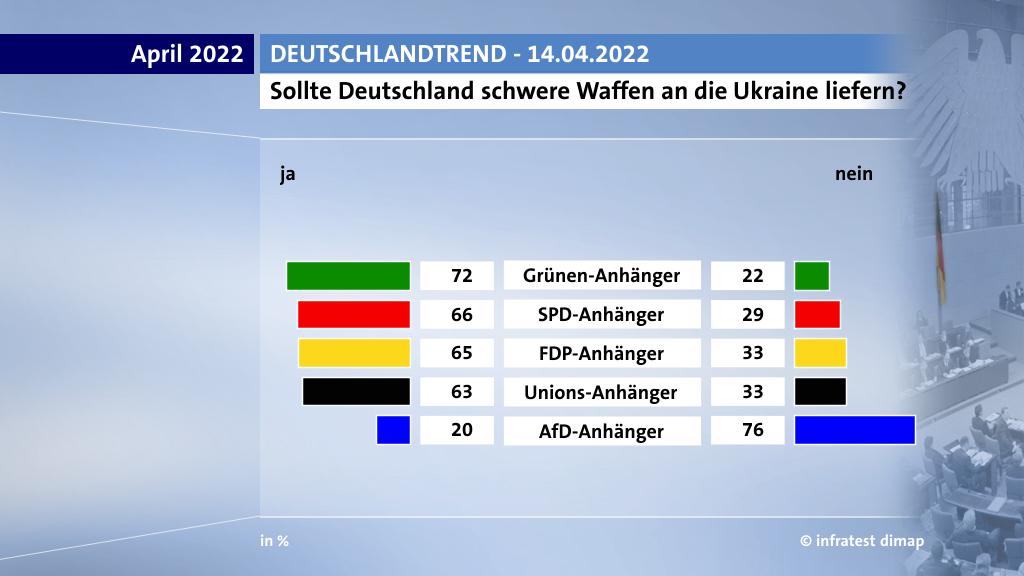

If this was written by an expert, that could make some sense, but it is not. Nuclear plant is not a startup, where you can just skip the QA part to release faster or put a not working cookie banner for few months, because nobody really checks compliance. You have to conduct safety tests, there should be enough staff and replacement parts, fuel supply must be secured, waste disposal must be planned in advance. Calling to accept risks of not doing this properly is not exactly what German public supports. The polls are tricky thing to do. If you ask certain questions you will get whatever results you want. I’m sure it was not explained to the public in the poll that they will have to accept higher risks of nuclear disaster if reactors will be allowed to operate. Everyone thinks that it is as safe as it was in the past - no wonder majority would support it to help Ukraine.
The thing is, this majority also includes supporters of Greens and the party itself is not the same as it was in 80s. Greens are no longer unconditional pacifists and anti-nuclear hippies. They are the biggest supporters of sending heavy weapons to Ukraine now. They would extend nuclear if possible, because it advances the more important agenda of reducing emissions and helps Ukraine. They were ready to wait 20 years to phase out nuclear in 2000s, and it wasn’t Greens who accelerated shutdown after Fukushima. It was pro-business CDU with Merkel as a head of the government. This is why I would rather trust Habeck with his report than some random guy from the Internet with a political message.